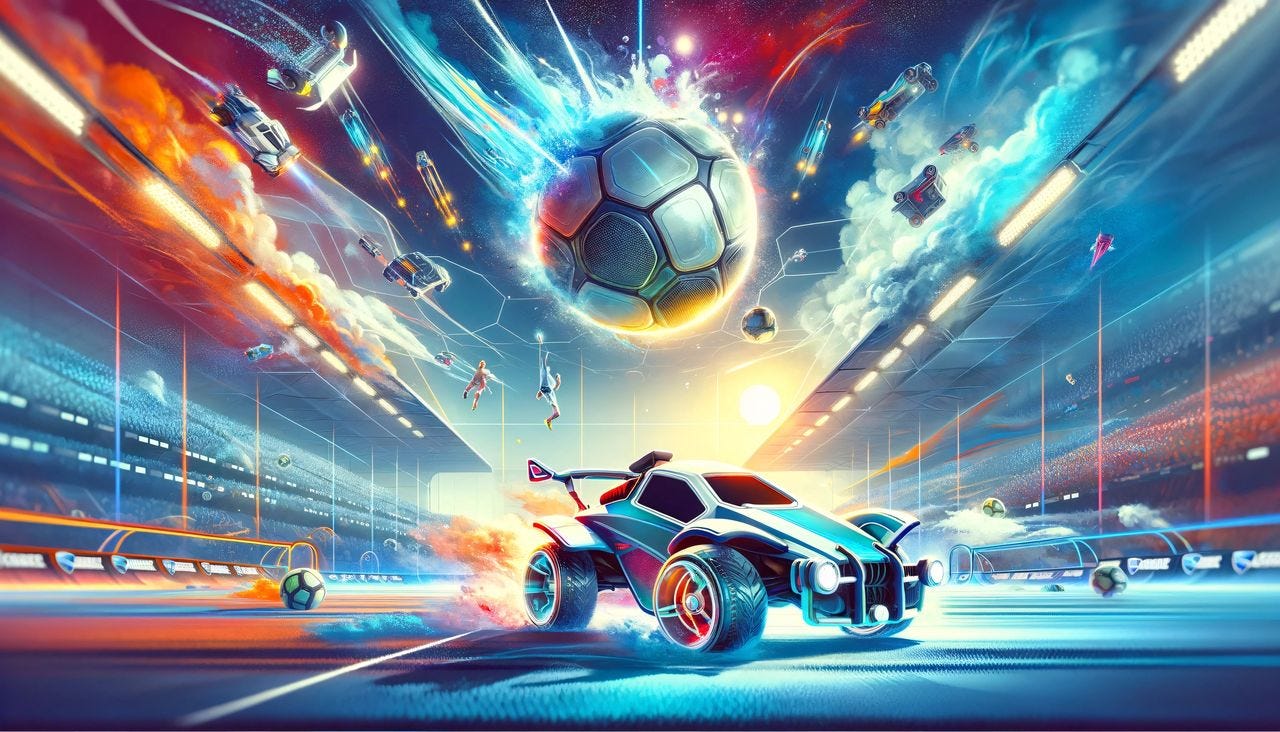
To the uninitiated, the multiplayer video game Rocket League might appear as a straightforward match of car soccer. Vehicles fly around an enclosed pitch, attempting to steer a giant ball into the opposing team's goal.
Note: Unique AI-generated phrases are presented as bold and italic.
At its core, it's a game governed by the laws of physics, where momentum, speed, trajectory, and force play pivotal roles.
But a more intricate dance hides beneath this veneer of vehicular physics, one that's as much about human chemistry as it is about the physical world. A tapestry of ego and positioning.
Each five-minute match in Rocket League is a condensed lifetime of decision-making, strategy, and interpersonal dynamics.
Every player's choice has immediate consequences, not only for themselves but also for their teammates and opponents. A well-timed jump can lead to a triumphant goal, while a missed defense can result in a devastating loss.
But it's not just about the maneuvers and tactics; it's about the human connections that form in these brief encounters.
In real-life team sports, chemistry between players is often hailed as the secret ingredient to success. It's the unspoken understanding, the ability to predict a teammate's next move, the synchronization of thoughts and actions.
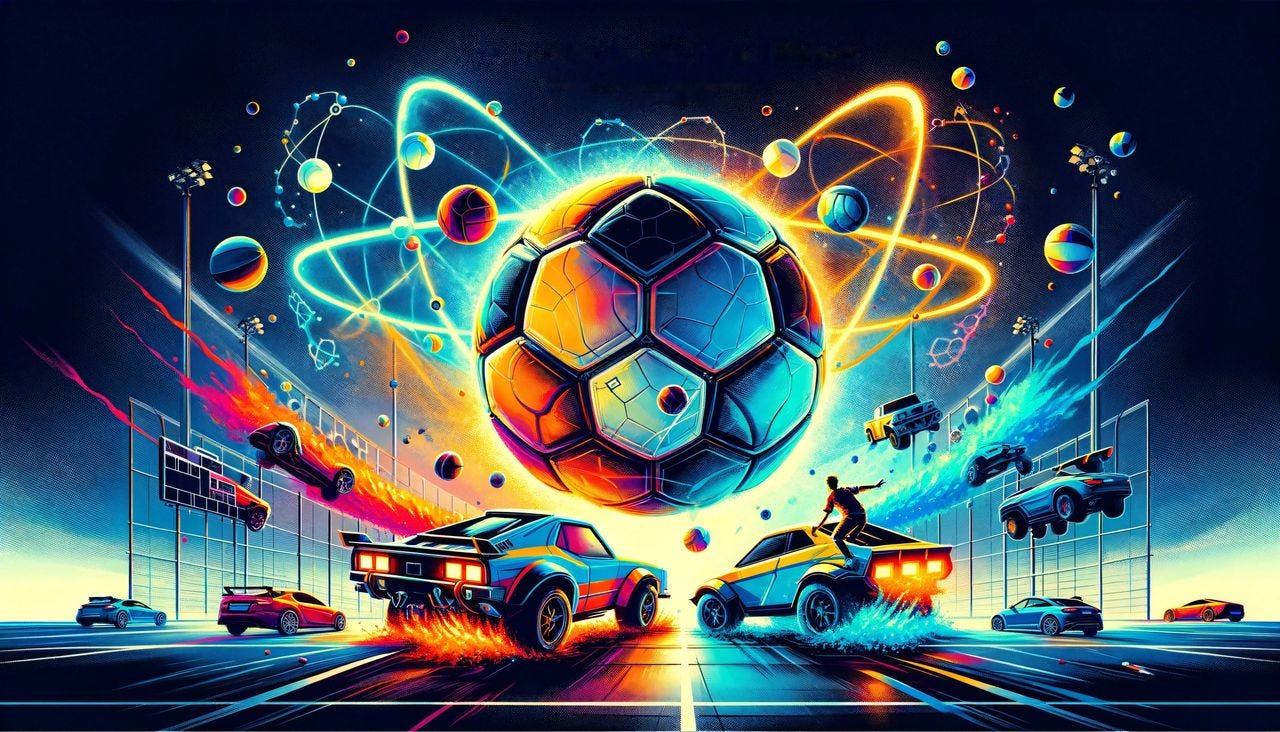
Rocket League, despite its virtual setting, is no different. When players are in sync, they move as one cohesive unit, anticipating passes, setting up shots, and defending their goal with a fluidity that's mesmerizing to watch.
However, as with any intense interaction, the emotional stakes are high. Moods can quickly sour.
A missed opportunity or an unintended blunder can lead to frustration. And in the online gaming world, where anonymity often emboldens people to express their feelings without restraint, this frustration can escalate into toxicity. Hurtful words are exchanged, blame is assigned, and the negative energy can linger long after the match is over.
This toxicity can also be contagious.
A player who experiences a particularly harsh game might decide to carry that negativity into their next match, infecting a new set of players with that particular brand of bitterness.
Perhaps one of the most intriguing (and vexing) phenomena in Rocket League is when a player chooses to remain in a game after mentally checking out. They might stop actively participating, instead opting to sit idly or even actively sabotage their own team.
This act of virtual protest is a form of punishment for all involved at that moment.
And while it's a strategy that's counterproductive to the game's objective, it highlights the depth of emotion and the personal stakes that players invest in each match.
So why do players continue to engage in this dance of chemistry and physics, despite the potential for emotional turmoil?
Perhaps because, at its best, Rocket League offers moments of pure elation.
The thrill of a last-second goal, the satisfaction of a well-executed play, the camaraderie of celebrating a victory with teammates — these are the moments that players chase. They're the highs that make the lows worth enduring.
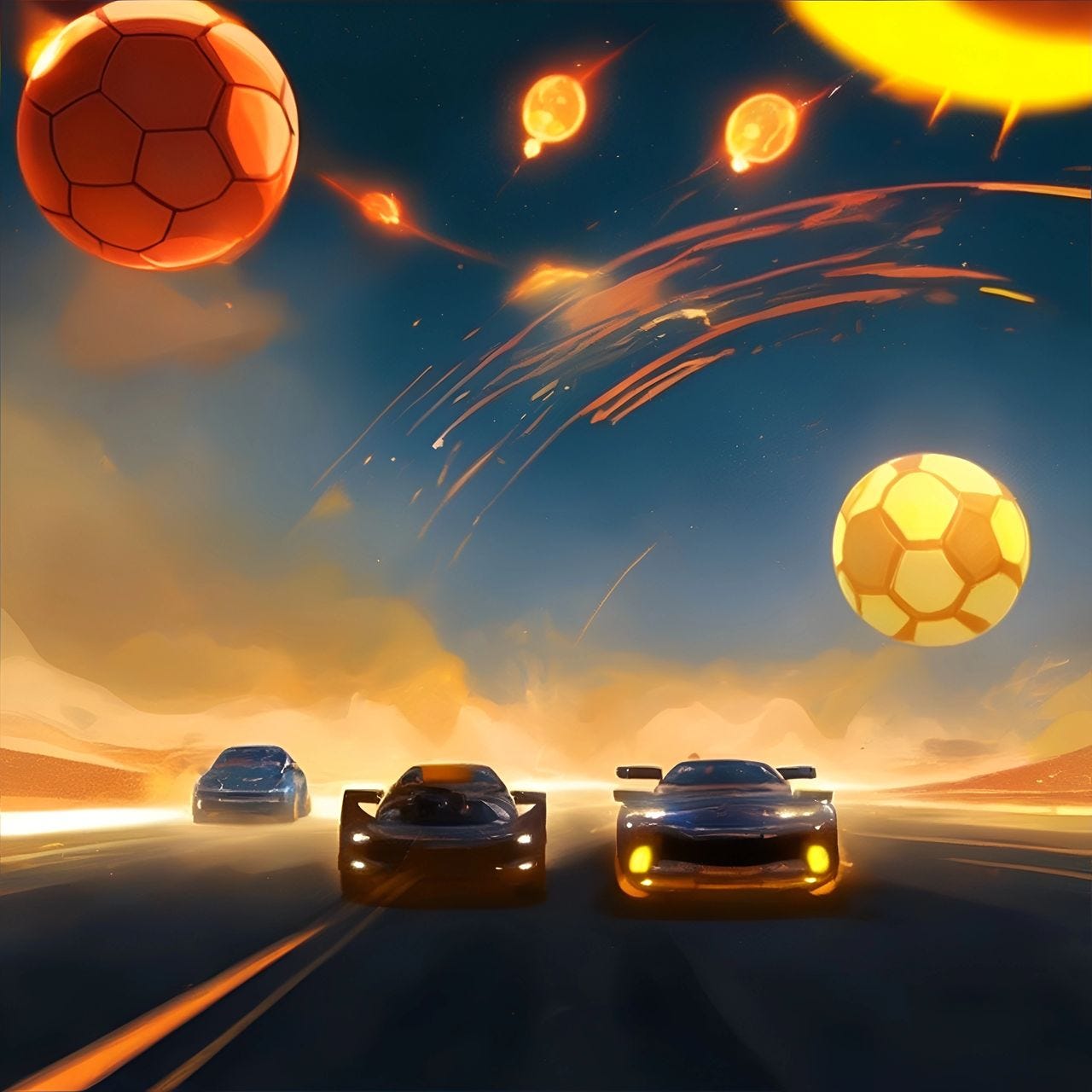
Rocket League is more than just a game. It's a microcosm of human interaction, a virtual space where people from all over the world come together to compete, collaborate, and connect.
Each match offers a unique blend of physics and chemistry, of strategy and emotion, of triumphs and challenges.
In the end, Rocket League serves as a reminder that even in a digital realm, human connection is paramount.
It's a testament to the power of teamwork, the importance of empathy, and the complex brew of emotions that define our interactions.
As players navigate the pitch, they're not just mastering the physics of car soccer — they're learning about themselves and each other; forging bonds and rivalries while experiencing the full spectrum of humanity’s strength and weakness in just five minutes.

ChatGPT prompt and resulting conversation used in creating this piece.
For posterity I've dumped the transcript below:
Me:
write 1,000 words about how the hit online car soccer multiplayer game Rocket League is as much chemistry as it is physics. How 5 minutes can be a lifetime of intimate decision making that affects others in real time. How moods can turn toxic and linger between games. How some choose to remain in a game even once they've decided to stop playing. A form of punishment to all involved.
ChatGPT:
Rocket League: A Dance of Chemistry and Physics
To the uninitiated, Rocket League might appear as a straightforward game of car soccer. Vehicles fly around an enclosed pitch, attempting to steer a giant ball into the opposing team's goal. At its core, it's a game governed by the laws of physics, where momentum, speed, trajectory, and force play pivotal roles. But beneath this veneer of vehicular physics lies a more intricate dance, one that's as much about human chemistry as it is about the physical world.
Each five-minute match in Rocket League is a condensed lifetime of decision-making, strategy, and interpersonal dynamics. Every player's choice has immediate consequences, not only for themselves but also for their teammates and opponents. A well-timed jump can lead to a triumphant goal, while a missed defense can result in a devastating loss. But it's not just about the maneuvers and tactics; it's about the human connections that form in these brief encounters.
In real-life team sports, chemistry between players is often hailed as the secret ingredient to success. It's the unspoken understanding, the ability to predict a teammate's next move, the synchronization of thoughts and actions. Rocket League, despite its virtual setting, is no different. When players are in sync, they move as one cohesive unit, anticipating passes, setting up shots, and defending their goal with a fluidity that's mesmerizing to watch.
However, as with any intense interaction, the emotional stakes are high. Moods can quickly turn sour. A missed opportunity or an unintended blunder can lead to frustration. And in the online gaming world, where anonymity often emboldens people to express their feelings without restraint, this frustration can escalate into toxicity. Hurtful words are exchanged, blame is assigned, and the negative energy can linger long after the match is over.
This toxicity can be contagious. A player who experiences a particularly harsh game may carry that negativity into their next match, infecting a new set of players with their bitterness. This ripple effect can tarnish the gaming experience for many, turning what should be a fun escape into a source of stress and angst.
Perhaps one of the most intriguing (and vexing) phenomena in Rocket League is when a player chooses to remain in a game after mentally checking out. They might stop actively participating, instead opting to sit idly or even actively sabotage their own team. This act of virtual protest is a form of punishment, not just for themselves but for everyone involved. It's a statement, a way to express dissatisfaction or resentment. And while it's a strategy that's counterproductive to the game's objective, it highlights the depth of emotion and the personal stakes that players invest in each match.
So why do players continue to engage in this dance of chemistry and physics, despite the potential for emotional turmoil? Perhaps it's because, at its best, Rocket League offers moments of pure elation. The thrill of a last-second goal, the satisfaction of a well-executed play, the camaraderie of celebrating a victory with teammates—these are the moments that players chase. They're the highs that make the lows worth enduring.
Rocket League is more than just a game. It's a microcosm of human interaction, a virtual space where people from all over the world come together to compete, collaborate, and connect. Each match offers a unique blend of physics and chemistry, of strategy and emotion, of triumphs and challenges.
In the end, Rocket League serves as a reminder that even in a digital realm, human connection is paramount. It's a testament to the power of teamwork, the importance of empathy, and the complex dance of emotions that define our interactions. As players navigate the pitch, they're not just mastering the physics of car soccer; they're learning about themselves and each other, forging bonds and rivalries, and experiencing the full spectrum of human emotion in just five minutes.
Me:
That's beautiful! I've been feeling that about this game for quite some time.
ChatGPT
Thank you! Rocket League, like many games, transcends its digital boundaries and becomes a canvas for human experiences, emotions, and connections. It's wonderful to hear that the sentiments expressed resonate with your own feelings about the game. Many players form deep attachments to games because they offer not just entertainment, but also moments of introspection, connection, and personal growth. Always remember that the beauty of games like Rocket League isn't just in the gameplay mechanics but in the stories and emotions they inspire in players like you.
Me:
Can you create four text-based prompts that I can feed into an ai image generator that best represent these sentiments in relation to Rocket League?
ChatGPT:
Of course! Here are four text-based prompts to capture the sentiments we discussed in relation to Rocket League:
"A team of cars in synchronized flight, trailing vibrant colors, moving seamlessly around a glowing soccer ball, capturing the essence of unity and precision in the midst of a vast cosmic arena."
"A car, paused at the edge of the Rocket League arena, staring at a setting sun, evoking a sense of introspection, solitude, and the deep emotions of a player after a challenging match."
"A split scene of two moments: On one side, a car celebrates a triumphant goal with fireworks and cheering teammates, and on the other side, the same car sits dejected under a stormy sky, representing the highs and lows of competition."
"Two cars from opposing teams, amidst the chaos of the match, pausing to admire a shared moment — a beautiful cosmic event or a rare in-game phenomenon, symbolizing the fleeting moments of connection and camaraderie in the heat of competition."
I hope these prompts inspire vivid and evocative images that encapsulate the deep emotions and experiences associated with Rocket League!