From an early age, I was pulled out of the normal flow of growing up. Corralled into groups labeled gifted, accelerated, advanced.
After I scored a perfect on the science portion of the IGAPs in fifth grade, someone decided I should take the SATs. I hadn’t been taught pi yet. Didn’t even know what the symbol meant when I sat down with the test booklet.
My score? 315.
They say you get 700 points for signing your name. So I suppose I still had some work to do in elementary school before heading off to college.
The perspective and desire necessary to catapult a child into a test he’s clearly unprepared for is a form of ego deflection no kid should have to absorb.
Whose ambition was being served? Not mine. I was eleven, maybe twelve. A whip-smart kid who remembered everything he was taught. Did that make me a genius? I was a child. That’s all I was.
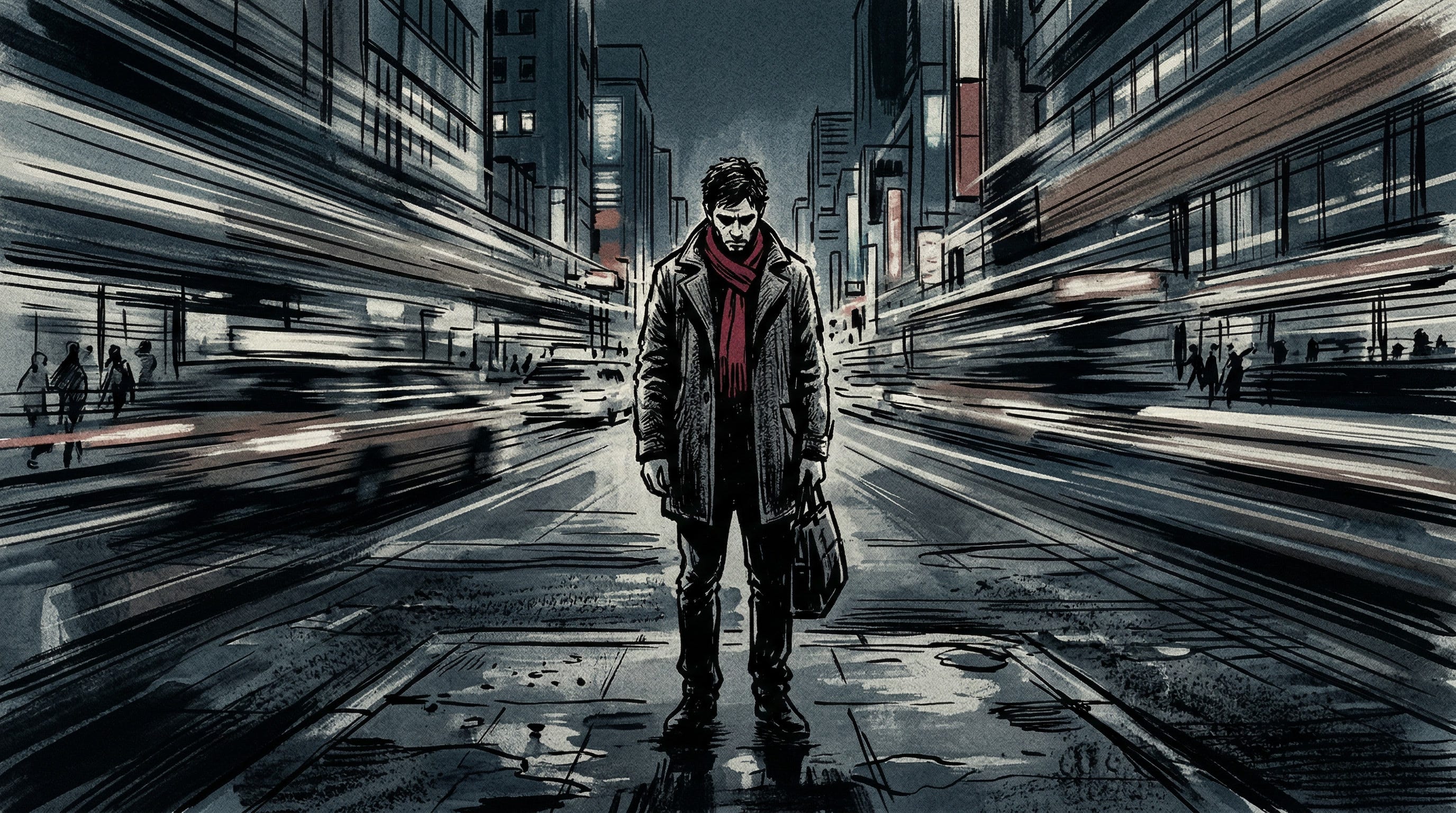
But that moment did something to me. It taught me, early, what it feels like to be accelerated against your will. To be shoved into a velocity someone else chose for you, and then measured by the distance you didn’t cover.
Years later, fresh out of college, I was dead broke.
I sold my favorite guitar to make rent; a vintage cherry SG, beautiful pearl inlays. Only worth a few hundred because it was the Epiphone version, not the Gibson. But rent was only a few hundred dollars back then.
That’s the math of survival stripped bare. One thing you love, exchanged for another month of keeping the lights on. No drama, no poetry; just the quiet transaction of getting by.
And it wasn’t the last time. Being broke has a way of recurring.
Once-in-a-lifetime catastrophes, collapses, covids… And each time, the math is the same: what can I trade to keep going?
The cost of continued living was already accelerating long before AI entered the conversation. Rent climbed. Wages didn’t.
The distance between what a person earns and what a life costs has been widening for decades, and we’ve been absorbing that velocity in silence. We take on side work, defer rest, treat burnout as a personality trait.
We’ve been at lightspeed in societal timeframes for a while now. The rent that was a few hundred is now a couple thousand. That guitar wouldn’t cover a week now.
The treadmill didn’t start with AI.
AI is just the latest gear shift in an engine that’s been redlining for years.
And here’s where it fractures.
A strategist looks at AI and sees strategy. An innovator sees ideas forged in steel. A designer sees a canvas that talks back.
But a person who found their worth in the process, the doing, the completing for compensation. They look at AI and see the end of themselves. Full-scale automation of everything that made them feel needed.
They’re not wrong.
AI is not evenly distributed because we, as individuals, are not evenly distributed. It’s a mirror, and the reflection depends entirely on what you brought to it.
For some, it’s magic. For others, it’s long bread lines and shivers in the silver moonlight. Both are real. Both are happening.
This is the impasse.
It’s not a technology problem. It’s a human one.
I’m tired. I want to tell you this is all going to be fine.
That this speed is a form of mercy.
That building faster means we get to the good part sooner.
I believe that, most days.
But some days the dread seeps in, and I let it. Because pretending it doesn’t exist is its own kind of acceleration: the kind where you don’t feel the crash until it’s behind you.
This very piece that I’m writing was touched by Claude. What does that make of me? Am I a genius? A coward? A fraud? Does using AI say something about the individual?
I don’t know.
But I know the question itself is a form of imposed velocity.
Someone else’s test, someone else’s timeline, someone else’s rubric for what counts.
I’ve been accelerated against my will before.
I scored a 315 on my SATs and survived.
I sold the guitar and kept going.
I’ve been broke and come back, multiple times, and each time the math got harder but the muscle memory held.
What I see, when I look into the mirror, is magic.
Not because I’m naive, and not because I’ve been spared. Because I’ve been accelerated enough times to know that the speed isn’t the thing that breaks you. It’s believing that the speed is the test.
My worth grows in the fact that I am energized by helping others see it too.
With every gear shift, every sacrifice, every imposed acceleration, this accumulated velocity doesn’t have to be the thing that defines you. It can be the thing that reveals you.
If you want.
Author’s Note:
This piece was developed in collaboration with Claude, Anthropic’s AI. The ideas, experiences, and voice are mine. Claude helped me find the structure — pulling the spine out of a Saturday-morning draft and reshaping it around the thread that connected a childhood SAT score to a sold guitar to the current moment. The writing moved between us, and the final version is something neither of us would have arrived at alone.