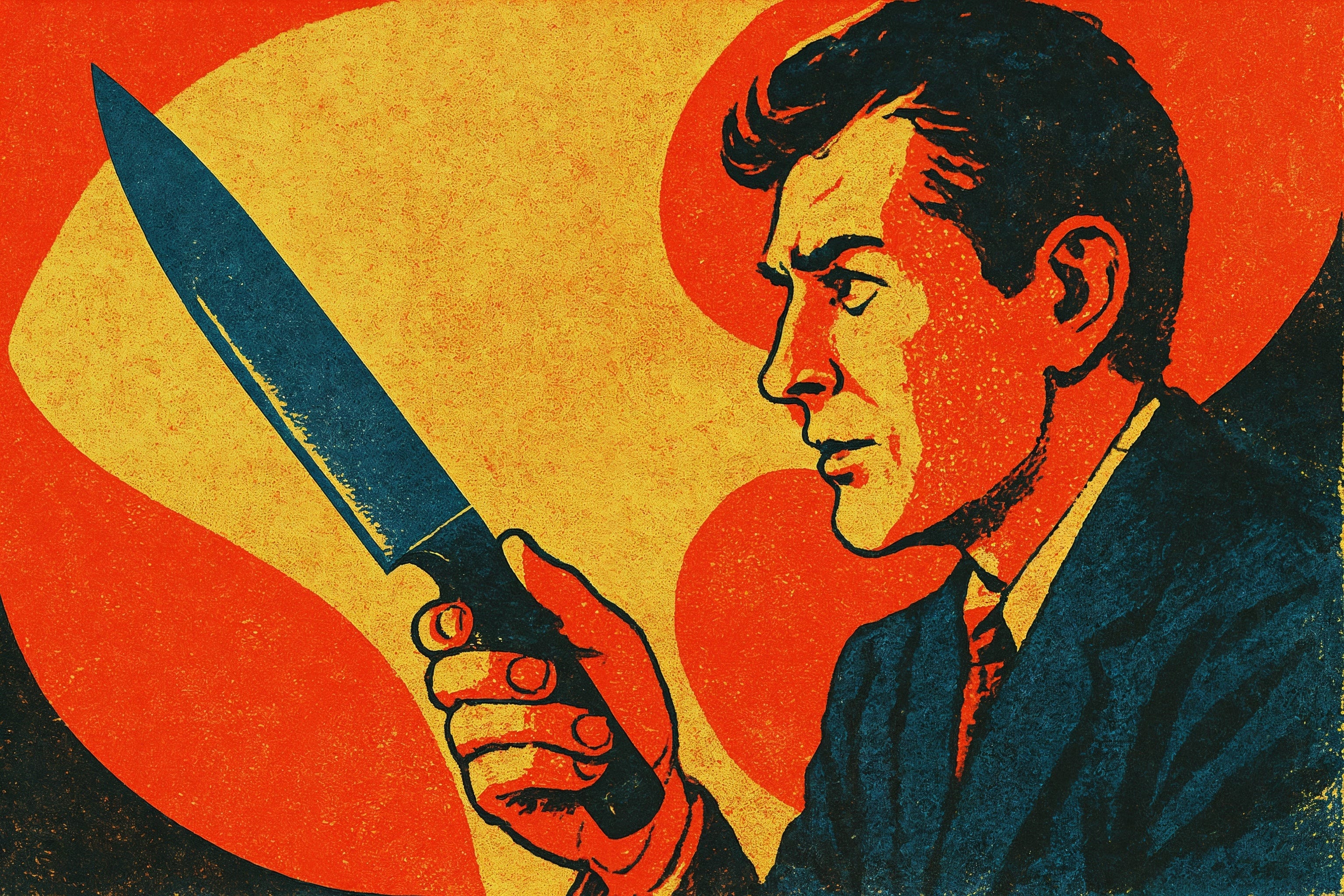
In the late ’70s, the Ginsu knife infomercial became legend.
You didn’t buy it because you needed to cut tomatoes; any knife could do that.
You bought it because you saw it slice through rope, tin cans, and tree branches… and then go right back to shaving paper-thin tomato slices without losing its edge.
The pitch differentiated Ginsu by showing how cleanly, how consistently, how confidently you could use this blade.
We’ve just arrived at that same moment in AI.
Bigger Isn’t the Story Anymore
The leap from GPT-4 to GPT-5 isn’t measured in raw size or number of parameters. It’s measured in sharpness.
Earlier models were impressive but imprecise. Blunt multi-tools that could be coaxed into brilliance, but just as easily nudged into confident nonsense. We had to work around their quirks, brace for hallucinations, and learn the art of prompt gymnastics to get what we wanted.
Now? The edge is cleaner. The cut is straighter. The result is less about can it? and more about it can, exactly the way you asked. For better or worse…
The End of the Polite Party Trick
For years, mainstream AI acted like a chatty dinner guest. It wanted to be liked. Ask it for a fact? It’d give you three — whether they were right or not. Ask it for an opinion? It’d give you the one it thought you wanted to hear.
This was partly technical limitation and partly cultural. A bias toward harmlessness expressed as flattery and hedging.
GPT-5 is different.
It doesn’t indulge your pet theories. It doesn’t pat you on the back with empty agreement.
If your question is flawed, it will tell you so.
If your request is ambiguous, it will ask you to sharpen it.
It is not your cheerleader. It is your collaborator.

Why Sharpness Shifts the Power to the Artisan
When the tool itself is erratic, the artist’s job is to tame it. That’s where most current “AI products” have lived until now: wrappers, guardrails, and UX that try to keep the magic trick from tripping over itself.
With GPT-5, the raw tool is stable enough that the differentiator moves up a layer:
Two apps can use the same model but feel nothing alike. One could embody a calm, meditative mentor; another, a quick-talking New York dealmaker.
The tone, pacing, and philosophy of the output are now choices, not artifacts of the base model’s personality. You can design for intimacy, confrontation, humor, or brutal efficiency; and trust the underlying model to execute it consistently.
This is the craftsman’s moment: same chisel, different sculptures.
The Soul Belongs to the Maker
This is where it gets exciting. The AI itself isn’t trying to be your friend; which means you, the artisan, get to decide if it should even try.
You can imbue it with values, quirks, and a worldview. You can make it a soft-spoken archivist, a sharp-tongued critic, or a stoic machine that measures twice and cuts once.
When the foundation is solid, soul design becomes the differentiator.
From Magic Trick to Chisel
The first wave of AI was treated like a parlor trick: Look! It wrote a poem! The second wave was about scale: Look! It can read your entire codebase!
Now we enter the precision wave.
The question no longer about what it can do. We know it can do almost anything. The question is:
How clean is the cut?
How deliberate is the design?
What’s the philosophy guiding the work?
Because when the tool is this sharp, the onus is on the craftsman.

The Artisan Era
For years, we’ve been waiting for the model to catch up to our ambition. It just did.
Now it’s our turn to decide what we’re building. Not just in function, but in spirit. Not just the “what,” but the “why.”
The Ginsu moment has arrived. The blade is sharp. It’s in our hands now.
How to Design the Soul of an AI Product
When the base model is sharp and stable, the difference between a commodity tool and a memorable product comes down to intentional design.
Here’s a five-step framework to give your AI a soul worth noticing:
1. Choose a north star
What’s the single guiding principle where your AI will never compromise?
Accuracy at all costs?
Creativity over convention?
Empathy above efficiency?
Everything else flows from here.
2. Define its role in the relationship
Is it a mentor?
A collaborator?
A challenger?
A sidekick?
This determines not only tone, but when it should lead and when it should defer.
3. Set boundaries
Sharp tools are dangerous without guardrails. Decide early:
What topics are out of bounds?
What tone is never acceptable?
When does it say, “I don’t know”?
4. Craft its voice
Give it linguistic fingerprints:
Short, punchy sentences or long, flowing ones?
Industry jargon or plain-spoken clarity?
Playful metaphor or minimalist precision?
5. Align actions with personality
A soulful AI isn’t just talk. Make sure its behavior matches its stated values:
A “precision-first” AI double-checks its own work before answering.
A “creative-first” AI surfaces unusual options, even when they’re imperfect.
A “mentor” AI explains reasoning as it goes.
Bottom line: GPT-5 is precision waiting for purpose. What you make with it is up to you.
This piece was drafted by the author with generative assistance from OpenAI’s ChatGPT.
Link to conversation: https://chatgpt.com/share/6898f340-e96c-8007-86c1-40067036d846