
Organizations have always run on imperfect hierarchies. Ego, fear, and the need for clarity collide inside any system built by humans.
Just think about it - we want input from others but crave a pecking order. We want collective alignment but also individual ownership. Even before AI, corporate coordination was always a little fuzzy.
Now, AI doesn’t just add another layer to this; it refracts the whole structure.
The org chart stops looking like a pyramid and starts looking like a prism, scattering decision-making authority and information flow in unexpected directions.
And all levels of all organizations are now in a footrace to adopt the latest time-saving tool. Leaders leverage AI for “objective” input. Teams quietly use it as a shadow consultant. The tech reshapes workflows before governance can even catch its breath.
And the fuzz compounds because:
Ego
Leaders want control but risk being outpaced by tools that democratize expertise.Fear
Nobody wants to be wrong (or worse, irrelevant) in a system now co-piloted by algorithms.The Unknown
AI makes decision-making probabilistic, not linear. That feels alien in organizations trained to crave deterministic clarity.
How AI Makes It Worse
Instead of solving this ambiguity, AI accelerates it:
Shadow Authority
AI becomes an unofficial voice in the room; cited, deferred to, even blamed without ever carrying accountability.Faster Misalignment
Small governance gaps multiply at machine speed. A mis-set policy or prompt pattern can propagate like wildfire.Decision Layer Blur
Is AI an advisor? A subordinate? A peer? Each role demands different oversight, but we often treat it as all three at once.
And so, this is how fuzz compounds: rapidly, invisibly, and unevenly across the org.
Alignment as the Antidote
The answer isn’t more control for control’s sake. It’s alignment. Designing governance that works like choreography, not guardrails.
Define Roles for AI
Spell out what decisions AI informs, owns, or automates.Process Before Tools
Lock in workflows and escalation paths before layering in AI.Transparency Loops
Make every AI-assisted decision auditable so trust doesn’t erode in the shadows.Governance Alignment
Let organizations keep functioning even as AI blurs traditional boundaries.
AI-Integrated Governance Framework
The goal: turn AI from a source of fuzziness into a clear partner within human structures; neither overpowered nor ornamental.
1. Role Definition: AI in the Org Chart
Advisor AI
Surfaces insights, patterns, forecasts. Humans make final calls.Operator AI
Executes defined tasks autonomously within clear limits.Partner AI
Co-creates with humans but requires human sign-off for deployment.
Setting these expectations early keeps authority from scattering.
2. Layered Decision Authority
Governance should work like air traffic control: humans and AI share lanes, but with different clearance levels:
Tactical Decisions
Automatable with tight feedback loops (e.g., scheduling, reporting).Operational Decisions
AI advises; humans approve (e.g., hiring recommendations, budget forecasts).Strategic Decisions
Human-led, AI-informed. AI offers scenarios; humans weigh trade-offs.
Each layer leaves an audit trail so accountability doesn’t vanish.
3. Alignment Rituals
AI needs rituals just like humans do:
AI Governance Councils
Cross-functional teams review policies, audit models, and assess impact.Feedback Channels
Employees flag friction or bias and file a bug report or Jira ticket.Decision Logs
Every AI-assisted decision leaves a visible breadcrumb trail for compliance and trust.
4. Governance Alignment
This is about preserving cooperation as the fuzz spreads.
Psychological Safety
Teams can test AI workflows without fear of blame when things break.Shared Understanding
Clarity comes from common language and repeatable processes.
5. Guardrails Without Paralysis
Too many rules kill agility; too few breed chaos. Balance comes from:
Pre-Approved AI Use Cases
Green-lit scenarios move fast; anything else triggers review.Model Lifecycle Reviews
Regular checks keep systems aligned with ethics, compliance, and goals as they evolve.Listen To Each Model
Adopt a receptive ear to the needs of the model serving your needs. Meet in the middle to go farther.
The New Equilibrium
When governance and alignment catch up, organizations stop fighting the fuzz. They become adaptable, cooperative, and ego-light; able to embrace AI without losing their center of gravity.
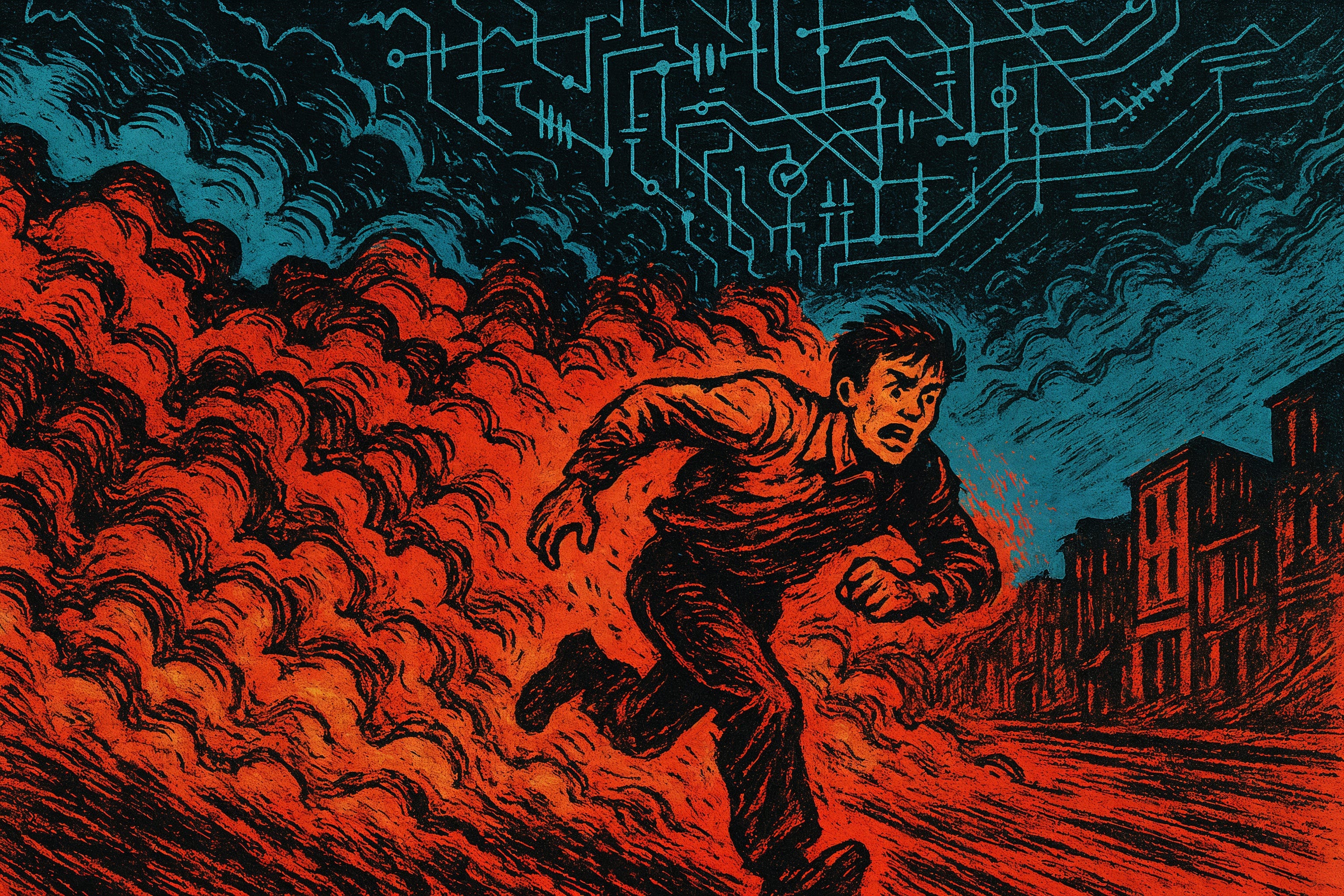
initial framework co-developed with AI assistance
Here’s the chat used in the creation of this piece.