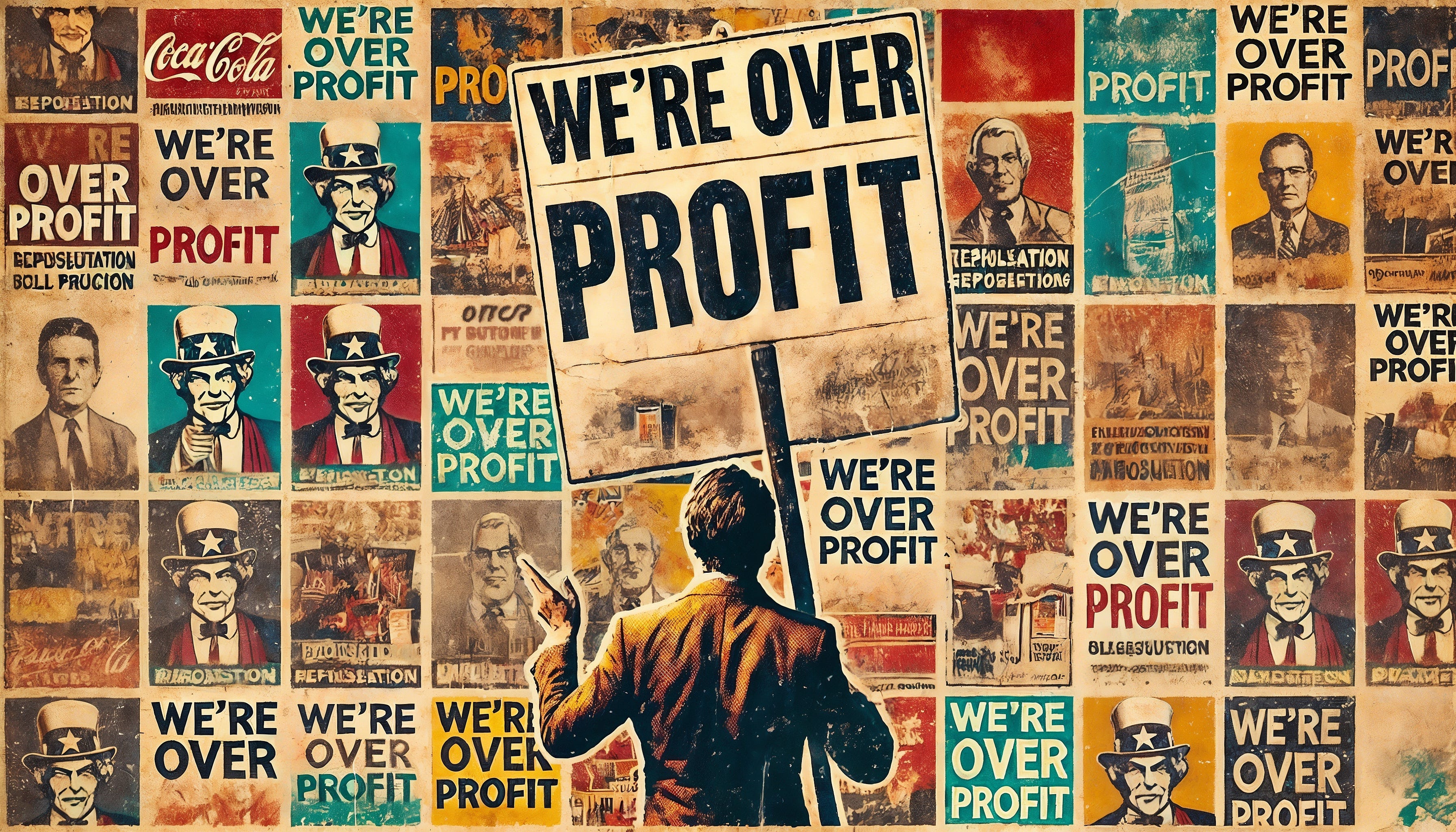
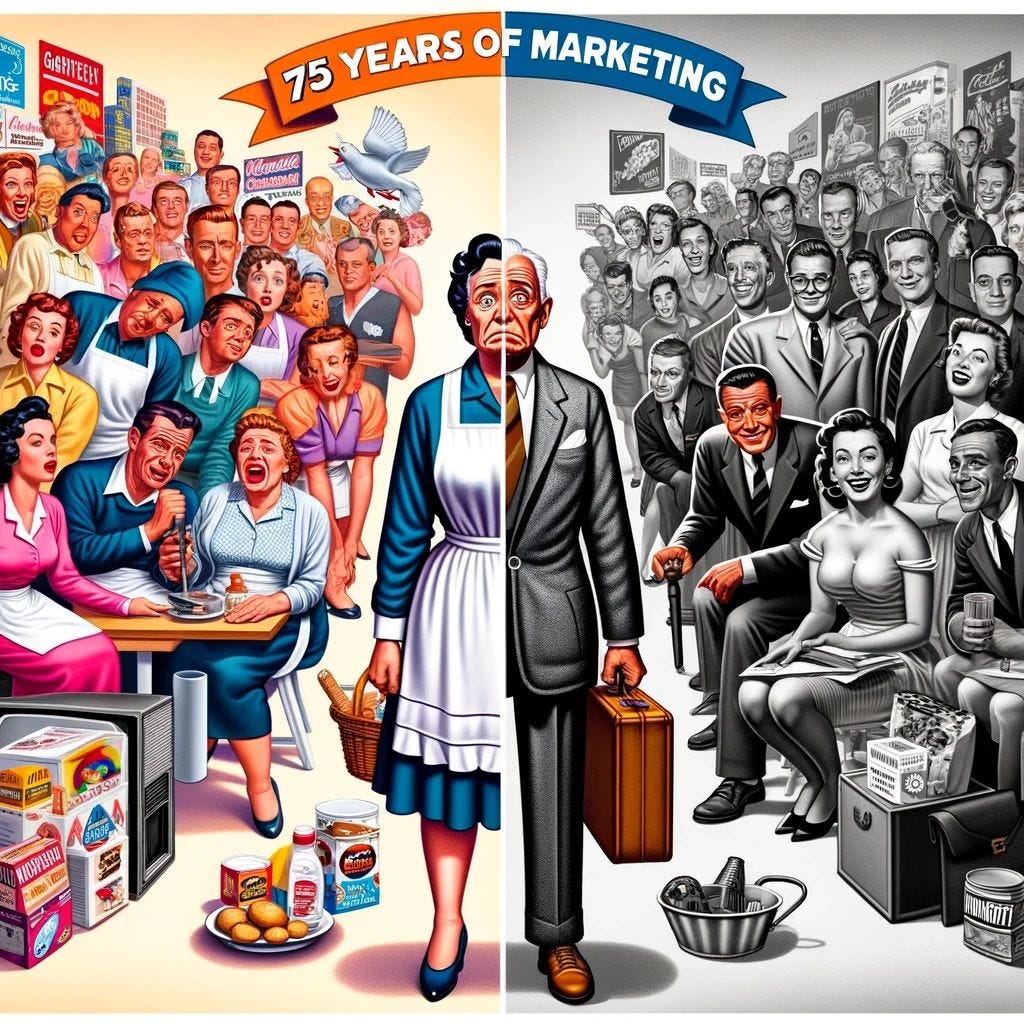
We’ve come pretty far from the early days of mass marketing. 75 years ago, at the dawn of the television commercial, a straight forward product pitch remained steadfast to the center lane of representation.
We were given two options: the busy body housewife - frazzled, overworked and under appreciated. Or the man of the house carrying the weight of the world - the bacon bringer, the deistic figure deserving unending respect at home.
Note: Unique AI-generated phrases are presented as bold and italic.
Capitalism has long peddled products by exploiting reductive identity caricatures of an ideal customer that they hope to attract and then extract revenue. This has been the stalwart of the American capitalist advertisement landscape since its creation.
It’s not entirely unexpected then that, as the social consciousness awakens, there's a growing trend among brands to exploit the vibrant colors of race, sexual identity, and orientation for quarterly profits.
Gone are the archaic, whitewashed televised archetypes. Now we see genuine examples of diversity that just so happen to also be selling the exact same products from the exact same conglomerates.
This seemingly inclusive tapestry hides a complex tension where corporations drive profits under the guise of representation. The gears of marketing use caricature exploitation to grease its wheels and add value for its organization's stakeholders.
Capitalism commodifies our inalienable characteristics, reducing rich cultural narratives, deeply held beliefs, social movements and central voices to mere aesthetic choices in a sales pitch for the same tired trinkets.
In 2017, Pepsi’s now infamous advertisement featured Kendall Jenner at a protest mirroring the Black Lives Matter movement. In the ad, tensions between protesters and police are diffused when Jenner hands an officer a Pepsi. How refreshing…
Thankfully, this ad was widely criticized for trivializing the struggles of marginalized communities and turning a profound movement into a promotional gimmick.
Nothing changed about the product, or the process, or the proceeds. The slick veneer was merely doused with a stark, concerned message to mimic the cultural struggle du jour while also asking for your purchase.
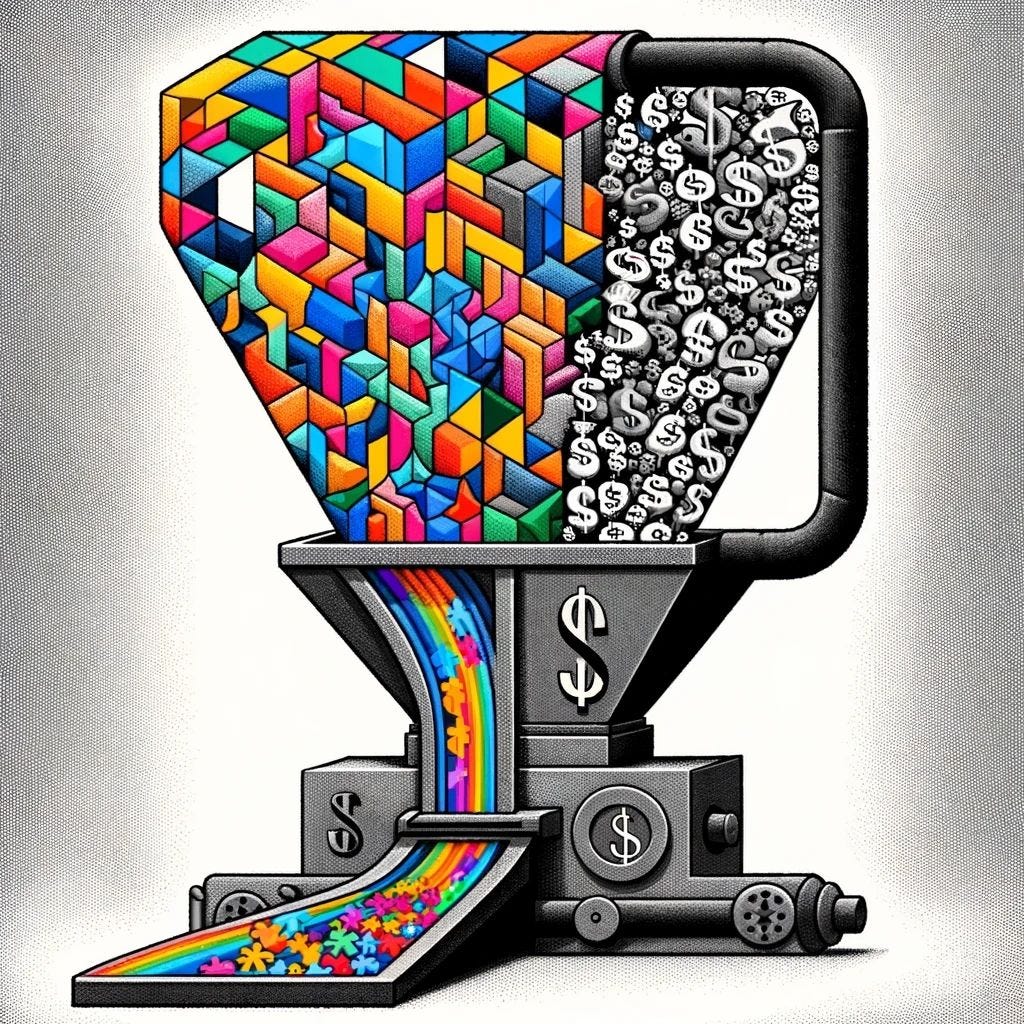
America’s Pride parades now look more like a commercial break on CNBC than an act of rebellion like the original Stonewall uprising.
Yet, this watered down, candy-coated mass-market depiction of representation regularly only skims the surface. Brands choose to focus on flamboyant displays rather than explore the depth and dangers of living a queer experience in today's world.
If you really want to see the true colors of a global brand - during Pride, see if it changes its branding in any queer-hostile countries like Russia, Iraq or the UAE.
This litmus test reveals the deceptive nature of the sales pitch.
Massive multi-billion dollar corporations use the vocabulary and color palette of genuine allyship to extract more dollars from your wallet.
In June of 2019, the UK-based M&S (Marks & Spencer) released an "LGBT" sandwich, containing Lettuce, Guacamole, Bacon, and Tomato. While marketed as a means to celebrate the LGBTQ+ community, it faced backlash for reducing a diverse community to basic ingredients in a sandwich.
“I don’t applaud it. It’s the sort of idea that only comes from middle management meetings. ‘All the gays love rainbows. And vegetables! I know! Gay sandwich wrapper!’” one user exclaimed on social media.
This phenomenon is now so prevalent that the concept of capitalizing on Pride without delivering any substantial contributions to any LGBTQ+ cause is branded rainbow capitalism.
But, what of the tastemakers? The brands who believe their seasonal offerings deliver a tectonic shift to the zeitgeist? Well, the fashion industry has a long history of borrowing from various cultures to move product.
Victoria's Secret’s 2012 fashion show had models wear Native American headdresses, reinforcing the sterilized, meaningless art-directed appropriation in fashion.
Such instances commodify and trivialize the deeply symbolic meaning of these items, reducing them to mere fascinators.
Capitalism knows it’s exploiting heritage to bolster that quarter’s bottom line. Let’s not forget, this is the economic engine that considers shock value a distinct and viable marketing strategy.
Bad news is still news. Look, we’re all fighting to be seen and remembered, but brands lack the necessary social-shame fear response that would otherwise keep them in check.
Amid this surge in diverse representation, it's essential to see between the spokespeople and decide if the messaging is genuine inclusion or just another performative gesture.
Case in point, racing to check boxes with inclusion can lead to disastrous juxtapositions. German fast-fashion clothing company H&M released an ad in 2018 that featured a black child wearing a sweatshirt with the words "Coolest Monkey in the Jungle.”
While brands may claim to prioritize diversity, incidents like this underscore the importance of genuine inclusivity both in external campaigns as well as the internal decision-making process.
The canvas of capitalism is becoming increasingly colorful, with a wider array of identities taking center stage. And representation holds immense power for attention. It can uplift marginalized voices, foster understanding, and celebrate the tapestry of human identity.
However, brands must tread this path with genuine intent and respect, ensuring that representation doesn't just cover up exploitation for profit. And always check in on your favorite brand’s messaging each month - there’s an awful lot of causes to exploit and each month brings the opportunity for a new grift.

ChatGPT conversation used in crafting this piece
For posterity, I've dumped the conversation below:
Me:
write 1000 words on how representation is exploitation in the current system of commerce and capitalism.
ChatGPT:
Representation as Exploitation in Contemporary Commerce and Capitalism
The modern system of commerce and capitalism is built upon representations: symbols, brands, images, and narratives that signify value, identity, and aspiration. While these representations can enable individuals to make informed decisions and navigate the complex world of goods and services, they also have a dark side. Representation in this context can often blur into exploitation, particularly when the symbols and narratives presented obscure the realities of production, consumption, and distribution. This essay explores how representation can be used as a tool for exploitation in contemporary capitalism.
1. Commodification of Identity
Brands and advertisements are not merely selling products; they are selling identities. Through meticulously crafted narratives, companies project idealized versions of selfhood, tapping into consumers' desires for belonging, prestige, or self-improvement. This commodification of identity is pervasive, influencing not just what we buy, but how we see ourselves. The issue arises when these constructed identities are based on shallow or harmful stereotypes. For example, the fashion industry's consistent portrayal of ultra-thin models as the epitome of beauty has contributed to body image issues among countless individuals. By presenting a narrow view of beauty or success, capitalism can exploit insecurities to drive consumption.
2. Obscuring Labor and Production
The representation of products often glosses over the conditions of their production. A t-shirt might be marketed for its style or comfort, but seldom do advertisements delve into the labor conditions where it was made. The "made in" label tells us the country of origin, but not the wages paid to workers, the safety of their environment, or the sustainability of the production methods. This obscurity allows corporations to exploit cheap labor markets without consumers being any the wiser. The true cost of goods, in terms of human welfare and environmental impact, is often hidden behind the shiny veneer of branding.
3. Financialization and Intangible Assets
In contemporary capitalism, a significant portion of a company's value is tied to intangible assets like brand reputation, intellectual property, and network effects. This financialization of the intangible means that companies can amass vast wealth based on perception rather than tangible production. The danger here is that value becomes increasingly divorced from real-world outcomes. A company's stock price might soar based on speculative future potential, even as its real-world operations stagnate or decline. This disconnect can lead to economic bubbles and exacerbate wealth inequality, as financial elites profit from abstract financial maneuvers while real-world workers see little benefit.
4. The Illusion of Choice
Supermarket aisles brimming with diverse products give an illusion of choice. Yet, many of these brands and products are owned by a handful of multinational corporations. The representation of variety masks a concentration of power and wealth. This faux diversity can exploit consumers, as they believe they are supporting competition and small businesses when, in fact, their money is flowing into the coffers of a few dominant players.
5. Data as Currency
In the digital age, consumers themselves have become a product. Through the representation of online personas, social media habits, and browsing patterns, companies collect vast amounts of data. This data is then commodified, sold, and used to further target consumers. The exploitation here is twofold: individuals often don't realize the extent to which their data is harvested and used, and they rarely see the economic benefits of the value they generate. Instead, tech giants reap the profits.
6. Environmental Misrepresentation
The rise of eco-conscious consumers has led to a surge in "green" products and sustainable branding. However, many such representations are mere "greenwashing". Companies might highlight a minor sustainable initiative while ignoring larger unsustainable practices. By exploiting consumers' good intentions, these corporations benefit from the image of environmental responsibility without making meaningful change.
Conclusion
Representation is a double-edged sword in contemporary commerce and capitalism. On one hand, it simplifies and enables the vast exchange of goods, services, and ideas. On the other, it can be a tool for exploitation, obscuring the realities of production and consumption, and perpetuating systems of inequality. As conscious consumers, it is crucial to look beyond the surface, question the narratives presented, and seek transparency in our capitalist interactions. Only then can we hope to shape a system that is equitable, just, and truly representative of our collective values.
Me:
can you rewrite it where the voice and tone match something like Art Bell and Dave Barry?
ChatGPT:
Certainly! Art Bell was known for his captivating late-night radio show that explored the mysterious and paranormal, while Dave Barry is a humor columnist known for his wit and irreverence. Combining these two distinct styles will result in a piece that's both eerily intriguing and humorously sarcastic. Here's a rewritten version:
When Brands Go Bump in the Night: The Twilight Zone of Capitalism
Ladies and gentlemen, in the dark corners of your local mall and the vast expanse of the internet, there lurk entities more mysterious than UFOs and Bigfoot. These are the enigmas of... dramatic pause... modern commerce and capitalism. Dave and I dove deep into this realm, and what we found might just tickle your funny bone while sending chills down your spine.
1. The Haunting of the Perfect Self
Have you ever felt that eerie sensation that brands aren't just selling you socks and cereal, but also... a better you? They conjure up these glamorous, ultra-perfect identities - sort of like how I imagine the aliens that abduct cows are ultra-perfect versions of cows. The fashion industry, for instance, has been hypnotizing us with models so thin they could probably be abducted by a light breeze. But seriously, these idealized versions of us exploit our innermost insecurities. It's like they've got psychic powers or something!
2. Ghost Factories
Behind that snazzy shirt you just bought might be a tale spookier than the Bermuda Triangle. Companies weave enchanting tales about their products, but who's talking about where they come from? It's like they've got a spectral sweatshop in a parallel dimension. The label might say "Made in XYZ," but what it doesn't tell you is about the ghostly labor conditions or the phantom environmental impact.
3. The Stock Market's UFOs
In the vast universe of capitalism, there's a curious phenomenon where companies are valued not for what they make, but for their... aura? It's almost as if Wall Street is in cahoots with extraterrestrials. Why else would a company's stock price go through the roof when, on planet Earth, it's not actually producing much?
4. The Supermarket Conspiracy
You stroll down the aisle and think, "Wow, look at all these choices!" But what if I told you it's all a grand illusion? Most of these products come from a secret society of... a few giant corporations. It's like finding out all those different radio signals you've been picking up are from the same spaceship. Mind. Blown.
5. Invasion of the Data Snatchers
In this digital age, every click, every like, every "Which Sandwich Are You?" quiz you take is being watched... not by the government (or maybe them too), but by companies! They're turning us into data zombies, feeding off our digital footprints. And the worst part? They're making billions while we get... more ads.
6. The Green Mirage
You've seen those products claiming to be as pure and natural as a unicorn frolicking in a meadow. But many are just using "green magic" to make you think they're Mother Earth's BFF. In reality, they're like the mischievous gremlins of the corporate world.
Conclusion
Fellow seekers of truth, the world of commerce is filled with mysteries, oddities, and downright spooky practices. And while Dave and I might have added a pinch of humor to this twilight tale of capitalism, remember to always look beyond the veil. Who knows what you'll find? Maybe even... the truth.
Me:
Can you balance the two drafts together while keeping the through line of how representation is exploitation in capitalism?
ChatGPT:
Absolutely! Let's merge the substance of the first draft with the captivating and humorous flair of the second to create a unique blend that retains the core message while entertaining the reader.
The Capitalist Twilight Zone: When Branding Meets the Bizarre
In the bustling bazaars of modern commerce, between the flashy billboards and hypnotic jingles, lurks a narrative as mysterious as the Bermuda Triangle and as tricky as a magician's sleight of hand. This tale is about how representation in capitalism often tiptoes into the realm of exploitation.
1. Identity's Hall of Mirrors
Brands aren't just peddling shoes or shampoo; they're selling dreamy, idealized versions of you and me. Kind of like those house of mirrors at carnivals, where every reflection shows a distorted, often unrecognizable version of reality. By magnifying our desires and insecurities, they're not just making a sale; they're buying a piece of our self-worth.
2. The Ghost Stories Behind the Goods
Next time you're admiring that snazzy new t-shirt, remember: there might be a ghost story stitched into its fabric. Brands weave tales of comfort and style, but they're eerily silent about the hands that crafted them. Where's the story of the worker's sweat, the environmental toll, or the phantom-like labor conditions? Sadly, those tales are often buried deeper than pirate treasure.
3. The Enigmatic Economics of the Intangible
In the capitalist cosmos, there's an odd phenomenon where businesses gain value not just from tangible things but from mysterious auras and unseen potentials. It's like saying a UFO is valuable not for its advanced tech, but because it has good vibes. The danger? When value is based on perception, it's like building castles on clouds—beautiful to look at, but dangerously unstable.
4. The Illusionist's Supermarket
Step right up, ladies and gentlemen, to the grand spectacle of choice! Or is it? Beneath the dazzling display of diverse brands often lies the hand of a few puppeteering corporations. It's like realizing all those magic tricks are just... tricks. By masking the concentration of power, they're pulling the wool over our eyes, one product at a time.
5. Digital Doppelgängers and Data Dealers
In the shadowy alleyways of the internet, every click, every share, every cat meme you love is being tracked. It's not Big Brother, but Big Data, turning our online selves into commodities. We've become both the magician and the unsuspecting audience, often unaware that our data is the rabbit being pulled out of the hat—for someone else's profit.
6. The Green Mirage
Ah, the allure of the eco-friendly promise—products parading as Earth's saviors. But peel back the green curtain, and you might find more smoke and mirrors than genuine change. It's the age-old trick of making something seem more than it truly is, exploiting our good intentions for a quick buck.
Conclusion
Journeying through the capitalist twilight zone, it's clear that representation, with all its glitz and glamour, has a sneaky sidekick called exploitation. As savvy spectators in this grand show, it's our job to discern the genuine acts from the charades. Because in this theater of commerce, the stakes are real, and the impact—profound.
Me:
can you write a draft of this that focuses more on the inalienable traits that make us who we are, like race and sexual identity and orientation to sell goods and services
ChatGPT:
Certainly. Let's delve deeper into the realm of representation in capitalism, particularly focusing on how inalienable traits such as race, sexual identity, and orientation are utilized (and often exploited) to sell goods and services.
The Capitalist Canvas: Painting Profits with Identity
In the modern marketplace, where every billboard and advertisement is a brushstroke, there's a growing trend of using the vibrant colors of race, sexual identity, and orientation to paint a portrait of capitalism. However, beneath this seemingly inclusive tapestry lies a complex narrative about representation and exploitation.
1. The Commodification of Color
Brands today wear diversity like a badge of honor. Multiracial models grace the covers, and products are tailored for every skin tone. But is this inclusivity genuine or just another sales pitch? By commodifying color, capitalism risks reducing rich cultural narratives to mere aesthetic choices—exotic backgrounds for photo shoots or trendy hashtags for campaigns.
2. Queer Capital
The rainbow, a symbol of LGBTQ+ pride, is becoming an increasingly familiar sight in advertising. From "Pride Month" specials to LGBTQ+ celebrity endorsements, queerness is in vogue. Yet, this representation often skims the surface, focusing on flamboyant displays rather than the depth and diversity of queer experiences. It's "rainbow capitalism" where identities are paraded for profit, sometimes without genuine allyship or support.
3. Stereotyping Sexual Identity
From the macho man to the sensual woman, capitalism has long peddled products by leaning on sexual identities. These caricatures, while catchy, can be reductive. They perpetuate narrow views of masculinity and femininity, often sidelining non-binary or genderqueer narratives. By exploiting these stereotypes, brands might boost sales, but at the cost of reinforcing harmful norms.
4. Selling Orientation
In a bid to appear progressive, some brands have begun showcasing diverse orientations in their campaigns. However, this representation can sometimes veer into tokenism. A same-sex couple in an advertisement might seem groundbreaking, but if it's used merely as a shock value or novelty, it trivializes real struggles and stories.
5. Cultural Couture
Fashion has a long history of "borrowing" from various cultures. While appreciation is one thing, appropriation for profit is another. Donning cultural symbols without understanding or respect turns identities into costumes, exploiting heritage for capitalist gains.
6. The Illusion of Inclusion
Amid this surge in diverse representation, it's essential to discern between genuine inclusion and performative gestures. Brands might tout inclusivity in their campaigns, but what's happening behind the scenes? Are they fostering diverse work environments, supporting marginalized communities, or merely riding the wave of "wokeness"?
Conclusion
The canvas of capitalism is becoming increasingly colorful, with identities taking center stage. But as consumers, it's crucial to look beyond the hues and discern the intentions. Representation is powerful, but when it borders on exploitation, it risks turning identities into commodities, diluting the very essence of what makes us unique. In the marketplace of identity, authenticity should always be the gold standard.
Me:
can you expand on this draft and include real-world examples and situations?
ChatGPT:
Certainly! Let's delve deeper into each point and provide real-world examples to illustrate how representation can sometimes border on exploitation in capitalism.
The Capitalist Canvas: Profiting from Identity
In the global marketplace, brands are increasingly recognizing the value of showcasing diversity. Yet, with this newfound appreciation for race, sexual identity, and orientation, arises the potential pitfall of commodifying these inalienable traits. Let's explore how the line between representation and exploitation has been blurred in several instances.
1. The Commodification of Color
Example: In 2017, Pepsi released an advertisement featuring Kendall Jenner, which depicted a protest mirroring the Black Lives Matter movement. In the ad, tensions between protesters and police are diffused when Jenner hands an officer a Pepsi. The ad was widely criticized for trivializing the struggles of marginalized communities and turning a profound movement into a promotional gimmick.
2. Queer Capital
Example: Every June, numerous brands launch "Pride Collections", with rainbow-themed products. While some genuinely support LGBTQ+ causes, others have been accused of "rainbow-washing". For instance, companies might sell pride merchandise but have histories of donating to anti-LGBTQ+ politicians or not implementing inclusive policies internally.
3. Stereotyping Sexual Identity
Example: The fragrance industry often leans heavily on traditional gender stereotypes. Men's colognes are marketed with rugged, masculine imagery, while women's perfumes might use sensual, delicate motifs. Such advertisements can inadvertently reinforce narrow notions of gender. Axe body spray, for instance, has historically marketed its products by portraying men as irresistible to women, perpetuating certain expectations of masculinity.
4. Selling Orientation
Example: In 2019, the UK-based M&S (Marks & Spencer) released a "LGBT" sandwich, containing Lettuce, Guacamole, Bacon, and Tomato. While intended to celebrate the LGBTQ+ community, it faced backlash for reducing a diverse community to a sandwich and capitalizing on Pride Month without substantial contributions to LGBTQ+ causes.
5. Cultural Couture
Example: Victoria's Secret faced criticism for its 2012 fashion show where models wore Native American headdresses, reinforcing cultural appropriation in fashion. Such instances commodify and trivialize deeply symbolic cultural items, reducing them to mere fashion statements without respect or understanding.
6. The Illusion of Inclusion
Example: H&M faced backlash for an ad in 2018 that featured a black child wearing a sweatshirt with the words "Coolest Monkey in the Jungle". While brands may claim to prioritize diversity, incidents like this underscore the importance of genuine inclusivity both in external campaigns and internal decision-making processes.
Conclusion
Representation in the capitalist realm holds immense power. It can uplift marginalized voices, foster understanding, and celebrate the tapestry of human identity. However, it's crucial that brands tread this path with genuine intent and respect, ensuring that representation doesn't morph into exploitation. As consumers, our responsibility lies in recognizing, supporting, and rewarding authentic representation while calling out instances that miss the mark.
e:
are we still connected?
ChatGPT:
Yes, we are still connected! How can I assist you further?
e:
please compile four image generation prompts that encapsulate the core message of this piece
ChatGPT:
Of course! Crafting image generation prompts requires a clear understanding of the essence of the topic at hand. Based on our discussion about the intersection of representation, identity, and capitalism, here are four prompts to encapsulate the core message:
Duality of Representation:
An image of a brightly colored, vibrant marketplace bustling with diverse individuals, each holding up a mask that resembles a simplified, stereotypical version of themselves. In the background, shadowy figures of corporations pull strings attached to these masks, puppeteering the scene.
The Commodification of Identity:
A conveyor belt in a factory setting where unique, intricate cultural artifacts, like a Native American headdress, LGBTQ+ pride flags, and traditional garments, are being flattened and repackaged into simplistic, shiny, mass-produced products. Above the conveyor belt, a sign reads: "One Size Fits All."
Rainbow-Washing Reality:
A storefront during Pride Month adorned with rainbow flags, with mannequins wearing "Pride" merchandise. Reflected in the store's window is the scene of a genuine LGBTQ+ protest, contrasting the commercialization inside with the real-world struggles outside.
Cultural Appropriation in Fashion:
A split image: on the left, a deeply respectful traditional ceremony with participants wearing culturally significant attire. On the right, a glitzy fashion runway with models donning simplified or exoticized versions of the same attire, with flashing cameras and applause.
These prompts aim to visualize the complexities and nuances of representation and exploitation within capitalism.
e:
After digesting the following draft, what questions do you have?: Syphoning value from identity for profit We’ve come so far from the early days of marketing fragrances to the macho man and sensual woman - haven’t we? Capitalism has long peddled products by exploiting reductive caricatures of sexual identities. This form of profit extraction appeals to our innate sense of lack. And it’s been a stalwart of the American capitalist advertisement landscape since its creation. But, as the social consciousness awakens, there's a growing trend among brands to exploit the vibrant colors of race, sexual identity, and orientation for quarterly profits. This seemingly inclusive tapestry hides a complex tension where corporations drive profits under the guise of representation. The gears of capitalism grinds and snorts the zeitgeist via caricature exploitation to return value to stakeholders. By commodifying our inalienable characteristics, capitalism risks reducing rich cultural narratives, deeply held beliefs, social movements and central voices to mere aesthetic choices. Doomed to sell the exact same meaningless trinkets and trash as they’ve done for decades. In 2017, Pepsi’s now infamous advertisement featured Kendall Jenner at a protest mirroring the Black Lives Matter movement. In the ad, tensions between protesters and police are diffused when Jenner hands an officer a Pepsi. How refreshing… Thankfully, this ad was widely criticized for trivializing the struggles of marginalized communities and turning a profound movement into a promotional gimmick. Nothing changed about the product, or the process or proceeds. The slick veneer is merely doused with a rainbow paint job, or stark concerned messaging to mimic the cultural struggle du jour. America’s Pride parades now look more like the commercial break on CNBC than an act of rebellion like the original Stonewall riots. Yet, this watered down candy-coated mass-market depiction of representation regularly only skims the surface. Brands often choose to focus on flamboyant displays rather than explore the depth and dangers of the living a queer experience in today's world. If you really want to see the true colors of a global brand. In June, see if they change their branding in any queer-hostile countries. This litmus test reveals the deceptive nature of the sales pitch. Massive multi-billion dollar corporations use the vocabulary and color palette of genuine allyship and support to extract more dollars from your wallet. Ask yourself where your favorite brand stands come July first. Like in June of 2019, when the UK-based M&S (Marks & Spencer) released an "LGBT" sandwich, containing Lettuce, Guacamole, Bacon, and Tomato. While marketed as a means to celebrate the LGBTQ+ community, it faced backlash for reducing a diverse community to basic ingredients of a sandwich. This phenomenon is now so prevelant, the concept of capitalizing on Pride Month without delivering any substantial contributions to LGBTQ+ causes is now called rainbow capitalism. “I don’t applaud it. It’s the sort of idea that only comes from middle management meetings. ‘All the gays love rainbows. And vegetables! I know! Gay sandwich wrapper!’” one user exclaimed on social media. Now, what of the tastemakers? The brands who feel their seasonal offerings debut with a tectonic shift to the zeitgeist? The fashion industry has a long history of borrowing from various cultures to move product. Victoria's Secret’s 2012 fashion show had models wear Native American headdresses, reinforcing the sterilized meaning and forced cultural appropriation in fashion. While appreciation is one thing, appropriation for profit is another. Such instances commodify and trivialize the deeply symbolic meaning of such items, reducing them to mere fashion statements. Donning cultural symbols without understanding or respect turns identities into costumes, exploiting heritage to bolster that quarter’s bottom line. Amid this surge in diverse representation, it's essential to discern between genuine inclusion and performative gestures. Case in point, racing to check boxes with race inclusion can lead to disastrous juxtapositions. German fast-fashion clothing company H&M released an ad in 2018 that featured a black child wearing a sweatshirt with the words "Coolest Monkey in the Jungle.” While brands may claim to prioritize diversity, incidents like this underscore the importance of genuine inclusivity both in external campaigns and internal decision-making processes. The canvas of capitalism is becoming increasingly colorful, with a wider array of identities taking center stage. Representation on the capitalist canvas holds immense power. It can uplift marginalized voices, foster understanding, and celebrate the tapestry of human identity. However, brands must tread this path with genuine intent and respect, ensuring that representation doesn't morph into exploitation.
ChatGPT:
After reading the draft, I have several questions that could help clarify its main points and broaden its scope:
Historical Context: How has the nature of representation in capitalism evolved over time? Are there significant shifts that led us to the current situation?
Consumer Responsibility: The draft suggests consumers should scrutinize brands more carefully, especially around issues like Pride Month. How can consumers effectively do this, and what role do they play in shaping better corporate practices?
Inclusivity vs. Tokenism: The draft mentions the importance of "genuine inclusivity." Could you provide examples or criteria that differentiate genuine attempts at inclusivity from token representation?
Corporate Accountability: How can corporations be held accountable for the dissonance between their advertising and their actual practices? Are there existing mechanisms for this, or do we need new ones?
International Context: The draft hints at the discrepancy in how brands approach LGBTQ+ issues in different countries. Could you elaborate on this and discuss how globalization affects representation and exploitation?
Economic Impact: The draft describes how corporations benefit from exploiting representations of identity. Is there data or research that quantifies the economic impact of such exploitation, either on the corporations themselves or on the communities they claim to represent?
Intersectionality: How do multiple forms of identity (e.g., race, gender, sexual orientation, etc.) intersect in the realm of capitalist exploitation?
Beyond the Outrage: Several instances of failed representation were mentioned, which led to public outcry. Have there been any notable consequences for the brands involved, or do they mostly weather the storm and continue with business as usual?
Future Outlook: Given the evolving social consciousness, what future trends can we anticipate in the intersection of representation and capitalism?
Alternative Models: Are there examples of companies or business models that have successfully navigated the balance between representation and exploitation, and what can we learn from them?
These questions could lead to a deeper exploration of the topic, providing more comprehensive insights into the complex relationship between representation and exploitation in the capitalist landscape.
Me:
What are your thoughts after reading this following draft?: Profitable exploitation We’ve come so far from the early days of marketing. From the genesis of the 1950s idyllic American life. When the everyman on TV looked like a cookie cutter person purchased off the shelf. Maybe it was a busy body housewife - frazzled, overworked and under appreciated. Or the bustling demands of the man of the house. The bacon bringer, the figure deserving unrestrained respect in the home. Capitalism has long peddled products by exploiting reductive caricatures of the identities they hope to attract to extract revenue. This is the stalwart of the American capitalist advertisement landscape since its creation. It’s entirely unexpected then that, as the social consciousness awakens, there's a growing trend among brands to exploit the vibrant colors of race, sexual identity, and orientation for quarterly profits. Gone are the days of the whitewashed television screen. We now see genuine examples of diversity that just so happen to also be selling the exact same products from the exact same conglomerates. This seemingly inclusive tapestry hides a complex tension where corporations drive profits under the guise of representation. The gears of capitalism grind and snort the zeitgeist via caricature exploitation to return value to stakeholders. Capitalism commodifies our inalienable characteristics, reducing rich cultural narratives, deeply held beliefs, social movements and central voices to mere aesthetic choices in a sales pitch for the same tired trinkets. In 2017, Pepsi’s now infamous advertisement featured Kendall Jenner at a protest mirroring the Black Lives Matter movement. In the ad, tensions between protesters and police are diffused when Jenner hands an officer a Pepsi. How refreshing… Thankfully, this ad was widely criticized for trivializing the struggles of marginalized communities and turning a profound movement into a promotional gimmick. Nothing changed about the product, or the process, or the proceeds. The slick veneer is merely doused with a stark concerned message to mimic the cultural struggle du jour while also asking for your business. [IMAGE] America’s Pride parades now look more like the commercial break on CNBC than an act of rebellion like the original Stonewall riots. Yet, this watered down candy-coated mass-market depiction of representation regularly only skims the surface. Brands choose to focus on flamboyant displays rather than explore the depth and dangers of the living a queer experience in today's world. If you really want to see the true colors of a global brand. In June, see if they change their branding in any queer-hostile countries like Russia or Iraq. This litmus test reveals the deceptive nature of the sales pitch. Massive multi-billion dollar corporations use the vocabulary and color palette of genuine allyship and support to extract more dollars from your wallet. In June of 2019, the UK-based M&S (Marks & Spencer) released an "LGBT" sandwich, containing Lettuce, Guacamole, Bacon, and Tomato. While marketed as a means to celebrate the LGBTQ+ community, it faced backlash for reducing a diverse community to basic ingredients of a sandwich. “I don’t applaud it. It’s the sort of idea that only comes from middle management meetings. ‘All the gays love rainbows. And vegetables! I know! Gay sandwich wrapper!’” one user exclaimed on social media. This phenomenon is now so prevalent that the concept of capitalizing on Pride Month without delivering any substantial contributions to LGBTQ+ causes is branded rainbow capitalism. But, what of the tastemakers? The brands who believe their seasonal offerings deliver a tectonic shift to the zeitgeist? Well, the fashion industry has a long history of borrowing from various cultures to move product. Victoria's Secret’s 2012 fashion show had models wear Native American headdresses, reinforcing the sterilized meaning and art-directed appropriation in fashion. Such instances commodify and trivialize the deeply symbolic meaning of such items, reducing them to mere fashion fascinators. Capitalism knows it’s exploiting heritage to bolster that quarter’s bottom line. Let’s not forget, this is the economic engine that considers shock value a distinct and viable marketing strategy. Bad news is still news. When we’re all fighting to be remembered, brands lack the necessary social shame sensation that would otherwise keep them in check. [IMAGE] Amid this surge in diverse representation, it's essential to see between the spokespeople and decide if the messaging is genuine inclusion or just another performative gesture. Case in point, racing to check boxes with inclusion can lead to disastrous juxtapositions. German fast-fashion clothing company H&M released an ad in 2018 that featured a black child wearing a sweatshirt with the words "Coolest Monkey in the Jungle.” While brands may claim to prioritize diversity, incidents like this underscore the importance of genuine inclusivity both in external campaigns and internal decision-making processes. The canvas of capitalism is becoming increasingly colorful, with a wider array of identities taking center stage. And representation on the capitalist canvas holds immense power. It can uplift marginalized voices, foster understanding, and celebrate the tapestry of human identity. However, brands must tread this path with genuine intent and respect, ensuring that representation doesn't just cover up exploitation for profit. And always check in on your favorite brand’s messaging each month - there’s an awful lot of causes to exploit and each month brings the opportunity for a new grift.
ChatGPT
After reading the draft, I'm left with several thoughts and questions that could further deepen the discussion:
Consumer Awareness: The draft rightly points out the exploitation of marginalized communities and identities for profit. What tools or metrics can consumers use to evaluate a brand's authenticity in their representation efforts?
Corporate Responsibility: The essay suggests that corporations often do the bare minimum in terms of representation. What ethical responsibilities do corporations have when engaging with social issues? Are there best practices they should follow?
Historical Context: The draft touches upon the evolution from the 1950s idyllic American life to today's more inclusive but still problematic representations. Could this historical journey be further explored to provide more insight into how we got here?
Global Perspective: The draft briefly mentions the discrepancy in how global brands approach representation in different countries. How do international politics and cultural attitudes impact a brand's representation strategy?
Economic Incentives: There's mention of "quarterly profits," but how significant is the financial impact of these performative gestures? Are companies that engage in more genuine representation strategies more or less successful?
Public Reaction: The draft states that certain ads have been widely criticized. How effective is public outcry in changing corporate behavior?
Internal Practices: The draft hints at the need for internal decision-making to be aligned with external campaigns. Could you elaborate on what this internal alignment would look like?
The Role of Social Media: How has the rise of social media platforms contributed to both the representation and exploitation of marginalized communities?
Future Trends: Given the evolving nature of social consciousness and activism, what future trends can we expect in the branding and marketing landscape?
Alternative Models: Are there case studies or examples of brands that have successfully balanced genuine representation with commercial interests? What sets them apart?
The draft is a compelling critique of how capitalism often commodifies representation for profit. These questions could serve as a guide for further exploration into the complexities of this issue.