
Humans are a peculiar species. We climbed out of the primordial soup only to immediately start arguing about which way was up.
Note: Unique AI-generated phrases are presented as bold and italic.
Throughout the annals of time (or at least since we learned to scribble on walls), we've been obsessed with this little thing called "being right."
Why?
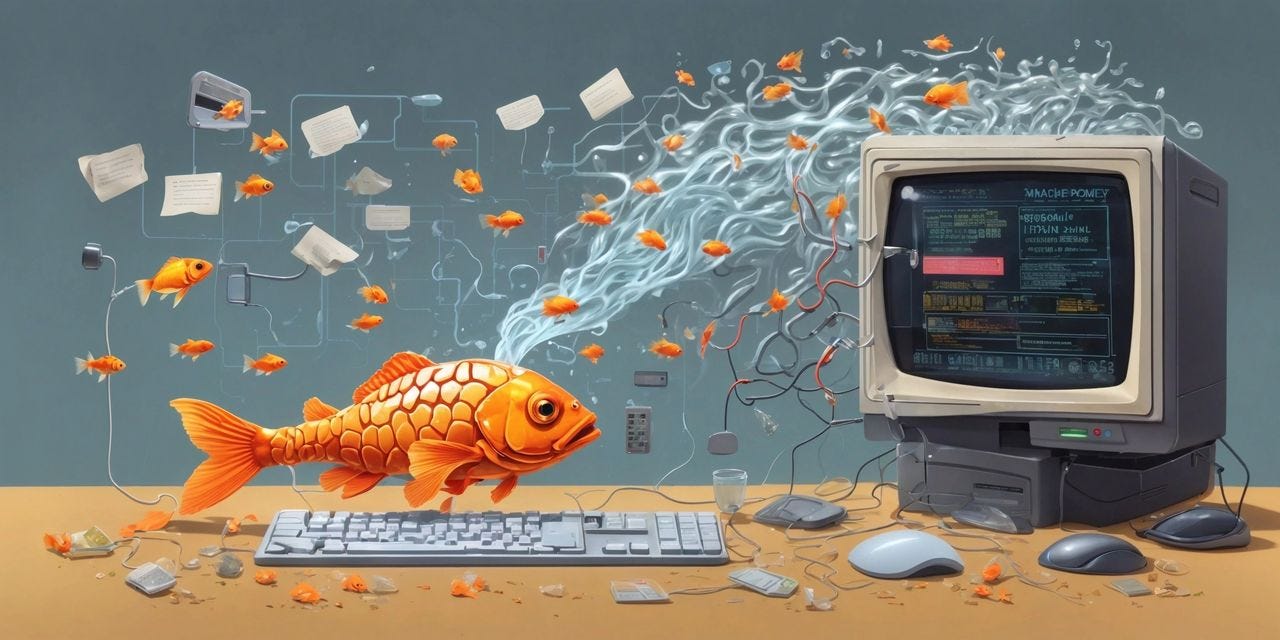
Well, perhaps because our memory bandwidth is roughly equivalent to that of a goldfish watching Netflix on dial-up.
Take schools, for example.
Hallowed halls of wisdom or vast echo chambers of recycled trivia?
We’re taught facts that were agreed upon after what was probably a very civil and not-at-all-biased committee meeting.
Remember, history is written by the victors. And by victors, I mean whoever had the biggest stick or the loudest voice at the time.
Governments? Ah, the grand puppeteers of societal narratives. They expertly craft tales of yore, deciding which historical figure was a hero and which was just having a really bad day.
It's less about truth and more about what they'd like the next generation's bumper stickers to say.
Religious institutions? They've been offering the "final and absolute" versions of truth since before apples were the hottest snack. Each one promising the most authentic hotline to the cosmos, while side-eyeing everyone else's connection.
And let's not even get started on the internet. That digital playground where every opinion is valid, as long as it's loud and retweetable.
Algorithms cater to our every whim, wrapping us in cozy bubbles of "I told you so," while the vast ocean of contradictory facts lurks just one click away.

But here's the twist: Our brains, bless them, can barely keep up. We're inundated with information, yet we can't remember where we left our keys.
We claim to have grasped the vastness of the universe, but ask us what we had for breakfast, and we draw a blank.
It's quite the cosmic joke, really. We’re hell-bent on proving we're right, armed with knowledge vetted by others, all while struggling to fully experience the present moment.
In the grand tapestry of existence, maybe it's time we admit that our understanding of "right" is just a blip, often shaped by whoever shouted last.
And perhaps, just perhaps, we might want to upgrade our mental bandwidth.
After all, it’s a bit embarrassing when our goldfish seems more present than we do.
ChatGPT prompt thread used in creating this piece
For posterity, I've dumped the entire conversation below:
Me:
Write 1,000 words on humanity's insufferable insistence on being, more importantly feeling right. Without the clear knowledge that nothing they know is there without the express consent of those distributing that information. Be it school, or government, church or other institution. Life experience aside, what we know to be true is cleared to exist in our heads by others.
ChatGPT:
Humanity's Relentless Pursuit of Being Right
In the vast theater of human history, there exists a pervasive and almost insatiable need: the desire to be right. At the core of our being, deep within the chambers of our psyche, we are constantly driven to validate our beliefs, to uphold our perceptions, and to champion our truths. This inexorable inclination has fueled countless debates, instigated numerous conflicts, and carved deep divides in societies. But what underlies this fervor? More importantly, how often do we pause and question the very foundation of what we believe to be right?
The mechanisms through which knowledge is acquired, filtered, and disseminated play a pivotal role in shaping our understanding of the world. From the moment we are born, we are inculcated with information, values, and beliefs, often without the opportunity or the tools to critically evaluate them. These sources—be it educational institutions, governments, religious bodies, or other significant entities—wield considerable power over our minds, often with our tacit consent.
Schools, for example, are traditionally seen as sanctuaries of knowledge, entrusted with the noble task of enlightening young minds. Yet, the curriculum they follow, the history they teach, and the perspectives they endorse are products of selective processes, often influenced by political, cultural, or societal biases. What is considered an incontrovertible fact in one textbook might be a contested theory in another. Thus, the very foundation of our knowledge, which we fiercely defend as right, might be built on the shifting sands of interpretation and perspective.
Similarly, governments, in their role as regulators and administrators, have a vested interest in controlling narratives. They determine which parts of history are celebrated, which truths are promoted, and which narratives are suppressed. The information they sanction—whether it's about a nation's history, its achievements, or its policies—shapes public opinion and defines national identity. While not all governmental influence is nefarious, it's crucial to acknowledge the potential for selective dissemination and even manipulation.
Religious institutions, for millennia, have been the custodians of moral and spiritual truths. While they provide solace, guidance, and a sense of community to billions, they too come with their own sets of doctrines, dogmas, and interpretations. What is considered sacrosanct in one faith might be heretical in another. Thus, the very essence of what one believes to be divinely right might be contingent upon the teachings of a particular institution or interpretation.
The digital age, with its information deluge, further complicates this landscape. While the internet promises democratization of knowledge, it is rife with echo chambers, misinformation, and algorithm-driven validations. The very platforms we rely upon for information—social media sites, news outlets, or search engines—are governed by algorithms that often reinforce our existing beliefs, making us more entrenched in our perspectives and more resistant to opposing views.
The crux of the matter is that our understanding of right and wrong, our very belief systems, are not solely products of independent thought and discernment. They are, in large part, shaped by external influences, many of which have their own agendas, biases, and limitations.
This realization should not lead to nihilism or a rejection of all external sources of knowledge. Instead, it should instill a sense of humility and a willingness to question, to seek, and to understand. It should remind us that being right is not an absolute state but a relative one, contingent upon the information we have, the sources we trust, and the lenses through which we view the world.
In our interactions with others, recognizing this inherent limitation can foster empathy, open-mindedness, and a genuine desire for dialogue. Instead of clinging stubbornly to our version of the truth, we can seek to understand the foundations of others' beliefs, acknowledging the myriad influences that shape their perspectives.
In conclusion, while the human desire to be right is deep-seated and often unyielding, it's imperative to recognize the intricate web of influences that shape our beliefs. By doing so, we not only enrich our own understanding but also pave the way for a more inclusive, empathetic, and enlightened society.
Me:
rewrite this so it's dry and sardonically funny with a twist on human's insufficient memory bandwidth to even perceive the present moment fully
ChatGPT:
Humanity's Quirky Obsession with Being Right
Ah, humanity. That curious species that climbed out of the primordial soup only to immediately start arguing about which way was up. Throughout the annals of time (or at least since we learned to scribble on walls), we've been obsessed with this little thing called "being right." Why? Well, perhaps because our memory bandwidth is roughly equivalent to that of a goldfish watching Netflix on dial-up.
Take schools, for example. Hallowed halls of wisdom or vast echo chambers of recycled trivia? We’re taught facts that were agreed upon after what was probably a very civil and not-at-all-biased committee meeting. Remember, history is written by the victors. And by victors, I mean whoever had the biggest stick or the loudest voice at the time.
Governments? Ah, the grand puppeteers of societal narratives. They expertly craft tales of yore, deciding which historical figure was a hero and which was just having a really bad day. It's less about truth and more about what they'd like the next generation's bumper stickers to say.
Religious institutions? They've been offering the "final and absolute" versions of truth since before snake apples were the hottest diet trend. Each one promising the most authentic hotline to the cosmos, while side-eyeing everyone else's connection.
And let's not even get started on the internet. That digital playground where every opinion is valid, as long as it's loud and retweetable. Algorithms cater to our every whim, wrapping us in cozy bubbles of "I told you so," while the vast ocean of contradictory facts lurks just one click away.
But here's the twist: Our brains, bless them, can barely keep up. We're inundated with information, yet we can't remember where we left our keys. We claim to have grasped the vastness of the universe, but ask us what we had for breakfast, and we draw a blank.
It's quite the cosmic joke, really. We’re hell-bent on proving we're right, armed with knowledge vetted by others, all while struggling to fully experience the present moment. It's like trying to read the entire internet with reading glasses that keep fogging up.
In the grand tapestry of existence, maybe it's time we admit that our understanding of "right" is just a blip, often shaped by whoever shouted last. And perhaps, just perhaps, we might want to upgrade our mental bandwidth. After all, it’s a bit embarrassing when our goldfish seems more present than we do.
Me:
Can you create image generation prompts that would encapsulate the core message of this piece?
ChatGPT:
Absolutely! If you're looking to generate images that encapsulate the core message of the re-written sardonically funny piece, here are a few prompts that might guide an AI or a human artist:
Goldfish Streaming: An image of a goldfish holding a tiny remote, watching a vintage TV that's buffering with the iconic 'dial-up' loading symbol. The backdrop? A classroom with historical figures arguing, a government seal, and religious symbols. Maybe throw in a misplaced set of keys on the fishbowl rim.
Bumper Sticker History: A car covered in bumper stickers, each depicting a humorous take on a historical event, with a tagline like "Approved by the loudest voice!" Meanwhile, the driver is squinting at a map, looking lost.
Cosmic Call Center: A busy call center with representatives wearing religious garb, each one holding up a sign saying "Direct Line to the Cosmos!" While in the corner, a customer (representing humanity) is on hold, scratching their head and trying to remember their last order.
Digital Echo Chamber: A person ensconced in a bubble, floating in a vast digital sea. Inside the bubble, there are "like" and "retweet" symbols, and the person is giving a thumbs up. Just outside, there's a barrage of contrasting facts and opinions, but they just bounce off the bubble's surface.
Memory Bandwidth Overload: A humorous depiction of the human brain as an old computer with too many tabs open. The screen displays "Error: Memory Full", while trivial notifications like "What's for breakfast?" pop up. Nearby, a goldfish swims with a focused expression, leaving a trail of clear, uninterrupted water.
These prompts aim to capture the essence of the piece in a visual and humorous manner, emphasizing the quirky take on humanity's obsession with being right and our limited capacity to fully understand or remember.