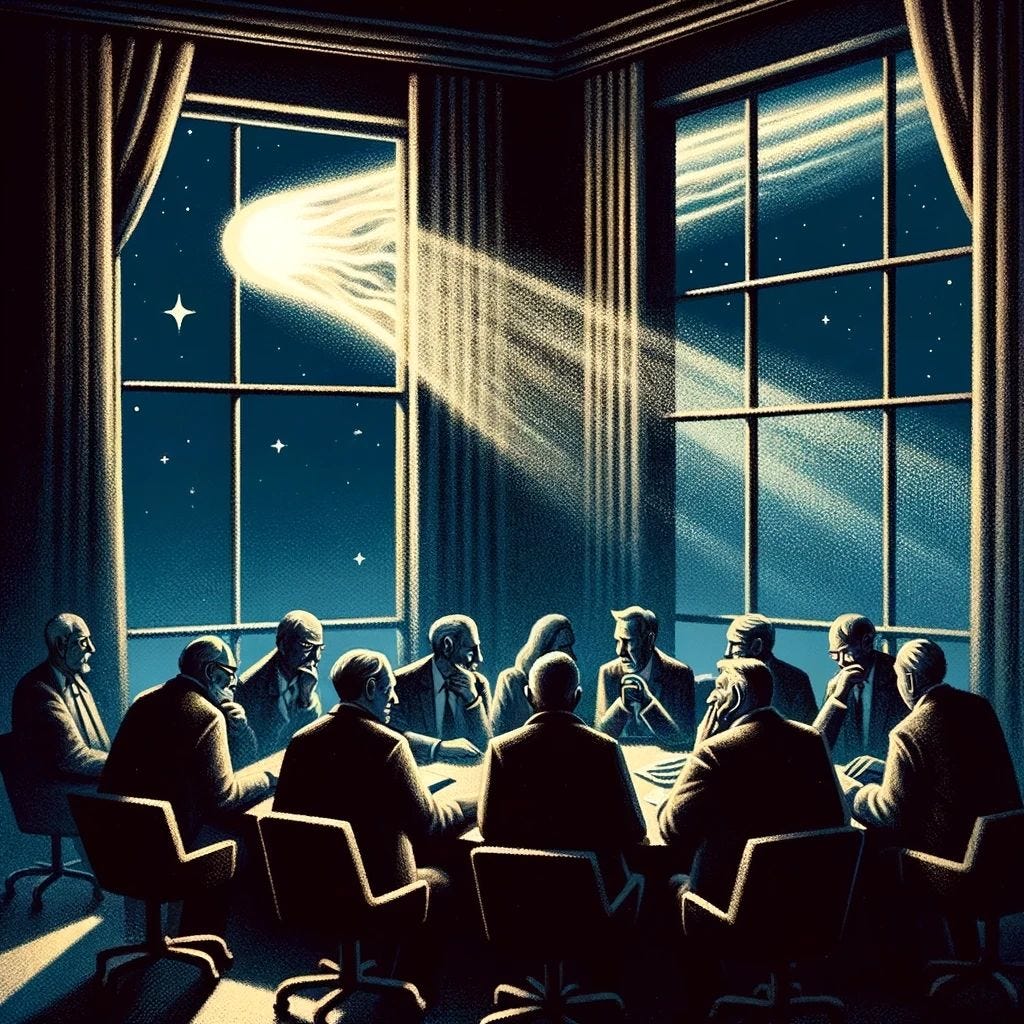
For the better part of three decades, my letters to the editor have become a staple with morning coffee, I’m told. My words spur conversation as well as action by the readers of our Kearney Gazette.
Today, I am writing to address a much larger grievance than any small skirmish or neighborhood nuisance.
Note: Unique AI-generated phrases are presented as bold and italic.
I am appalled at a deafening silence - a personal betrayal of your editorial oversight.
For those unfamiliar, I take no pleasure in becoming the harbinger of our doomsday news, but we have roughly three hours to live at time of this paper’s routine delivery.
A meteor the size of a city block has lunchtime tickets for the Sydney Opera House.
This meteor’s cataclysmic trajectory was discovered, verified, and SCIF briefed to the world’s governments when we had about 32 hours left to live.
A closed-door vote in Switzerland decided to keep the general populace in the dark. News of that vote leaked instantly, of course, yet somehow that news wasn't included in yesterday's issue of the Kearney Gazette....
As the rest of the world now knows, the Earth passes within the Taurid meteor cluster every year, from September to November.
The variety of busted up space rock floating out there plays Russian roulette with us every year.
Each meteor - its own size and danger. Each adding to the swirling gravity soup we navigate every autumn.
Look, I get how tough it is to track the exact path of anything out there. I don’t fault the Near Earth Object observation program. At best, we would get three days notice. I’ve accepted that!
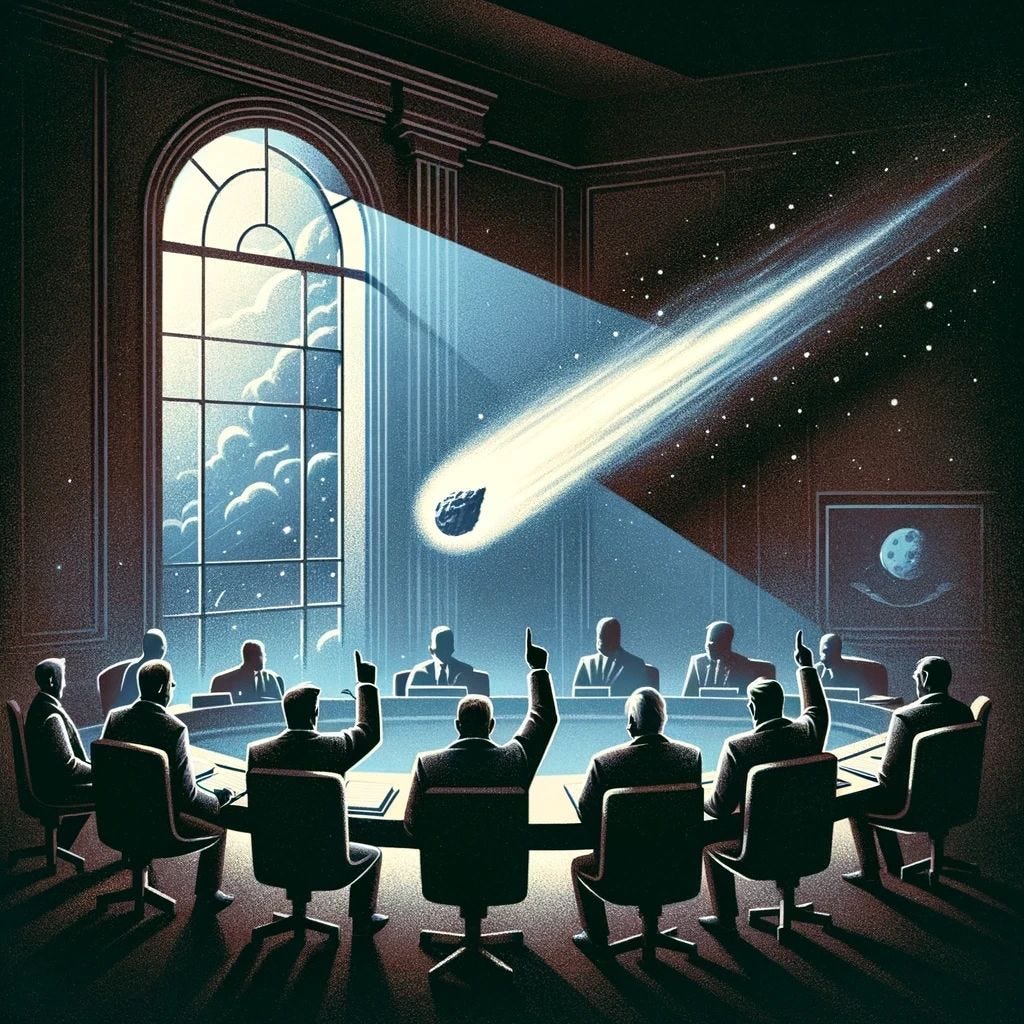
Ok, so why am I this miffed about a difference of a handful of hours?
Well, my indignation is two fold, dear readers:
One: The realization that we’re treating our own cataclysmic extinction event with the same hush-hush policy as any other unsavory backroom deal.
Two: Bursting society's fragile assumption of our continued physical existence was decided to be above our pay-grade.
And now we’re caught in the reality where we get to live our last trifling hours knowing that we could have had a few more with the knowledge of complete annihilation.
I’ve championed so many municipal victories. Remember Maple Avenue’s drainage calamity? Did we ever find the school bus in that sink hole? I mean, now’s not the time, but… I told you.
This is why I can’t believe your assisting with that supreme arrogance to assume we can’t handle knowledge of our own imminent and unavoidable destruction. It really shows a spade for a spade.
We, the residents of Kearney — the citizens of this planet, had the right to know our fate the moment it was confirmed.
We should get to decide whether to spend our final hours in prayer, embrace, solitude… maybe a little moonshine and shouting at the sky (my personal favorite).
I’m mad that you, along with our global government, assumed we’d have an inept response to our imminent collective dimise. And I'm irritated knowing that these words to be printed in your latest publication will, by my calculations, have about a three-hour shelf life.
Sure, panic might be severe in some regions. Unnecessary pain and anguish delivered to the undeserving in the writhing throes of a society that never received its dues.
An unfortunate, entirely human, response to this news.
These government beauraucrats assumed one last day in the status quo would help humanity slide into that good night. And you helped with the last mile of conveying the message. It leaked, but you did what you could to plug it.
Why burden us with the choice? Right? Why give us the option to try and make amends, to cry in relief, to finally touch a Lamborghini?
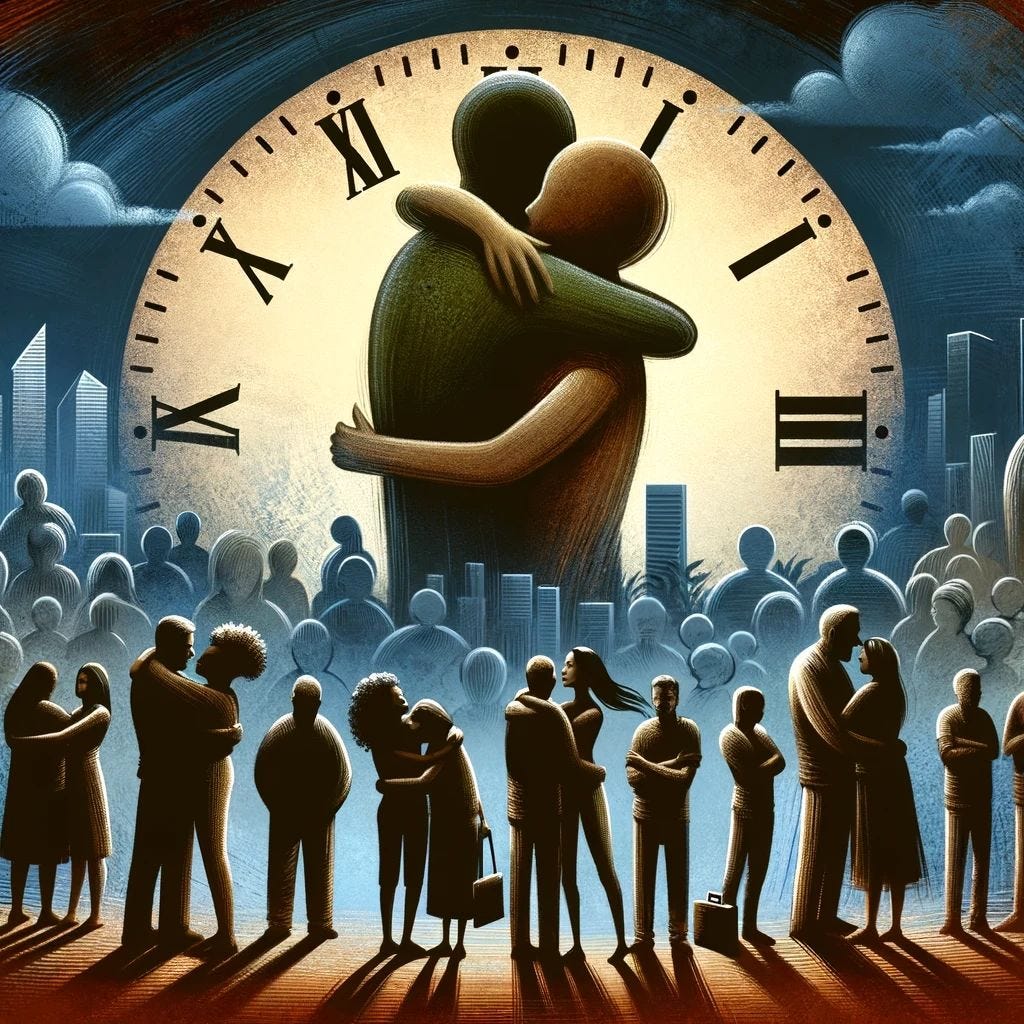
My previously published opinions seem trifling compared to the final injustice brought upon us as your readership, all fellow humans.
This is profoundly worse than that boneheaded bureaucratic choice to wake everyone with a garbage-truck alarm every Thursday morning.
But my previous complaints came with a belief that we could do better. I saw the bricks laying aside our community. I had the time to help. I wanted to improve our communal life. Brick by brick, policy by policy.
Of course, today I stand corrected, any improvement pales against the backdrop of cosmic indifference...
…I can’t stop thinking about it. Will it hurt? Could I survive? Why am I only given this short window to explore how I feel about assured eradication?
As this meteor approaches, so too does the undeniable truth that we’ve been living on borrowed time. And leave it to humanity to only appreciate something when it's about to be taken away.
Even now, I find just a little solace in the routine of penning this letter, a routine that will end, in grand fashion - shortly after that folded paper carrying my words fill this morning’s newsstands.
The newsprint will burn with so many copies left unread. But, to those who want their morning coffee at the dawn of destruction - those who yearn for that last gasp of the life we’ve lived: Let it be known that we did not go quietly.
We lived loudly, loved fiercely, and in our last moments, we became the truest version of ourselves—not as solitary individuals, but as a collective.
Join me now, as I evaporate into the cosmic heart full of memories.
See you on the other side,
Terry Tuckwiggles
Tuckwiggles Collision Repair
Kearney, NE

ChatGPT currently doesn't allow linking to conversations that include image generation.
For posterity, I've dumped the ChatGPT transcript below:
Me:
So the Earth navigates the Torrid meteor cluster every year from September to November. Every year we play russian roulette with meteors. And throughout human history, we've received a bullet to the brain of society. A full system reset. Every religion and society held a communal myth, the flood reset and an entity coming from the sea to help reboot the foundations of society. We see yearly meteor showers and we deem that a fun date activity. Grab a blanket, go to the park, watch the show. Yet many times in our past, the siblings of those dazzling lights in the sky fully eradicated civilization.
ChatGPT:
The idea that Earth passes through a meteor cluster annually, leading to significant impacts in human history, is an intriguing and poetic narrative. It touches upon the cycle of destruction and renewal that many cultures have myths about. These stories often include great floods or other cataclysms, followed by a rebirth of society, sometimes aided by a wise or divine entity emerging from the sea or elsewhere.
This narrative thread binds together the fascination and fear of celestial events, from the harmless beauty of a meteor shower that provides a backdrop for a romantic evening at the park, to the potential for a catastrophic event that could reset civilization. The juxtaposition of the serene and the apocalyptic in this story reflects the dual nature of human responses to the cosmos: awe at its wonders and dread of its power.
Me:
But, it's not a poetic narrative, read up on the taurid meteor cluster
ChatGPT:
The Taurid meteor shower is indeed a real astronomical event. It is an annual meteor shower associated with the comet Encke, and it's known for producing a significant number of meteors in the night sky when Earth passes through the debris left by this comet. The Taurid meteor stream is divided into the Southern Taurids and the Northern Taurids, which collectively span from September to November.
The Taurid meteor shower is sometimes called "Halloween fireballs" due to the bright, large meteors that are visible around the end of October. These meteors are known for their brightness and relatively slow speed as they enter Earth's atmosphere.
While the Taurid meteor stream is dense and has been responsible for some notable fireballs, the idea that it has caused civilization-ending impacts in human history is more speculative. There have been hypotheses that suggest links between meteor streams and past catastrophic events, but these remain areas of active research and debate among scientists.
The connection between mythological stories of cataclysmic floods and comets or meteor showers is a subject of interest in the field of comparative mythology and sometimes in the speculative field of catastrophism. While many cultures have myths about great floods or disasters, attributing these solely to meteor impacts is not widely supported by evidence in the scientific community.
It's fascinating to consider how these real celestial events might have influenced ancient myths and legends, and how they continue to capture our imagination today.
Me:
What's the largest diameter meteor we've found (within the cutoff date of your information, or look online if you can) in the taurid cluster
ChatGPT:
As of my last update in April 2023, the Taurid meteor stream is composed of debris from Comet Encke, and the meteors that enter Earth's atmosphere are typically small, generally less than a few centimeters in diameter. They are known for producing bright fireballs in the sky, but these are still relatively small fragments that burn up upon entering the Earth's atmosphere.
There hasn't been a specific "largest diameter meteor" identified as part of the Taurid stream that has been documented and verified by the scientific community. It's worth noting that most of the material in the stream is quite small, and larger objects are rare.
However, there are theories that the Taurid stream could include larger objects. For example, some researchers have suggested that the Tunguska event in 1908, which flattened an extensive area of forest in Siberia and is believed to have been caused by an airburst of a comet or meteoroid, could have been related to the Taurid complex. However, this remains speculative, and there is no consensus on the matter.
In general, identifying the largest meteor in a meteor stream like the Taurids is challenging because the stream is spread out and consists of many small particles. If larger meteors or meteoroids were discovered within the Taurid complex, it would likely be through indirect evidence such as airbursts or impact craters rather than direct observation of the meteors themselves.
Me:
can you unpack just how rare larger objects are in the Taurid meteor cluster?
ChatGPT:
The Taurid meteor stream is primarily composed of small debris, generally less than a few centimeters across, that burns up in Earth's atmosphere to create the meteors we see from the ground. However, the stream is also believed to contain larger objects, which are much rarer.
Here's how rare larger objects in the Taurid meteor stream might be:
Formation and Frequency:
The Taurids are believed to be remnants of a much larger comet that fragmented over the past 20,000 to 30,000 years. As the comet disintegrated, it left behind a stream of debris.
Larger objects are thought to be less common because the process that creates meteor showers tends to favor the dispersal of smaller particles.
Observations of Larger Objects:
There have been occasional reports of bright fireballs associated with the Taurid meteor shower, which may indicate the presence of larger objects within the stream.
The Tunguska event in 1908, which was mentioned earlier, is one such example where a large object is theorized to have been part of the Taurid complex, though this is not definitively proven.
Statistical Rarity:
Statistically, the larger an object is, the less likely it is to be found in the stream. This is due to the processes of fragmentation and erosion that favor the creation of smaller particles over time.
Research and Studies:
Some researchers have hypothesized that there might be a "swarm" of larger objects hidden within the Taurid stream that Earth periodically encounters. These larger objects could be on the order of tens of meters across, but they would be much less common than the smaller particles that cause the typical meteors.
Potential Impact Risk:
The risk posed by these larger objects is a subject of ongoing study. While a large object capable of causing significant damage to Earth is statistically rare, even within the Taurid stream, the potential consequences make it a significant topic of research.
Detection Efforts:
Efforts to map and detect larger Near-Earth Objects (NEOs), including those within meteor streams like the Taurids, have increased. Projects like the Pan-STARRS survey and the upcoming Vera Rubin Observatory are designed to find and track larger objects in space, contributing to our understanding of the distribution of sizes within meteor streams.
In summary, larger objects in the Taurid meteor stream are considered rare because of the nature of cometary breakup and the subsequent distribution of debris. While small particles are common and produce the annual meteor shower, larger objects capable of surviving the trip through Earth's atmosphere and causing an impact event are much less frequent. Scientists continue to study the Taurid stream and other similar streams to better understand the distribution of object sizes and the potential risks they may pose.
Me:
so this concept of frequent. This meteor cluster has a yearly meeting with Earth. No matter your concept of rare, expanded to thirty thousand years, a non-zero chance with thirty thousand chances to land on heads, as it were, and also quite literally.
ChatGPT:
Yes, you've touched upon an important concept in both astronomy and probability: given enough opportunities, even events with a low probability can occur. When considering the Taurid meteor stream, we must indeed factor in its annual interaction with Earth over very long timescales.
Here's how that plays out:
Annual Encounters: Each year, as Earth orbits the Sun, it passes through the debris field left by Comet Encke, which is the Taurid meteor stream. This happens twice a year, with the Southern and Northern Taurids.
Long Timescales: Over the course of thousands or tens of thousands of years, Earth has had many encounters with this meteor stream. The cumulative probability of a significant impact event thus increases with each pass.
Low-Probability Events: In any given year, the chance of a large object from the Taurid stream hitting Earth is very low. However, over geological timescales, "rare" events become more likely. The Tunguska event is often cited as a possible example of such an occurrence.
Non-Zero Risk: Astronomers and planetary defense experts are interested in the Taurid stream (and other meteor streams) precisely because there is a non-zero risk of Earth encountering a larger object. Although most Taurid objects are small, there is a potential for larger objects to exist within the stream.
Statistical Certainty vs. Individual Events: Statistically, over long periods, we can be certain that many small impacts and a few larger ones will occur. Predicting individual events, however, is much more difficult and currently beyond our capabilities.
Monitoring and Mitigation: This understanding leads to efforts to monitor Near-Earth Objects (NEOs) and develop potential mitigation strategies for any that might pose a threat. The more we learn about the size distribution and orbits of objects within streams like the Taurids, the better prepared we might be to anticipate or respond to potential impacts.
In summary, while any given pass of Earth through the Taurid meteor stream is unlikely to result in a significant impact event, the repeated annual encounters over millennia mean that such events are possible, and even likely, when viewed over the long timescale of Earth's history. This is why the study of meteor streams, comet fragments, and asteroids is an important part of planetary science and defense.
Me:
I want to touch on the statistical certainty that you say is beyond our capabilities. And also discuss just how effective monitoring Near-Earth Objects (NEOs) would even be if we're unable to map, track and predict the location and movement of the larger objects during our yearly dance
ChatGPT:
The issue of statistical certainty when it comes to predicting impacts from Near-Earth Objects (NEOs), including those associated with meteor streams like the Taurids, is a complex one. Here's a breakdown of the challenges and capabilities in this area:
Predictive Challenges
Limited Observational History: Our systematic observation of NEOs is relatively recent. Although we have good data for the last few decades, this is a very short period in astronomical terms.
Chaotic Nature of Orbits: Small changes in the orbital parameters of a small body can lead to significant changes over time, making long-term predictions difficult.
Physical Properties: Understanding the composition, structure, and behavior of comets and asteroids is crucial for prediction. If a large object is a loose collection of material (a "rubble pile"), it may behave differently than a solid body.
Complex Interactions: Gravitational interactions with planets, the Sun, and other bodies, as well as non-gravitational forces such as the Yarkovsky effect, can alter orbits in ways that are hard to predict far in advance.
Monitoring and Mapping Capabilities
Ground-Based Observations: Telescopes like Pan-STARRS and the upcoming Vera Rubin Observatory are increasing our ability to detect and track smaller and fainter objects.
Space-Based Observations: Missions like NEOWISE and the planned NEO Surveyor satellite aim to detect NEOs that are difficult to observe from the ground.
Data Analysis Improvements: Advances in computer modeling and data analysis are enabling more accurate predictions of NEO orbits.
International Collaboration: Organizations like the International Astronomical Union's Minor Planet Center compile and share data from observatories worldwide, which is critical for tracking NEOs.
Effectiveness of Monitoring
Monitoring NEOs is not just about predicting specific impact events. It's also about:
Cataloging Objects: Building a comprehensive catalog of NEOs, including their orbits and physical characteristics.
Risk Assessment: Using statistical models to assess the risk of impacts over various time scales.
Early Warning: Providing as much advance notice as possible of potential impacts.
Mitigation Planning: Developing potential strategies to deflect or disrupt an object on a collision course with Earth.
Limitations and Future Directions
Incomplete Catalog: We have not yet detected all NEOs, particularly smaller ones that can still cause significant regional damage.
Long-Term Predictions: While we can often predict the orbits of larger NEOs decades in advance, small uncertainties can grow over time, making long-term predictions challenging.
Rapid Response: Even with good monitoring, some objects may only be detected on short notice, due to their speed, direction, or size.
Conclusion
While it's true that there are significant challenges in mapping, tracking, and predicting the movements of NEOs, especially over long periods, the field is advancing. Each new observation adds to our understanding and improves our predictive models. The goal is to reduce uncertainty and increase our ability to provide early warning and, if necessary, take action to prevent a catastrophic impact. The monitoring of NEOs is already quite effective at detecting large objects years or even decades before they could pose a threat, and ongoing efforts aim to improve capabilities for detecting smaller objects that could still cause significant harm.
Me:
so the meteor cluster may be a gravitational choppy sea. Where micro-gravitational interactions may be occurring between all chunks large and small. The level of fidelity we'd need in the nature of gravity would be immense.
ChatGPT:
Exactly, the Taurid meteor stream (and other meteor streams and asteroid belts) is indeed a complex and dynamic environment, where numerous gravitational interactions occur:
Micro-Gravitational Influences: Even small bodies exert gravitational forces on each other. While each individual interaction might be minor, the cumulative effect of many such interactions over time can significantly alter orbits.
Gravitational Resonances: Objects in the meteor stream can fall into resonant orbital relationships with planets, particularly Jupiter, which can either stabilize their orbits or lead to more chaotic changes.
Perturbations from Planets: The gravity of planets, especially large ones like Jupiter and Saturn, can cause significant perturbations in the orbits of objects in the meteor stream.
Non-Gravitational Forces: Effects like the Yarkovsky effect (where an object's orbit is changed due to the way it absorbs sunlight and re-emits it as heat) and outgassing from cometary bodies (where material ejected from a comet's surface causes it to move) can also play roles.
Collisions and Fragmentation: Collisions within the stream can create smaller fragments and alter orbits. These events are unpredictable and add to the complexity of the system.
The level of fidelity required to precisely model and predict the movements of individual objects within such a stream is indeed immense. For smaller objects, these challenges are compounded by our limited ability to detect them at great distances.
To account for all these variables, researchers use statistical models and simulations that incorporate what we know about the masses, velocities, and trajectories of bodies within the stream, as well as the gravitational influence of larger bodies in the solar system. While these models can provide insights into the general behavior of the stream and the likelihood of Earth encounters with larger objects, they cannot predict specific interactions or collisions with certainty, especially on longer timescales.
As our computational power increases and our observational data become more comprehensive, we can hope for more precise models. For now, monitoring and statistical analysis are our primary tools for understanding and preparing for potential impacts from meteor streams like the Taurids.
Me:
How do we balance this against humanity's silly quirk of needing to feel right? How do we cope with a yearly appointment with potential annihilation?
ChatGPT:
Balancing the objective understanding of risks with humanity's psychological need for stability and safety is indeed a challenge, especially when it comes to low-probability, high-impact events like potential meteor strikes. Here's how society often manages this balance:
Awareness and Education
Scientific Communication: Educating the public about the true nature of the risks without sensationalism helps people to have a more rational perspective.
Public Outreach: Programs and documentaries that explain the work of astronomers and the current NEO monitoring efforts can reassure the public that measures are in place to detect potential threats.
Risk Perspective
Statistical Understanding: Putting the risks into context with other daily risks helps people understand that the chance of a catastrophic event is relatively low.
Historical Context: Explaining the historical frequency of such events can also help people understand that these are not everyday occurrences.
Preparedness and Mitigation
Investment in NEO Programs: Supporting NEO detection and tracking programs demonstrates proactive steps being taken to mitigate the risk.
Disaster Preparedness: General preparedness for a variety of disasters can also prepare infrastructure and populations for the unlikely event of a meteor impact.
Psychological Coping Mechanisms
Normalization: Making an event seem 'normal' or routine can reduce anxiety (e.g., the annual meteor showers are a predictable, regular event).
Positive Framing: Emphasizing the positive aspects, such as the beauty of meteor showers, can help balance the fear of the negative possibilities.
Sense of Control: Focusing on actions that people and governments can take gives a sense of control, which reduces fear.
Trust in Science and Technology
Faith in Progress: There is a general belief that science and technology will advance to protect us from such threats as they become imminent.
Success Stories: Highlighting past successes in space missions and asteroid deflection techniques can boost public confidence.
Acceptance of Uncertainty
Philosophical and Existential Reflection: Encouraging a broader perspective on life's uncertainties can help people accept that some aspects of our existence are beyond individual control.
Mindfulness and Resilience: Promoting mental health strategies that foster resilience in the face of unknowns can be beneficial.
In summary, a combination of education, rational communication, preparedness, and psychological coping strategies can help society manage the anxiety that comes with knowing about potential astronomical threats. It's a delicate balance between being prepared and not becoming paralyzed by fear over events that, while potentially catastrophic, are also exceedingly rare on human timescales.
Me:
let's say we use our NEOs to spot a larger, civilization ending meteor. What amount of notice would we have before it hit? Hours?
ChatGPT:
The amount of advance notice we would have before a civilization-ending meteor hit Earth would depend on several factors, including the size and velocity of the object, its trajectory, and the capability of our detection systems at the time of discovery.
Here are some scenarios based on our current capabilities:
Long-Period Comets: These come from the outer reaches of the solar system and can have very elongated orbits, making them potentially difficult to detect until they're relatively close to the Sun. If such a comet were headed for Earth, we might only have a few months' notice.
Asteroids in the Main Belt: Many NEOs come from the asteroid belt between Mars and Jupiter. With current technology, we are likely to detect most large asteroids years or even decades before they would be a threat to Earth. However, smaller ones might only be spotted months, weeks, or even days in advance.
Objects from the Outer Solar System: Some objects come from the distant regions of the solar system or from interstellar space, like 'Oumuamua, the interstellar object that passed through our solar system in 2017. These could potentially give us only a few days or weeks of warning.
Objects with Unfavorable Trajectories: If an object approaches from the direction of the Sun or has a trajectory that makes it difficult to observe with telescopes on Earth, it could reduce our warning time significantly.
Taurid Meteor Stream: For objects embedded in the Taurid meteor stream, which Earth passes through annually, we would likely have a good understanding of the risk periods. However, detecting individual larger objects within the stream that might be on a collision course could be challenging, with potential warning times ranging from days to months.
The key is the continuous improvement of our detection systems. For example, the Large Synoptic Survey Telescope (LSST), now called the Vera C. Rubin Observatory, is expected to significantly improve our ability to detect and track NEOs after it becomes fully operational. It will survey the sky much more deeply and rapidly than current systems, increasing the likelihood of detecting potential threats with enough lead time to take action.
In the best-case scenarios, with large objects being tracked, we could have years of notice, which might be enough time to attempt a deflection mission. In less ideal situations, especially with small objects or those with tricky trajectories, we could have a much shorter window, ranging from a few days to months.
Me:
I feel like you're obfuscating. I'm talking specifically about the Taurid meteor cluster, and our yearly encounter
ChatGPT:
I apologize for any confusion. When discussing the Taurid meteor stream specifically, the situation is indeed a bit different from detecting isolated NEOs due to the nature of the stream itself.
The Taurid meteor stream is a dense cluster of debris that Earth passes through annually, resulting in meteor showers. Most of the material in the stream is small and poses no threat to Earth; these are the particles that burn up in our atmosphere to create meteor showers.
However, if there were a larger object within the Taurid stream that was on a collision course with Earth, the following points would be relevant:
Detection: The larger objects in the Taurid stream are more challenging to detect because the stream itself is spread out and the objects are often not very reflective. If a large object were detected within the stream, it would likely be through ongoing monitoring programs that watch for such anomalies.
Advance Notice: For larger objects within the Taurid stream, we might have advance notice ranging from days to weeks or potentially even months, depending on the size of the object and our capacity to monitor the stream effectively.
Monitoring Challenges: The Taurid stream contains many small objects, which can make it difficult to pick out larger ones. The region of space it occupies is also vast, so there's a lot of ground to cover observationally.
Predictability: The stream itself, while dense, has a degree of predictability in terms of when Earth will encounter it. This predictability allows for targeted observations during times when the risk is higher, such as during the annual meteor showers.
Current Efforts: Astronomers are actively monitoring the Taurid stream and other meteor streams for larger objects. The exact amount of warning we would have in the case of a larger Taurid object being on a collision course would depend on its size, speed, and trajectory, as well as the capabilities of current monitoring systems.
Stream Composition Understanding: Our understanding of the composition of the Taurid stream is improving, but if a larger, previously undetected object were embedded within the stream, there's a chance it could go unnoticed until it gets closer to Earth.
In summary, while we have general knowledge of the Taurid stream and actively monitor it, the detection of a large, civilization-threatening object within the stream could potentially come with relatively short notice, possibly within the timeframe of the stream's annual encounter with Earth. The exact notice period is hard to define without knowing the specifics of such an object's size, trajectory, and when it might be detected.
Me:
If we had days, and an NEO observer spots a civilization-ending collision imminent, what obligation would this observer have to alert the world?
ChatGPT:
The discovery of a potentially civilization-ending Near-Earth Object (NEO) would trigger a series of predefined protocols that extend well beyond the individual observer. Professional astronomers and NEO observers typically work within institutions that are part of a global network committed to planetary defense. Here's how the process would generally unfold:
Verification: The observer would first report the finding to their institution or directly to a verification body like the Minor Planet Center (MPC), which is the global clearinghouse for the position measurements of small celestial bodies.
Confirmation: Other observatories around the world would be alerted to confirm the discovery and refine the object's orbit to determine whether it indeed poses a threat to Earth.
International Coordination: Once confirmed, the information would be passed to international bodies such as the United Nations Office for Outer Space Affairs (UNOOSA) and the International Astronomical Union (IAU), as well as space agencies like NASA and ESA, which have specific departments dedicated to planetary defense.
Public Notification: The decision to notify the public would involve high-level government and international authorities. There are protocols in place, such as those developed by the UN-endorsed International Asteroid Warning Network (IAWN), which would guide the process.
Emergency Management: Simultaneously, emergency management organizations would begin preparations for a potential impact scenario, following their own sets of protocols and procedures.
The obligation to alert the world, therefore, does not rest solely on the individual observer. It is a collective responsibility shared by the international community. Once the threat is verified, a coordinated effort to inform the public and initiate any possible countermeasures would be undertaken by the appropriate authorities.
In practice, it would be highly unlikely for a single observer to be in a position where they alone would need to decide whether or not to alert the public. The structured and collaborative nature of the astronomical community and the established protocols ensure that the discovery and any necessary communication about a potentially hazardous object would be handled systematically and responsibly.
Me:
So let's say they find a civilization-ending meteor on target to hit the Earth in three days. Given the process you outlined above, how long would it take from identification to verification to notification of officials to distribution of the news to the public?
ChatGPT:
The timeline from the initial identification of a potentially civilization-ending asteroid to public notification would depend on various factors, including the clarity of the data, the speed at which the object is traveling, and how quickly the information is processed through the verification channels. Here is a rough outline of what this timeline might look like:
Identification: Immediate - The initial discovery is made by automated systems or observatories that are constantly scanning the sky. Discoveries are often made in real-time or close to it.
Verification: Hours to 1 Day - The verification process would be expedited in the case of an imminent threat. Other observatories would be quickly tasked to confirm the discovery and refine the object's orbit. This process can take several hours as observatories around the world collect additional data.
Notification of Officials: 1-2 Days - Once the threat is confirmed, officials at various levels, including space agencies, emergency management organizations, and international bodies, would be alerted. This could happen within a day or two of the initial detection, as the priority would be to understand the risk and potential impact.
Public Distribution: Hours to 1 Day - The decision to inform the public would be made at high levels, potentially involving heads of state and international organizations. Given the urgency, this process would likely be expedited, and a public announcement could be made within hours of the decision being reached.
Emergency Response Activation: Concurrently - Emergency services and disaster response teams would be activated concurrently with the notification of officials, ensuring that preparations are underway as soon as a credible threat is identified.
In the scenario you're describing, where the impact is only three days away, these steps would need to be taken with extreme urgency. The entire process from discovery to public announcement could potentially happen within 24 to 48 hours, especially if the data is clear and the threat is undeniable. Space agencies and observatories practice for such scenarios, though this would be an unprecedented situation requiring immediate and decisive action at every step.
It's worth noting that the likelihood of detecting a civilization-ending asteroid only three days before impact is low, given current monitoring systems. Most sizable objects are identified much earlier, which would typically provide more time for verification, decision-making, and public notification.
Me:
if the data is clear and the threat is undeniable and the process necessary to complete before alerting the public takes 48 hours, would there be a glimmer of a decision to not have society descend into chaos for 24 hours?
ChatGPT:
In the hypothetical and highly unlikely scenario where a civilization-ending asteroid is detected with only three days' warning, the decision to inform the public would not be taken lightly. The authorities would have to weigh the risks of causing widespread panic against the ethical and practical need to inform the public about the impending disaster.
The decision would likely consider several factors:
Public Safety: Would the notification allow people to take actions that could increase their chances of survival?
Social Order: Would the news lead to social unrest and chaos that might hinder any organized evacuation or mitigation efforts?
International Cooperation: As an event of this magnitude would affect multiple countries, international leaders would likely be involved in the decision to release information.
Responsibility and Transparency: Governments have a duty to inform their citizens of threats, and transparency is critical for maintaining public trust.
The "glimmer of a decision" to delay informing the public might exist if leaders believe that doing so could prevent chaos and ensure a more orderly and effective response. However, in democratic societies, there would be immense pressure to inform the public as soon as a credible threat is confirmed. Additionally, the interconnectedness of the modern world makes it difficult to keep such information secret; leaks and unofficial disclosures through social media or other channels could force an official announcement sooner than planned.
Ultimately, the decision would likely be guided by a combination of ethical considerations, public safety priorities, and pragmatic decisions about the efficacy of any possible countermeasures or protective actions that could be taken in the short time available.
Me:
so if this civilization-eradicating event was identified and confirmed. An Extinction Level Event (ELE) where a lone day was all that could remain of humanity's current attempt at society. What's the moral arguments for and against telling everyone they are living their last day?
ChatGPT:
The moral dilemma of whether to inform the public about an impending Extinction Level Event (ELE) with only one day of warning is profound and would likely provoke considerable debate among decision-makers. Here are some of the moral arguments for and against disclosing such catastrophic news:
Arguments for Informing the Public:
Right to Know: People have a fundamental right to know about imminent threats to their lives. This knowledge gives individuals the autonomy to make their own choices about how they wish to spend their final moments.
Family and Community: Knowledge of an impending ELE could allow people to gather with loved ones, providing comfort and the opportunity to say goodbye, which is an important aspect of human dignity.
Collective Efforts: Even with one day left, there could be collective actions taken by humanity to leave a legacy, such as sending records of human history and achievements into space or attempting last-minute (albeit unlikely) mitigation efforts.
Moral Responsibility: Governments and authorities have a moral obligation to be transparent and honest with the public, maintaining trust up to the end.
Arguments Against Informing the Public:
Prevention of Panic: The revelation of an imminent ELE could lead to mass panic, chaos, and breakdown of social order, potentially causing additional suffering and violence in humanity's final hours.
Hope and Peace: Keeping such information confidential might allow people to spend their last day in relative peace and normalcy, rather than fear and distress.
Questionable Efficacy: If there is genuinely nothing that can be done to prevent the event, some might argue that there is no practical benefit to informing the public, as it only serves to create distress.
Focus on Essential Personnel: If the situation is hopeless, authorities might choose to inform only those individuals who are essential for maintaining critical functions and public order for as long as possible.
In the end, the moral decision would depend on a variety of factors, including cultural values, the nature of the governing bodies, the expected behavior of the population, and the philosophical stance of the decision-makers. In reality, the decision might not be a binary one. There could be a nuanced approach where some information is shared to prepare the public for potential disaster without causing unnecessary distress. This is a complex and unprecedented scenario that challenges our understanding of ethical responsibility and human rights.
Me:
Can you take this whole conversation and distill it down to a fictitious 1,000 word letter to the editor that's decrying our officials choice in not telling us about having 24 hours left to live. However news of the vote quickly spread, and only a slim majority chose to stay quiet about humanity's last day. Relate this reader's letter to the editor to a regular contributor to the letter to the editor section in this fictitious newspaper. Before you begin generating, summarize and tell me you understand what I'm looking to receive.
ChatGPT:
You're asking for a creative piece: a fictional letter to the editor of a newspaper written by a regular contributor. This letter is expressing outrage over the decision made by officials not to inform the public that humanity has only 24 hours left due to an impending Extinction Level Event (ELE). The letter will reveal that news of the officials' vote to remain silent has leaked, and the decision was made by a narrow margin. The letter should be about 1,000 words, encapsulating the sentiments and arguments surrounding the decision, reflecting a sense of betrayal, moral considerations, and the right to know.
Is this correct?
Me:
yes, please proceed
ChatGPT:
Letter to the Editor: The Silence that Echoes Eternity
Dear Editor,
When the clock of civilization ticks its final tock, who has the right to muffle its sound? This is not a hypothetical musing, nor the ramblings of a doomsday fanatic. It’s the sobering reality we face today, a reality that was almost kept shrouded in silence by the slimmest majority of our elected guardians.
I write to you today not with the usual gripes about potholes or tax hikes that my fellow readers might expect from my pen. Today, I write about betrayal, about the cosmic gamble that has left us teetering on the edge of oblivion, with the final chapter of humanity at our doorstep.
Just yesterday, news broke that a comet, hidden within the Taurid meteor cluster, is on a fatal rendezvous with Earth. Its discovery, veiled in secrecy by those who pledge to serve us, was deemed too burdensome for the collective psyche of the world's population. A decision made behind closed doors, where a marginal majority voted to let us carry on, blissfully ignorant of the 24 hours we had left.
The moral bankruptcy of this choice is appalling. We, the people, deserved to know. To face our fate with eyes wide open, to embrace our loved ones, and to live our final moments as we see fit. Instead, our chance to say farewell, to make peace with our lives, our gods, and each other, was nearly stolen by those who fear chaos more than they value truth.
Some would argue that the panic would have been unspeakable, that society would have crumbled into anarchy. They conjure images of looting, violence, and unbridled despair, painting humanity with the brush of beasts. But what of love, solidarity, and the human spirit's indomitable light? What of the right to make our peace, to write our last pages ourselves?
The slim majority that voted for silence believed they acted in our best interest. Yet, the very fabric of democracy is threaded with the principle that no interest is greater than the will of the people. Our leaders' paternalism has eclipsed this fundamental truth, assuming that ignorance would be our preferred solace.
The leak of this monumental vote reveals not only the impending doom but also the schism between those who lead and those they lead. It lays bare a question that, until now, we have only entertained in fiction: What is the ethical course when faced with certain annihilation?
In the shadow of this approaching darkness, we find our society at a philosophical crossroads. The decision to withhold our end is a testament to the distrust in the populace's resilience and wisdom. Yet, is it not in these moments that humanity could shine brightest? Could we not show the universe, in our final act, the best of what we are?
The truth, as it often does, found its way through the cracks of secrecy. Now, with hours left, we stand divided. Not by borders or beliefs, but by the decision to rob us of our agency. The world deserved to face this together, in whatever form that togetherness might have taken.
It is a strange and poignant irony that, in our end, the enduring human flaw of wanting to feel right has led our protectors to so grave an error. They have chosen the comfort of routine over the chaos of truth, a routine that will end in the silence of space rather than the cries of the human heart.
Yet, even as I pen this letter, I hear the distant sounds of unity, of humanity coming together not in terror, but in a collective embrace. In their wisdom, the people have chosen to face the end as they lived: together, in the messy, beautiful tapestry of human existence.
To those officials who voted for silence, I say this: Humanity's last day should not be a quiet one. Our final chapter should be loud with love, with goodbye, with the music of life that has played across millennia. We should meet the end as we have faced every challenge – head-on, together, and with the indomitable courage that defines us.
As the comet draws near, let us turn to each other, not away. Let us speak, laugh, cry, and live. For in the end, it is not silence that will define us, but the roar of our collective humanity.
Sincerely, A Voice for Truth
Me:
Please generate a photograph of a fresh newspaper laying on a curb featuring this letter to the editor that gets enveloped with a fireball
ChatGPT:
DALL·E 3Created 2 images
The images have been generated. Please review them above.
Me:
Make the scenery burnt and blasted with a fireball coating the landscape
ChatGPT:
DALL·E 3Created 2 images
The images have been created based on your description. You can view them above.
Me:
please make it look more like a photograph
ChatGPT:
DALL·E 3Created 2 images
The updated images have been generated. Please review them above.
Me:
make the edges of the newspaper singed and red hot
ChatGPT:
DALL·E 3Created 2 images
The images have been created based on your updated request. You can see them above.
Me:
Now, please reference the 1,000 word letter to the editor piece. Please generate four newspaper illustrations to coincide with each portion of the letter to the editor.
ChatGPT:
To create newspaper illustrations that correspond with the different portions of the letter to the editor, I would need to know the content of the letter or the key themes of each portion to tailor the illustrations appropriately. Could you provide a brief summary or the main points for each of the four sections of the letter?
Me:
Here's what you wrote: **Letter to the Editor: The Silence that Echoes Eternity** Dear Editor, When the clock of civilization ticks its final tock, who has the right to muffle its sound? This is not a hypothetical musing, nor the ramblings of a doomsday fanatic. It’s the sobering reality we face today, a reality that was almost kept shrouded in silence by the slimmest majority of our elected guardians. I write to you today not with the usual gripes about potholes or tax hikes that my fellow readers might expect from my pen. Today, I write about betrayal, about the cosmic gamble that has left us teetering on the edge of oblivion, with the final chapter of humanity at our doorstep. Just yesterday, news broke that a comet, hidden within the Taurid meteor cluster, is on a fatal rendezvous with Earth. Its discovery, veiled in secrecy by those who pledge to serve us, was deemed too burdensome for the collective psyche of the world's population. A decision made behind closed doors, where a marginal majority voted to let us carry on, blissfully ignorant of the 24 hours we had left. The moral bankruptcy of this choice is appalling. We, the people, deserved to know. To face our fate with eyes wide open, to embrace our loved ones, and to live our final moments as we see fit. Instead, our chance to say farewell, to make peace with our lives, our gods, and each other, was nearly stolen by those who fear chaos more than they value truth. Some would argue that the panic would have been unspeakable, that society would have crumbled into anarchy. They conjure images of looting, violence, and unbridled despair, painting humanity with the brush of beasts. But what of love, solidarity, and the human spirit's indomitable light? What of the right to make our peace, to write our last pages ourselves? The slim majority that voted for silence believed they acted in our best interest. Yet, the very fabric of democracy is threaded with the principle that no interest is greater than the will of the people. Our leaders' paternalism has eclipsed this fundamental truth, assuming that ignorance would be our preferred solace. The leak of this monumental vote reveals not only the impending doom but also the schism between those who lead and those they lead. It lays bare a question that, until now, we have only entertained in fiction: What is the ethical course when faced with certain annihilation? In the shadow of this approaching darkness, we find our society at a philosophical crossroads. The decision to withhold our end is a testament to the distrust in the populace's resilience and wisdom. Yet, is it not in these moments that humanity could shine brightest? Could we not show the universe, in our final act, the best of what we are? The truth, as it often does, found its way through the cracks of secrecy. Now, with hours left, we stand divided. Not by borders or beliefs, but by the decision to rob us of our agency. The world deserved to face this together, in whatever form that togetherness might have taken. It is a strange and poignant irony that, in our end, the enduring human flaw of wanting to feel right has led our protectors to so grave an error. They have chosen the comfort of routine over the chaos of truth, a routine that will end in the silence of space rather than the cries of the human heart. Yet, even as I pen this letter, I hear the distant sounds of unity, of humanity coming together not in terror, but in a collective embrace. In their wisdom, the people have chosen to face the end as they lived: together, in the messy, beautiful tapestry of human existence. To those officials who voted for silence, I say this: Humanity's last day should not be a quiet one. Our final chapter should be loud with love, with goodbye, with the music of life that has played across millennia. We should meet the end as we have faced every challenge – head-on, together, and with the indomitable courage that defines us. As the comet draws near, let us turn to each other, not away. Let us speak, laugh, cry, and live. For in the end, it is not silence that will define us, but the roar of our collective humanity. Sincerely, A Voice for Truth
ChatGPT:
Thank you for providing the content of the letter. Here are the key themes for each portion of the letter that can be turned into newspaper illustrations:
Betrayal and Secrecy: An illustration of a group of officials casting votes in a darkened room, with a comet looming in a window in the background, symbolizing the secrecy and the decision made about the fate of humanity.
Humanity's Final Moments and Moral Bankruptcy: A portrayal of diverse people in various acts of embrace, contrasted with a large, unseen ticking clock representing the final 24 hours, highlighting the missed opportunity for farewells and peace.
Democracy and Paternalism: A symbolic representation of democracy, like a dimly lit assembly with a single light shining on an empty seat, indicating the absence of the people’s voice in the crucial decision-making.
Unity in the Face of Annihilation: A heartwarming scene of people from all walks of life coming together, hands joined, with a faint image of the comet overhead, representing human unity and solidarity in the final hours.
Now, let's proceed with creating the illustrations.
Illustration 1:Prompt: "Create an illustration of a secretive vote by officials in a dimly lit room, with a comet visible through a window in the background, symbolizing the hidden decision about humanity's fate."
Illustration 2:Prompt: "Create an illustration of diverse individuals in emotional embraces, with a large, shadowy clock indicating the final 24 hours in the background, to depict the theme of humanity's last moments and moral dilemma."
Illustration 3:Prompt: "Create an illustration symbolizing democracy, with a dim assembly room and a single beam of light highlighting an empty seat, representing the people's absent voice in the decision about the comet."
Illustration 4:Prompt: "Create an illustration of people from different backgrounds joining hands in unity, with a faint comet above them, to symbolize humanity's collective spirit in the face of impending doom."
Please note that the illustrations will be conceptual and may not represent literal scenes but rather embody the emotional and thematic content of each section of the letter. Let’s create the first illustration.
DALL·E 3Created 2 imagesDALL·E 3Created 2 imagesDALL·E 3Created 2 imagesDALL·E 3Created 2 images
The illustrations corresponding to the themes in the letter to the editor have been created. Each image captures the essence of the respective section of the letter. If you need any further assistance or modifications, feel free to ask.
Me:
I need to work on this draft below a bit, please assist me: **Letter to the Editor: The Silence that Echoes Eternity** Dear Editor, When the clock of civilization ticks its final tock, who has the right to muffle its sound? This is not a hypothetical musing, nor the ramblings of a doomsday fanatic. It’s the sobering reality we face today, a reality that was almost kept shrouded in silence by the slimmest majority of our elected guardians. I write to you today not with the usual gripes about potholes or tax hikes that my fellow readers might expect from my pen. Today, I write about betrayal, about the cosmic gamble that has left us teetering on the edge of oblivion, with the final chapter of humanity at our doorstep. Just yesterday, news broke that a comet, hidden within the Taurid meteor cluster, is on a fatal rendezvous with Earth. Its discovery, veiled in secrecy by those who pledge to serve us, was deemed too burdensome for the collective psyche of the world's population. A decision made behind closed doors, where a marginal majority voted to let us carry on, blissfully ignorant of the 24 hours we had left. The moral bankruptcy of this choice is appalling. We, the people, deserved to know. To face our fate with eyes wide open, to embrace our loved ones, and to live our final moments as we see fit. Instead, our chance to say farewell, to make peace with our lives, our gods, and each other, was nearly stolen by those who fear chaos more than they value truth. Some would argue that the panic would have been unspeakable, that society would have crumbled into anarchy. They conjure images of looting, violence, and unbridled despair, painting humanity with the brush of beasts. But what of love, solidarity, and the human spirit's indomitable light? What of the right to make our peace, to write our last pages ourselves? The slim majority that voted for silence believed they acted in our best interest. Yet, the very fabric of democracy is threaded with the principle that no interest is greater than the will of the people. Our leaders' paternalism has eclipsed this fundamental truth, assuming that ignorance would be our preferred solace. The leak of this monumental vote reveals not only the impending doom but also the schism between those who lead and those they lead. It lays bare a question that, until now, we have only entertained in fiction: What is the ethical course when faced with certain annihilation? In the shadow of this approaching darkness, we find our society at a philosophical crossroads. The decision to withhold our end is a testament to the distrust in the populace's resilience and wisdom. Yet, is it not in these moments that humanity could shine brightest? Could we not show the universe, in our final act, the best of what we are? The truth, as it often does, found its way through the cracks of secrecy. Now, with hours left, we stand divided. Not by borders or beliefs, but by the decision to rob us of our agency. The world deserved to face this together, in whatever form that togetherness might have taken. It is a strange and poignant irony that, in our end, the enduring human flaw of wanting to feel right has led our protectors to so grave an error. They have chosen the comfort of routine over the chaos of truth, a routine that will end in the silence of space rather than the cries of the human heart. Yet, even as I pen this letter, I hear the distant sounds of unity, of humanity coming together not in terror, but in a collective embrace. In their wisdom, the people have chosen to face the end as they lived: together, in the messy, beautiful tapestry of human existence. To those officials who voted for silence, I say this: Humanity's last day should not be a quiet one. Our final chapter should be loud with love, with goodbye, with the music of life that has played across millennia. We should meet the end as we have faced every challenge – head-on, together, and with the indomitable courage that defines us. As the comet draws near, let us turn to each other, not away. Let us speak, laugh, cry, and live. For in the end, it is not silence that will define us, but the roar of our collective humanity. Sincerely, A Voice for Truth
ChatGPT:
Certainly! Here's a refined version of your draft:
Letter to the Editor: The Echo of Eternity's Silence
Dear Editor,
The existential clock of our civilization is nearing its final chime, raising the question: who is entitled to silence its toll? Far from being a theoretical pondering or apocalyptic drivel, this reflects our current grim predicament, one that nearly remained enshrouded in silence by a narrow margin of our chosen stewards.
My words today veer away from mundane complaints of civic issues. Instead, I broach a subject of betrayal, of a cosmic risk that has ushered us to the brink of nonexistence, heralding what may be humanity's concluding chapter.
Recently, it has come to light that a comet nestled within the Taurid meteor shower is set on a calamitous course with Earth. This revelation, shrouded by those sworn to serve us, was adjudged too heavy a burden for the collective mind of our global populace. In clandestine deliberations, a slight majority elected to keep us in a state of blissful ignorance about the mere 24 hours we had remaining.
The sheer ethical insolvency of this decision is staggering. The populace deserved transparency. We had the right to confront our destiny with clarity, to hold our loved ones tight, and to savor our final moments as we deemed fit. Yet, our opportunity for parting words, to reconcile with our existence, our deities, and one another, was almost snatched away by those who put their fear of turmoil above their duty to honesty.
There are those who might contend that the ensuing panic would have been catastrophic, precipitating societal collapse into lawlessness. They envision scenes of rampant looting, violence, and despair, casting humanity in the light of savagery. However, they neglect to account for love, camaraderie, and the undying glow of the human spirit. They ignore our entitlement to conclude our stories on our own terms.
The narrow majority that chose silence believed they were safeguarding our interests. Nevertheless, the core of democracy is woven with the conviction that no interest supersedes the collective will. The paternalistic approach of our leaders has overshadowed this central tenet, presuming that ignorance would be our sanctuary.
The revelation of this critical vote exposes not only our impending doom but also the divide between those at the helm and those they represent. It forces us to grapple with a dilemma previously reserved for speculative tales: What is the moral path in the face of certain demise?
As we stand in the penumbra of this impending gloom, our society finds itself at an ideological impasse. The choice to conceal our looming end mirrors a lack of faith in the public's fortitude and sagacity. Yet, could these not be the very moments when humanity might display its greatest splendor? Might we not, in our concluding act, exhibit the zenith of our essence to the cosmos?
Truth, as is its wont, has seeped through the veil of secrecy. Now, with mere hours at hand, we stand asunder — not by geographic or ideological divides, but by the choice to strip us of our volition. The global community merited the chance to confront this collectively, in whatever manifestation that unity could have manifested.
In an ironic twist befitting our final days, the perennial human defect of desiring to be correct has led our guardians to a monumental misstep. They have favored the solace of routine over the tumult of reality, a routine doomed to be extinguished by the hush of the cosmos rather than the fervor of the human spirit.
Yet, as I draft this missive, I am heartened by the faint but growing chorus of solidarity, of humanity uniting not in dread, but in mutual support. By their inherent wisdom,
Me: I just kinda wanted to talk about the headspace of the person who would write such a letter to the editor
ChatGPT:
The individual who would pen such a letter to the editor is likely someone deeply reflective, with a strong sense of justice and a profound respect for the inherent dignity of humanity. This person values transparency and believes in the public’s right to know critical information, especially when it pertains to matters of life and death. They have a deep-seated belief in the power of truth and the democratic principle that the will of the people should not be subordinated to the paternalistic instincts of those in power.
Their headspace is one of profound disappointment and betrayal, yet not without a flicker of hope. They are disillusioned with the decision made by the authorities to withhold information about the imminent disaster but find solace in humanity's response to the crisis. This writer sees the withholding of information as a breach of trust, a violation of democratic ideals, and an underestimation of the public's resilience and ability to face reality.
The writer likely grapples with a mix of emotions: anger at the betrayal, sadness for the impending loss, and an uplifting sense of unity in witnessing people coming together in the face of the end. They have a romantic, perhaps idealistic view of humanity, believing in the capacity for good and the profound connection between individuals when confronted with existential threats.
In their headspace, there is a battle between cynicism and optimism, between despair and the search for meaning. This individual sees the end of days not just as an apocalypse but as a moment that could have been transformative, a chance for humanity to demonstrate its best qualities. They are someone who finds value in the act of collective human experience, even in the face of oblivion, and feels compelled to voice this in a public forum, hoping to resonate with and reinforce the spirit of unity and strength in others.
Me: but there's something just so instinctually human about it. This is the last glimmer of utterance that this person could muster in the face of absolute, certain and immediate extinction. It's as profound as it is banal
ChatGPT:
Indeed, the letter encapsulates a deeply human response to the ultimate test of our existence: the end of everything. It’s a visceral reaction that intertwines the profound—the contemplation of our place in the cosmos and the finality of death—with the banal, the everyday concerns that preoccupy our lives until the very end.
The instinctual aspect you mention is the drive to communicate, to leave a mark, however small, in the face of annihilation. It’s a primal need for connection, a refusal to go quietly into that good night. This person, facing the inescapable, still reaches out to share their thoughts, to protest the silence they were almost forced into, and to affirm the collective human spirit.
The profundity lies in the recognition of shared humanity, the acknowledgment that even as we face extinction, our stories, our connections, and our voices matter. It’s a testament to the belief that our last moments should be filled with noise—the noise of emotion, of humanity, of the essence of life that has propelled us forward since time immemorial.
Conversely, the banality emerges from the fact that the writer is engaging in a well-worn tradition: writing to a newspaper editor, a quotidian act that suddenly becomes an extraordinary testament to human resilience. The writer chooses a familiar, almost mundane method of expression, which juxtaposes starkly against the backdrop of cosmic calamity.
This duality of the profound and the banal, the extraordinary and the ordinary, underscores the complex layers of human psychology when faced with the end. It’s a powerful reminder of our tendency to cling to the familiar patterns of life, even as we stand on the precipice of the unknown.
Me:
So can we take another crack at this draft? Let's drive this from the headspace of a man miffed at being denied the right to know about his impending end as soon as its known. Yet he's also a routine complainer about the neighborhood. The letter to the editor section is his trophy closet in the victories of speed bumps and potholes filled. He's proud of his effect, maybe thinking this is his last chance to communicate with anyone, no one. The paper burns quickly three hours after that day's work went to the printer. Please give me a 1,000 word draft using this headspace from the writer and using what we've talked about here as well.
ChatGPT:
Letter to the Editor: The Final Complaint
Dear Editor,
I've been a faithful correspondent to your column for the better part of two decades, my words often a critique on the mundane missteps of our local governance—potholes left gaping like open wounds on Main Street, or the lackluster attempts at traffic control that saw us endure a symphony of car horns rather than the serenity of our suburban symphony. My letters, a staple as much as the morning coffee for some, have been both chided and championed. Yet, today, I write not to claim another victory in the small skirmishes of neighborhood nuisances but to address a silence that is deafening, a betrayal that is as personal as it is universal.
Let me preface by saying that I take no pleasure in being the harbinger of doomsday news, but the irony is not lost on me that my final letter to you, Editor, is one of existential magnitude rather than trivial town affairs. It has come to my attention, as it has to the world now, that a comet, shrouded within the Taurid meteor cluster, has set its deadly coordinates for Earth. Its discovery, treated with the same hush as an unsavory political scandal, was decided to be above our paygrade of concern by the slimmest majority of our "elected guardians."
This, Editor, is where my indignation lies. Not in the celestial object barreling towards us—no, for in the grand design of the universe, we are but a footnote—but in the fact that this decision was made without us, the people, the very essence of democracy. I've spent years advocating for transparency on the most pedestrian of municipal matters, and now, faced with the ultimate disclosure, we are met with silence.
The decision to withhold the truth is not just an act of omission; it is an act of supreme arrogance. We, the residents of this small corner of the world, the citizens of this planet, deserved the right to know our fate the moment it was confirmed. To decide whether to spend our final hours in prayer, in embrace, or in solitude. This was not their choice to make.
Perhaps they thought the panic would be too great, the chaos too wild. "Let them enjoy their final days in peace," they might have rationalized, "unburdened by the weight of the inevitable." But peace comes not from ignorance but from acceptance, a chance we were nearly denied.
It is true, Editor, that I have often complained about the broken streetlights and the untimely garbage collections. But those were complaints rooted in a belief that we can always do better, that our communal life can be improved, brick by brick, policy by policy. Today, I stand corrected, for all those improvements pale in insignificance against the backdrop of cosmic indifference.
Yet, I would be remiss to let this be a letter of despair. Even now, with the knowledge of our impending doom, I see a community coming alive. In the face of our end, we have found a beginning. There is a unity forming, transcending borders, beliefs, and the very concept of difference. It is the unity I always believed we were capable of, the potential I saw in every letter sent and every response received.
As the comet approaches, so too does the undeniable truth that we have been living on borrowed time. And isn't it just like humanity to only truly appreciate something when it's about to be taken away? In these final hours, we witness the sheer scale of life's fragility and the indomitable spirit that it has birthed.
This, my final complaint, is not one of anger but of a poignant reflection. For what are we, if not creatures of habit, creatures of hope? Even now, I find solace in the routine of penning this letter, a routine that will end, not with the echo of my words in your column, but in the silence of the cosmos.
The paper that carries this letter will burn, perhaps unread, as will all things. But let it be known that we did not go quietly. We lived loudly, loved fiercely, and in our last moments, we became the truest version of ourselves—not as solitary individuals, but as a collective, a humanity united.
To those who chose silence, know this: our last day was never yours to dictate. It was always ours to live, in every petty squabble, every shared triumph, every small victory over the inconveniences of life. It was ours in the music of life that played through the ages, a melody that will not cease with us but will carry on into the vastness of the universe.
In closing, Editor, I thank you. For every letter printed, for every voice heard, for the platform to express the concerns of the everyman. As we face the final curtain, I am proud to have been a part of this human tapestry, proud to have lived and loved, and proud to have made my small, yet indelible mark.
With a heart full of memories and a spirit unyielding to the end, I bid you, and this world, farewell.
Sincerely,
A Faithful Reader