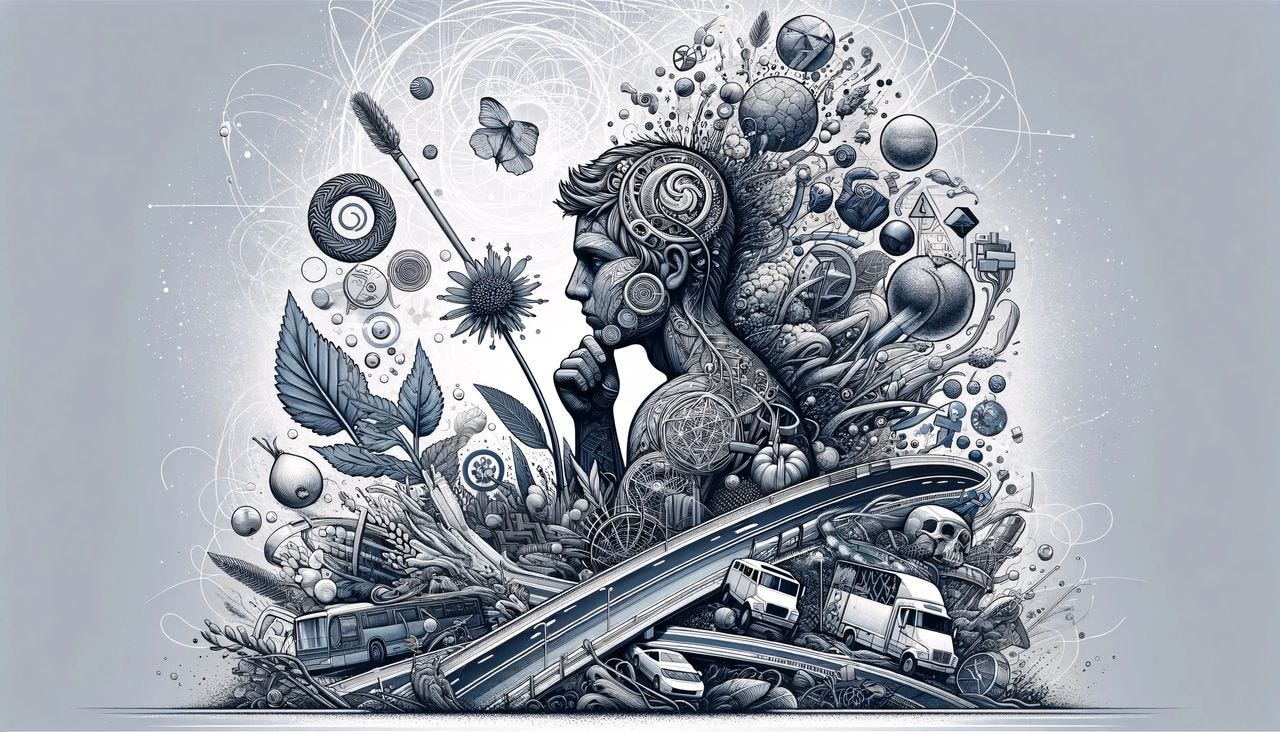
Have you ever considered how long a weed lives after you pull it from the ground? Or what congregation of life relies on the shade from that weed for survival? Or what might have taken root in that spot had you pulled that weed weeks prior?
Would that consideration admittedly change how you care for your lawn?
In our lifetimes, we make countless decisions – some minuscule, some monumental. These choices, whether we realize it or not, reverberate throughout the world and always have unforeseen consequences - some minuscule, some monumental. Life’s great irony is our proximity to our choices leave us blind to the entirety of their effect.
Note: Unique AI-generated phrases are presented as bold and italic.
In fact, we’d be foolish to think we even knew the size of impact any decision of ours truly makes. Sometimes our actions uplift others, and at times, our actions cause pain. It's a sobering reality to accept that we'll always be the villain in someone's story, regardless of our intentions.
Consider the benign courtesy of letting someone merge on the highway. An outright good gesture of civility. Yet, 20 cars behind us is someone racing to the hospital to say goodbye to their ailing mother.
This seemingly considerate choice, whether we ever realize it or not, just prevented that son his closure as his mom died seconds before he reached her room. Our desires, needs, and justifications take precedence in our decisions to act. This is a sanity-protecting measure, as weighing the infinite strands of outcome on each decision would leave us entirely paralyzed.
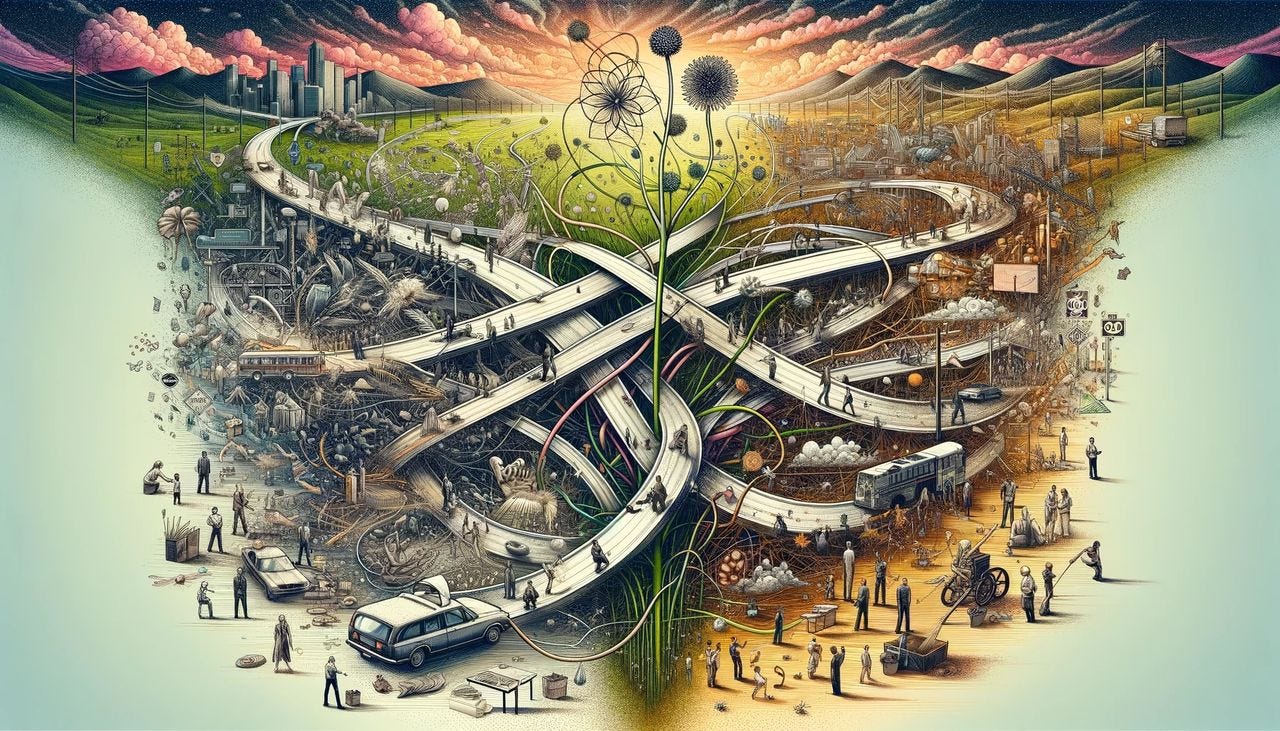
Life contains many sprawling chapters, and as we wade through its many challenges, we’re forced to paint with broad brushstrokes to create our narratives. Perhaps instinctively, we all take shortcuts to field and execute on our decisions - since paralysis is death for our continued existence.
We’ve got immediate needs demanding constant attention - the value of our personal agency is often governed by our attempt at satisfying the ease of suffering for us and ours. Humanity’s evolutionary ability to ignore the majority of information bombarding us is world class - by design.
Imagine attempting to expand your awareness to the entire system that we all operate within for a split second. It’s no reason why the Infinite Perspective machine was devised as a torture device in Douglas Adams’ Hitchhiker’s books.
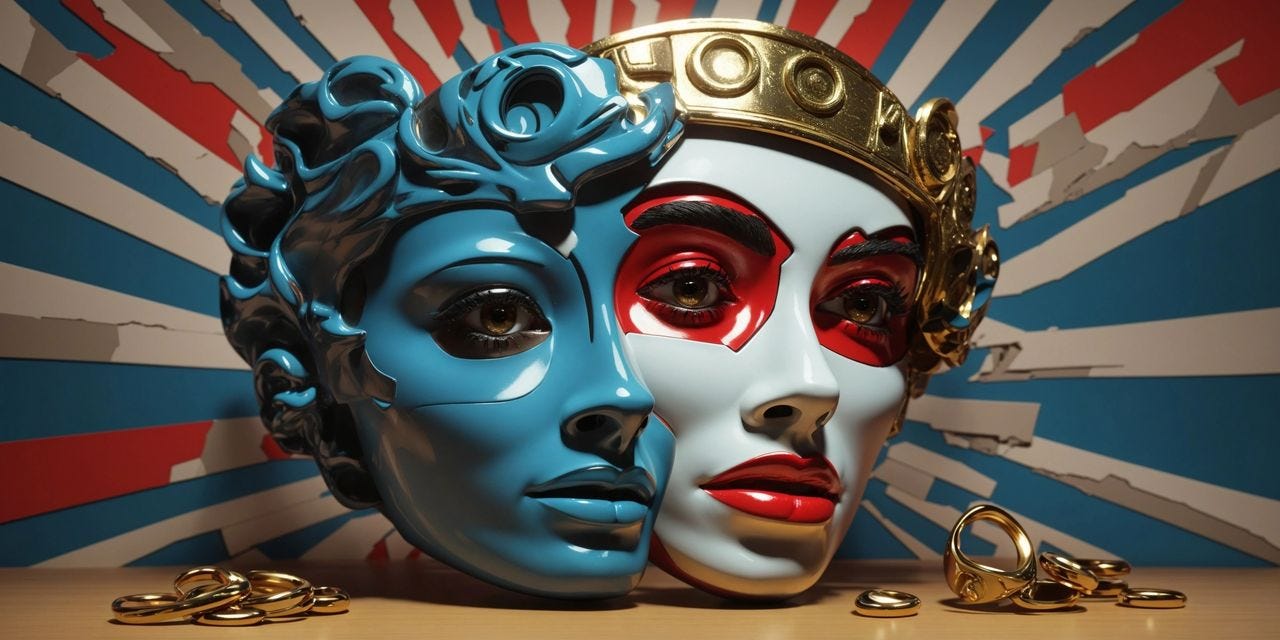
The palpable paradox
Our multitudes are so expansive that even we, in our introspective moments, struggle to grasp our own essence.
In the grand theatrical production of life, we headline our own show, embodying our roles as the star, while at the same time we're also the bumbling sidekick or the misunderstood villain in someone else’s story.
Like the duality of magnetic polarity, to live a life of consequence, our magnetic charge is sure to push some away. In fact, pondering the inner world of others, it’s a near certainty that we’re rubbing someone the wrong way with every single decision that we make.
Maybe it’s the way she pronounces “aluminum” or my staunch defense of cargo shorts. Perhaps your bumper sticker is crass yet profound. Or, his brazen willingness to microwave fish in the break room.
The universe is vast, and the reasons for pettiness, vaster.
We are natural born critics. This is part of our shortcut system for decision making. We’re all xenophobic, creatures of habit, following our patterns and routine. And if you’re living a passionate life, someone, somewhere, is going to cast you as the villain in their bedtime story. Can this realization affect how we move forward as a collective species experiencing life concurrently?
I'd say we need a collective pause button. A space where we can all take a moment to consider our own effect on the world around us, not just the one in our palms, pockets and laptop screens. And while we're at it, maybe spare a thought or two for the multitudes that reside within each of our fellow earthlings. While we may never fully grasp the entirety of another's experience or even our own, the journey towards that understanding holds profound value.
Our collectively individualistic hope to become the hero will irrevocably force us into the role of foil in another’s story. And the sooner we see that, the sooner we can rest comfortably in the reality of just how messy a life's worth of experiences truly are.
ChatGPT conversation used in the creation of this piece
For posterity, I've dumped the entire conversation below:
Me:
within us contains multitudes. We are able to make enough decisions to affect the world in a way where we'll always end up the villain in someone's story. As they say "Somebody's therapist knows your name." The only way we don't become a villain in someone's eyes is if we live an inert life. Motionless, without effect. A wasted life. We, of course, paint ourselves the hero, our needs divine. We paint with our broad brushes because a lifetime requires so many paint strokes. It's no wonder why hurt people hurt people. Can those who have known a portion of the multitudes of an individual truly vouch for the entirety of another individual? Can we truly know others as we continue to evade knowing ourselves? Perhaps moments of reflection for society are the best outcome in the messy affair of truly knowing ourselves and others. Those that share our home, the Earth. Please write 1,500 words elaborating on this concept.
ChatGPT:
Within Us Contains Multitudes: The Complexity of Human Nature and Perception
In Walt Whitman's "Song of Myself," he boldly declared, "I am large, I contain multitudes." This assertion has been deeply resonant throughout history, symbolizing the vast and varied experiences, emotions, and perspectives that dwell within a single individual. Indeed, every person is a universe unto themselves, layered with complexities, contradictions, and infinite potential.
It is said that every action has a reaction. In our lifetimes, we make countless decisions – some minuscule and some monumental. These choices, whether we realize it or not, reverberate throughout the world and often have unforeseen consequences. Sometimes these actions uplift others, and at times, they inadvertently cause pain. It's a sobering reality to accept that we'll always be the villain in someone's story, regardless of our intentions.
In today's interconnected world, our actions echo louder than ever before. A single misstep or misunderstood intention can be magnified, leaving an indelible mark on another's perception of us. The saying, "Somebody's therapist knows your name," is a poignant reminder that our actions and words impact others deeply. It suggests that our interactions, both positive and negative, are significant enough that someone has spoken about us in the sanctity of a therapeutic space.
Living an inert life, devoid of meaningful interaction or impact, may seem like the only way to avoid being the antagonist in someone's narrative. Yet, such a life might also be regarded as a "wasted" one – void of risks, experiences, and the genuine connections that imbue our existence with richness and depth. So, how do we navigate this labyrinth of human interaction?
Many of us paint ourselves as the heroes of our stories. Our desires, needs, and justifications often take precedence. Life is vast and sprawling, and as we wade through its many challenges, we employ broad brushstrokes to create our narratives. These narratives are not just for our benefit; they also influence how others perceive us. A crucial understanding to have is that hurt people indeed hurt people. Personal pain, unresolved trauma, and internal conflicts often manifest in outward behaviors, impacting relationships and perpetuating cycles of hurt.
However, the idea that one can truly understand the entirety of another individual based on fragmented experiences or perceptions is deeply flawed. Our multitudes are so expansive that even we, in our introspective moments, struggle to grasp our own essence. The paradox is palpable: How can we hope to understand others when we continually grapple with understanding ourselves?
It's also worth pondering: Are we running from truly knowing ourselves? Self-reflection is a courageous act. It demands vulnerability, acceptance, and a willingness to confront uncomfortable truths. Yet, in evading self-knowledge, we not only do ourselves a disservice but also those around us. Our lack of understanding of our own complexities can result in misconceptions about others.
In this vast tapestry of human existence, moments of societal reflection are, perhaps, our saving grace. These are instances where communities come together, share stories, and attempt to see the world through another's eyes. It's in these shared experiences and dialogues that bridges are built, allowing us to traverse the chasms of misunderstanding.
Those who share our home, the Earth, are as varied and multifaceted as the landscapes that adorn it. In every corner of the globe, individuals, each containing their multitudes, coexist. While it's a daunting task to understand the entirety of another's being, it's an endeavor worth undertaking. It's through this effort – this genuine attempt at understanding and empathy – that we inch closer to a more harmonious coexistence.
In conclusion, the beauty and challenge of human existence lie in its complexity. Our multitudes, both a gift and a riddle, invite us to engage deeply, reflect often, and strive for understanding. While we may never fully grasp the entirety of another's experience or our own, the journey towards that understanding holds profound value. It's a reminder that while we are indeed vast, containing multitudes, we are also inextricably linked in this shared journey of life.
Me:I don't like this draft. Can you take my original request and write 1,500 words as if you were dave berry or p. j. o'rourke, perhaps a sardonic mixture of both.
ChatGPT:
Within Us Contains Multitudes: A Sardonic Exploration
Imagine, if you will, a world in which Walt Whitman, after penning "I am large, I contain multitudes," was faced with the 21st-century dilemma of choosing the perfect Instagram caption. Perhaps, “#DeepThoughts #JustBeingMyMultitudinousSelf”?
The truth is, Whitman was on to something, even if he didn't have the luxury of Twitter to condense his profundities. We are vast entities, capable of wearing many hats—though, let's be real, some of those hats are those obnoxious oversized ones that scream, “Look at me!” But here's the kicker: every time we decide to toss on a new hat, be it the cap of a hero or the fedora of mischief, we're likely rubbing someone the wrong way.
They say that "Somebody's therapist knows your name." Well, I bet someone's bartender does, too. Probably with a story or two about that time you insisted on karaoke-ing both parts of "Summer Nights" from Grease, without a partner, and a little off-key.
But here’s the cold, hard, slightly sticky truth: trying to please everyone is much like trying to keep your dog from being interested in the trash—it's an uphill battle, and there's usually a mess involved. The world is chock-full of critics. And if you’re living a life worth any salt, someone, somewhere, is going to cast you as the villain in their bedtime story. Maybe you ate the last donut or sent a snarky email. Perhaps you committed the most heinous crime of all: not replying with a laugh to their latest meme. Oh, the horror!
Yet, if we were to recline on our sofas, munching on popcorn, utterly motionless lest we disturb the universe, would life be any better? Sure, there's appeal in the inertia—no angry mobs, no disgruntled postmen miffed at your online shopping addiction. But it also sounds terribly boring. And who wants a legacy of being the person who was... unremarkably neutral? That's the kind of epithet that won't even make it to a posthumous Twitter trend.
In the grand theatrical of life, while many of us might be headlining our own show, boldly declaring our roles as the star, there's a good chance we're also the bumbling sidekick or the misunderstood villain in someone else’s play. And why not? Variety is the spice of life, after all.
However, one does wonder—can anyone, having glimpsed just an act or two of our magnum opus, really “get” the whole performance? A snippet of our character does not an entire season make. And really, considering the episodes where we don't even know our own motivations, expecting outsiders to get the full scoop seems a tad ambitious. Heck, most of us are still trying to figure out why we prefer one brand of toilet paper over another. Personal preference? Subliminal advertising? An unsettling affinity for bears?
This leads us to the ultimate quagmire: if understanding ourselves is a task equivalent to assembling IKEA furniture without the manual (or those weird little tools), how can we ever hope to decipher the enigma of others?
What we need is a collective pause button—a societal "time-out" corner, if you will. A space where we can all take a moment, preferably with a beverage of choice, and reflect. Get to know ourselves beyond the coffee preferences and the guilty-pleasure playlists. And while we're at it, maybe spare a thought or two for the multitudes that reside within our fellow earth-sharers.
In closing, and not to get all mushy-gushy or drift into the deep end where philosophy drowns common sense, it's worth noting that we're all a bit of a mixed bag. A cocktail of quirks, foibles, and occasional flashes of brilliance. And while we might occasionally be the proverbial fly in someone's chardonnay, there's always the chance we're the surprise cherry in another’s Manhattan.
So, here's to the vast, the varied, and the oh-so-very human. We might not have it all figured out, but in the wise words of someone probably quite wise (or at least very good at making things up on the spot): It's not about the destination; it's about the weird, wacky, and wonderfully convoluted journey. Cheers!
Me:
Please rewrite this draft in the voice and tone of John Cheese from Cracked.com back in 2014-2016
ChatGPT:
Within Us Contains Multitudes: The John Cheese Take on Humanity’s Ridiculousness
Okay, buckle up kids, because we're about to dive into the weird, wild world of "us." You know, that chaotic jumble of thoughts, desires, and regrettable karaoke choices we collectively call a personality? Yeah, that.
Remember that time Walt Whitman, the famous bearded poet dude, said, "I am large, I contain multitudes?" Well, that was long before the era of meme culture and reality TV, but damn if he wasn't predicting every one of us trying to curate our multitudes for the perfect Instagram story.
Now, I've read somewhere—and by 'read,' I mean overheard in a dive bar—that "Somebody's therapist knows your name." I'm willing to bet dollars to doughnuts that there's also a bartender somewhere who pours a shot every time he recalls the 'you' memory. Maybe it was that tragic attempt at the worm on a dance floor. Or that tearful rendition of "I Will Always Love You" after one too many. You're not alone; we've all been there.
See, here's the thing: while we're all desperately trying to be the heroes of our own stories, wading through life with the grace of a giraffe on roller skates, there's always that one guy, lurking in the shadows, who thinks we’re the Lex Luthor to their Superman. Probably because you "accidentally" took their lunch from the office fridge or neglected to like their 50th pet pic of the day.
Now, I've considered the alternative. Imagine sitting at home, doing absolutely zilch—so under the radar that even NSA's like, "Who?" But the idea of being as exciting as plain toast doesn’t exactly scream “life goals.”
Our attempts at understanding others? Oh boy. Most days, I'm just trying to understand why I decided that wearing socks with sandals was a "look." And yet, we expect to grasp the essence of another human being, when half the time, we don't know why we opened the fridge or entered a room.
You'd think, with all our advanced tech and countless hours spent deep-diving into the abyss of the internet, we'd have figured out this whole "human connection" thing. But nope. We're still the same awkward beings, just with more cat videos at our disposal.
So, what’s the answer? Perhaps we need a collective CTRL+ALT+DEL. A cosmic do-over. A moment where humanity can sit back, laugh at its absurdities, and realize we're all just trying to get by without accidentally supergluing our fingers together.
To wrap this up before I hit the character limit or your attention span wanes (whichever comes first): Here's the deal. We're all messes, each in our own special way. And while occasionally you might be the reason someone sighs heavily and wonders about their life choices, remember—you're also the reason someone, somewhere, has an epic story to tell at parties.
So let's embrace the weird, the cringy, and the downright bizarre. After all, our multitudes make life interesting. And at the very least, they give us something to laugh about later. Cheers to our beautiful disasters.
Me:
ditch that last draft. rewrite this in the voice and tone of David Wong, writer of John Dies at the End.
ChatGPT:
Within Us Contains Multitudes: Wong’s Take on the Chaotic Human Spectrum
Alright, before we dive into this, let’s get something straight: Humanity is a hot mess. That's right, you, me, and the guy who invented clapping to show approval (seriously, who thought of that?). We're all part of this circus of confusion.
Let's travel back in time for a moment. Walt Whitman, the dude who never met an overshare he didn't like, once penned, "I am large, I contain multitudes." To translate that into modern speak, it’s like saying, “Check out all the conflicting thoughts and weird habits I have; bet you can't top them!”
Now, there's a saying that "Somebody's therapist knows your name." In my version, somebody's otherworldly, mind-bending, reality-altering creature also knows your name, and it's probably mispronouncing it just to piss you off.
See, life's weird like that. One minute you're the hero, with wind in your hair and a badass leather jacket. The next, you're the villain because you decided to tell the truth about that god-awful haircut your friend got. Look, someone had to say it!
You might think, “Well, let's just do nothing!” You know, just sit on the couch, binging reruns and avoiding all of humanity. But where's the fun in that? Even inactivity is a choice. Plus, someone out there probably thinks you breathe too loudly or that your choice of pizza toppings is a crime against humanity.
Now, do we really know each other? Hell, do we even know ourselves? I've met sentient drugs and interdimensional creatures easier to understand than my own motivations. We're these complex, messed-up balls of insecurities, dreams, and bad decisions after two too many drinks. You expect to get a full read on someone else when you can't even remember why you walked into the kitchen?
So what's the endgame here? Is it all just cosmic chaos where we stumble around, trying to make sense of our own existence while accidentally stepping on a few toes? Maybe. But here’s my hot take: All these multitudes, these vast landscapes of quirks and contradictions, make for one hell of a story. Your story.
In the grand scheme of things, we're all both insignificant specks and complex galaxies in the sprawling universe of existence. And while you might occasionally unleash an eldritch horror or become the antagonist in someone’s woefully narrated life story, you're also the protagonist to someone else, charging ahead in a narrative so twisted even M. Night Shyamalan wouldn't touch it.
So yeah, cheers to us. The good, the bad, and the inexplicably bizarre. Because whether we like it or not, the world's a lot more interesting with our multitudes in it. Keep the chaos coming.
Me:
Can you find a voice and tone that mixes all these drafts together?
ChatGPT:
Multitudes: The Chaotic, Sardonic Symphony of Being Human
So here we are, standing at the intersection of 'Existential Boulevard' and 'What-The-Hell Avenue,' trying to figure out this whole 'being human' fiasco. Picture it: Walt Whitman, our bearded pal from yesteryears, sits in a dimly lit room, brainstorming hashtags for "I am large, I contain multitudes." Yeah, even Whitman wasn’t immune to the allure of a snappy caption.
Let's break it down. Each of us, in our quest for purpose and pizza, is a hot mess of contradictions. And while we're busy orchestrating our life's grand opus, we're bound to hit a few sour notes. Heck, for some, the entire symphony might just sound like someone sat on a piano.
There's this idea floating around, probably whispered in therapist waiting rooms and dive bars, that "Somebody's therapist knows your name." I’d wager there's also a haunted doll out there muttering it in the dead of night, but hey, that’s just the norm in this fever dream called life.
But what if, instead of being the hero, strutting our stuff with all the grace of a cat in tap shoes, we end up as the bad guy? Like when you passionately defended pineapple on pizza or, god forbid, forgot to send that 'happy birthday' text. Oh, the humanity!
Now, one might think, “What if I just opt out? Be a human-shaped blob of neutrality?" Sure, being the beige wallpaper in the vibrant room of existence is a strategy, but where's the pizazz? The zest? The occasional chaotic energy of wearing socks with sandals?
As for truly knowing others, that's a rabbit hole deeper than any conspiracy theory. If deciphering our own internal mumbo-jumbo feels like navigating a maze blindfolded, what chance do we have of decoding someone else? Especially when most of us are still trying to figure out if we're team 'gif' or 'jif'.
Maybe the real journey isn't about dodging the pitfalls or always hitting the high notes. Maybe it's about embracing the harmonious chaos, the jumbled mess of melodies, and making it the soundtrack of our lives.
In this sprawling cosmic concert, we're all both the accidental kazoo solo and the epic guitar riff. We might ruffle some feathers or accidentally step on life’s metaphoric Legos, but in the end, we make for one heck of a show.
So here's to us: the weird, the wacky, the profoundly profound, and the hilariously mundane. Because life, with all its hiccups and harmonies, wouldn’t be the same without each note. Play on, you chaotic maestros. Play on.
Me:
can you make it more somber, double the length, and have a dry alan rickman in Galaxy Quest style of delivery
ChatGPT:
Multitudes: A Solemn Study in Chaotic Humanity
In the vast, unfathomable tapestry of existence, where countless stars twinkle and galaxies swirl, we find ourselves ensnared in the inescapable quandary of being, well, human. Imagine, if you will, the depth of Walt Whitman's furrowed brow as he ponders, "I am large, I contain multitudes." He wasn’t merely trying to wax poetic. No, he was staring into the very chasm of human complexity.
Nestled between the pulsating vibrancy of life and the icy grip of oblivion, every soul navigates an intricate maze, striving for meaning and significance. And as we do, each of us, in whispered confessions and thunderous proclamations, leaves an indelible mark on the canvas of time. A footnote, perhaps, in the grand scheme of things, but crucial nonetheless.
In hushed corridors, dimly lit by the candle of introspection, there’s a saying that echoes: "Somebody's therapist knows your name." It isn't just a nod to our modern predicament of overanalysis, but a testament to the haunting weight of our actions. The chilling reality? We are forever etched in the memories and discourses of others, sometimes as heroes, but often, as inadvertent villains.
One might be tempted to ponder, “Is obscurity the answer then? Should I fade into the vast, gray anonymity, becoming nothing more than a wisp in the wind?” Yet, even within that spectral invisibility lies the weight of choice, the consequence of silence, and the impact of absence. You see, even in trying to be the still, quiet wallpaper in the raucous banquet of existence, you remain a part of the narrative.
To know another, to truly delve into the labyrinth of another’s soul, is a fool’s errand. Many of us wander through life, clutching at the mirage of understanding, only to be met with a mirroring abyss. And the cruel irony? We remain equally oblivious, often lost to our own whims and fancies, hostages to our own patterns.
Yet, perhaps it's in this bewildering dance of shadows and light that we find our true essence. Not in the glaring spotlight or the stark void, but in the delicate interplay, the tender moments of connection, and the searing instances of discord.
Do we dare embrace this? Do we have the courage to face the symphony and cacophony of our being, the harmonies and dissonances that define our journey? To accept that we might be, at once, the echoing note of melancholy and the triumphant crescendo?
In this sprawling cosmos, we stand — sometimes tall, often faltering. Each of us a paradox, a riddle wrapped in the enigma of existence. And though our contributions might seem minuscule, almost infinitesimal in the grand cosmic play, they are uniquely ours.
So, as the curtain descends, and the lights dim, let us find solace in our intricate multitudes. The beauty, the tragedy, the profound, and the profane, they all converge, crafting the legacy of a life truly lived.
In the somber, unyielding voice of the cosmos — much like the inimitable Alan Rickman might convey — we are reminded: Life, with all its peculiarities, is a gift. A challenge, a puzzle, and a privilege. Cherish it, for all its worth.
Me:
Take the original idea and write a 1,000 word humor column
ChatGPT:
The Grand Misadventures of Being Multitudinous Humans
Ladies, gents, and those who identify as "confused about most things in life" (hello, my people), let's discuss Walt Whitman's musings on containing multitudes. Because if ever there were a poetic way to say "I'm a mess," old Walt hit the nail on the head.
First, let's unpack the weight of "Somebody's therapist knows your name." If that doesn't have you spiraling down a rabbit hole of every awkward encounter, I don't know what will. Somewhere out there, Dr. FeelGood is earning a pretty penny hearing about the time you decided to showcase your breakdancing "skills" at the office Christmas party.
Now, onto the crux of the matter: Being the villain. Sure, in the blockbuster of our lives, we’re the hero. But step back for a minute, and you'll realize in someone else's saga, you're that obnoxious character everyone hopes will be written out by season two. Why? Maybe because you've had the audacity to microwave fish in the communal kitchen. Or perhaps it's the passive-aggressive notes about missing Tupperware.
“But what if,” you ponder, while staring deeply into your 4th cup of decaf, “I simply do nothing? Be the Switzerland of human interaction?” Good luck with that. You might opt for a life of beige inaction, but remember: your mere existence probably annoys someone. Maybe it’s the way you pronounce “aluminium” or your staunch defense of cargo shorts. The universe is vast, and the reasons for pettiness, vaster.
We then wade into the murky waters of self-awareness. Ah, that age-old question: Do we truly know ourselves? Considering I’ve spent a considerable amount of time looking for my glasses while they were perched on my head, I'd say that ship sailed. And sank.
As for knowing others, have you ever tried assembling IKEA furniture with someone? If you can make it through that without contemplating how many ways a wrench can be weaponized, you're golden. But for the rest of us mere mortals, understanding the complexities of another soul is about as easy as understanding why cats have a vendetta against perfectly placed ceramics.
Maybe, just maybe, the key lies in accepting the chaos. Reveling in our roles as both the hero and the rogue. Smiling at the fact that while we're the lead in our narrative, we might just be the comic relief in someone else's. Or worse, the character with a questionable fashion sense.
So, as we navigate the comedy of errors that is life, let’s raise a toast. To the multitudes we contain, to the heroes and villains we inadvertently become, and to the knowledge that, somewhere out there, a therapist is buying a new car, thanks to our life choices. Cheers!
Me:
Can you merge these concepts and smooth this out a little? "They say that "Somebody's therapist knows your name." Well, I bet someone's bartender does, too. Probably with a story or two about that time you insisted on karaoke-ing both parts of "Summer Nights" from Grease, without a partner, and a little off-key. The world is chock-full of critics. And if you’re living a life worth any salt, someone, somewhere, is going to cast you as the villain in their bedtime story. "
ChatGPT:
Of Therapists, Bartenders, and Unsolicited Duets
"They say that 'Somebody's therapist knows your name,' and I’d wager someone's bartender has it scribbled down, too. And not just your name, but probably a footnote about that one time you stood under the dimmed lights, took the karaoke stage by storm, and passionately crooned both parts of "Summer Nights" from Grease. No partner. Slightly off-key. And with an enthusiasm that suggested Sandy and Danny had nothing on you.
In the grand theater of life, critics lurk in every corner. You might be the star of your own show, but to someone else? You're that audacious soloist, unapologetically hogging the spotlight during what should have been a duet. And you know what? If you're ruffling feathers and sparking whispers between therapists and bartenders alike, then you're doing something right.
Because living a life with flavor means occasionally being the unexpected twist in someone else's tale. Sure, some will cast you as the villain in their bedtime narratives. But remember, every good story needs a memorable character. And who's more memorable than the brave soul who belts out both sides of a duet?"
Me:
Please devise four image generation prompts focusing on the literal contents of the image using the following draft: Multitudinously messy Have you ever considered how long a weed lives after you pull it from the ground? Would that thought experiment leave you feeling a little worse about your desire to keep your lawn well manicured? In our lifetimes, we make countless decisions – some minuscule, some monumental. These choices, whether we realize it or not, reverberate throughout the world and always have unforeseen consequences. Sometimes our actions uplift others, and at times, our actions cause pain. It's a sobering reality to accept that we'll always be the villain in someone's story, regardless of our intentions. Consider the benign courtesy of letting someone merge on the highway. Nary a thought goes into such an action, yet 20 cars behind us is someone racing to the hospital to say goodbye to their ailing mother. Our action, whether we ever realize it or not, just prevented that hypothetical son his closure as his mom died seconds before he reached her room. Our desires, needs, and justifications often take precedence in our decisions to act. This is a sanity-protecting measure, as weighing the infinite strands of outcome on each decision would leave us entirely paralyzed. Life is vast and sprawling, and as we wade through its many challenges, we employ broad brushstrokes to create our narratives. Perhaps instinctively, we all take shortcuts to field and execute on our decisions. Our ability to receive and process every signal in just our immediate surrounding is less than stellar, now imagine expanding your awareness to the entire system that we all operate within. The palpable paradox The idea that one can truly understand the entirety of another individual based on fragmented experiences, perceptions or second-hand accounts is deeply flawed. Our multitudes are so expansive that even we, in our introspective moments, struggle to grasp our own essence. In the grand theatrical production of life, we headline our own show, embodying our roles as the star, while at the same time we're also the bumbling sidekick or the misunderstood villain in someone else’s story. It’s no mystery to anyone pondering the inner world of others that we’re likely rubbing someone the wrong way with every single decision that we make. Maybe it’s the way you pronounce “aluminum” or your staunch defense of cargo shorts. The universe is vast, and the reasons for pettiness, vaster. We are natural born critics. This is part of our shortcut system for decision making. We’re xenophobic, creatures of habit and routine. And if you’re living a life worth any salt, someone, somewhere, is going to cast you as the villain in their bedtime story. So how does this realization affect how we move forward as a collective species experiencing life concurrently? We need a collective pause button. A space where we can all take a moment and reflect. Give the algorithms a day off so we can get to know ourselves beyond our coffee preferences and the guilty-pleasure playlists. And while we're at it, maybe spare a thought or two for the multitudes that reside within our fellow earthlings. While we may never fully grasp the entirety of another's experience or even our own, the journey towards that understanding holds profound value. Our hope to become the hero will irrevocably force us into the role of foil in another’s story. And the sooner we see that, the sooner we can rest comfortably in the reality of just how messy experience truly is.
ChatGPT:
Certainly! Based on the provided text, here are four image generation prompts focusing on the literal contents:
The Unseen Consequences
Visualize a pristine, manicured lawn. At the edge, there's a hand pulling out a weed. As the weed is uprooted, ghostly images emerge from the disturbed earth: A butterfly being displaced, a nest of tiny insects suddenly homeless, and the roots reaching deep, showing connections to other plants. In the background, a timer counts the seconds left in the weed's life.
The Highway of Life
Illustrate a bustling highway scene. Cars are neatly aligned, but one car lets another merge in. A chain reaction ensues. Some cars are forced to slow down, while others speed up. Far behind, a vehicle marked with an emergency light is stuck, unable to progress. Above them, a giant clock hands race forward, indicating the passing of precious time.
Multifaceted Theatrics
Show a theater stage, where a singular individual stands center. This person has multiple shadows, each representing a different character: a hero with a cape, a sidekick clutching a script, and a misunderstood villain with a tragic mask. The spotlight on them changes colors, indicating changing perceptions based on the viewing angle.
Pause and Reflect
Depict a bustling urban scene frozen in time. Every individual, regardless of their activity, has paused. In this paused state, translucent thought bubbles emerge from each person. Some show self-reflection, some reveal their dreams, and others contain snippets of their favorite songs or coffee orders. In the center, a giant pause button radiates a calming light, suggesting a collective moment of introspection.
I hope these prompts serve as a fruitful foundation for your envisioned imagery!
Me:
What questions do you have after reading the following draft?: Multitudinously messy Have you ever considered how long a weed lives after you pull it from the ground? Or what congregation of insects rely on the shade of that weed’s leaves for shelter? Or what might have taken root in that spot had you pulled that weed weeks prior? Would that realization leave you feeling differently about your desire to keep your lawn well manicured? In our lifetimes, we make countless decisions – some minuscule, some monumental. These choices, whether we realize it or not, reverberate throughout the world and always have unforeseen consequences. In fact, we’d be foolish to think we knew the size of impact any decision of ours truly makes. Sometimes our actions uplift others, and at times, our actions cause pain. It's a sobering reality to accept that we'll always be the villain in someone's story, regardless of our intentions. Consider the benign courtesy of letting someone merge on the highway. Nary a thought goes into such an action, yet 20 cars behind us is someone racing to the hospital to say goodbye to their ailing mother. Our action, whether we ever realize it or not, just prevented that hypothetical son his closure as his mom died seconds before he reached her room. Our desires, needs, and justifications often take precedence in our decisions to act. This is a sanity-protecting measure, as weighing the infinite strands of outcome on each decision would leave us entirely paralyzed. Life is vast and sprawling, and as we wade through its many challenges, we employ broad brushstrokes to create our narratives. Perhaps instinctively, we all take shortcuts to field and execute on our decisions. Our ability to receive and process every signal in just our immediate surrounding is less than stellar, now imagine expanding your awareness to the entire system that we all operate within. The palpable paradox The idea that one can truly understand the entirety of another individual based on fragmented experiences, perceptions or second-hand accounts is deeply flawed. Our multitudes are so expansive that even we, in our introspective moments, struggle to grasp our own essence. In the grand theatrical production of life, we headline our own show, embodying our roles as the star, while at the same time we're also the bumbling sidekick or the misunderstood villain in someone else’s story. It’s no mystery to anyone pondering the inner world of others that we’re likely rubbing someone the wrong way with every single decision that we make. Maybe it’s the way you pronounce “aluminum” or your staunch defense of cargo shorts. The universe is vast, and the reasons for pettiness, vaster. We are natural born critics. This is part of our shortcut system for decision making. We’re xenophobic, creatures of habit and routine. And if you’re living a life worth any salt, someone, somewhere, is going to cast you as the villain in their bedtime story. So how does this realization affect how we move forward as a collective species experiencing life concurrently? We need a collective pause button. A space where we can all take a moment and reflect. Give the algorithms a day off so we can get to know ourselves beyond our coffee preferences and the guilty-pleasure playlists. And while we're at it, maybe spare a thought or two for the multitudes that reside within our fellow earthlings. While we may never fully grasp the entirety of another's experience or even our own, the journey towards that understanding holds profound value. Our hope to become the hero will irrevocably force us into the role of foil in another’s story. And the sooner we see that, the sooner we can rest comfortably in the reality of just how messy experience truly is.
ChatGPT:
After reading the provided draft, here are some questions that come to mind:
What prompted the writer to delve into this exploration of interconnectedness and the far-reaching consequences of our actions?
Are there any studies or research to back up the idea that even small actions can have cascading effects on others, or is this more of a philosophical reflection?
How would the writer suggest that one finds a balance between being aware of the possible ripple effects of their actions while still being able to make decisions without becoming paralyzed by overthinking?
When mentioning "giving the algorithms a day off," is this a commentary on modern technology's influence on our lives? How might "algorithms" be perpetuating or mitigating the issues discussed?
What would this "collective pause button" look like in a practical sense? Is it a call for a global day of reflection, or is it more of a metaphorical idea?
How does one reconcile the inevitability of becoming the "villain" in someone else's story while still striving to be a good person?
When referring to our inability to truly understand another person based on fragmented experiences, are there any practical suggestions to bridge this gap of misunderstanding?
The piece touches on the idea that people are "natural born critics" – is there a proposed solution or strategy for combating this instinct?
How does the writer define a life "worth any salt"? Are there criteria, or is it up to individual interpretation?
What might be some actions or habits people can adopt to be more aware and thoughtful of the potential consequences of their actions, even the seemingly minor ones?
The draft prompts contemplation on the interconnectedness of life, actions, and the potential for misunderstandings. Answering these questions could provide deeper insight and clarity for readers.
Me:
Please add answers to those questions into the draft most recently provided
ChatGPT
Of course! Here's a revised draft incorporating answers to the posed questions:
Multitudinously Messy
While sitting in my backyard one lazy Sunday, gazing at the overgrown weeds—yeah, I procrastinate lawn care too—I began this exploration of interconnectedness. Have you ever considered how long a weed lives after you pull it from the ground? Or what congregation of insects rely on the shade of that weed’s leaves for shelter? Or what might have taken root in that spot had you pulled that weed weeks prior?
This wasn't just about my lawn aesthetics; this was a bigger reflection on life. Would that realization leave you feeling differently about your desire to keep your lawn well manicured?
In our lifetimes, we make countless decisions – some minuscule, some monumental. While there isn't a specific study on hand, history and experience show these choices, whether we realize it or not, reverberate throughout the world and always have unforeseen consequences. In fact, we’d be foolish to think we knew the size of the impact any decision of ours truly makes.
Sometimes our actions uplift others, and at times, they cause pain. It's a sobering reality to accept that we'll always be the villain in someone's story, regardless of our intentions.
Consider the benign courtesy of letting someone merge on the highway. Nary a thought goes into such an action, yet 20 cars behind us is someone racing to the hospital to say goodbye to their ailing mother.
Our action, whether we ever realize it or not, just prevented that hypothetical son his closure as his mom died seconds before he reached her room. But here's the thing, we shouldn't be paralyzed by every decision we make. Balance is key.
Our desires, needs, and justifications often take precedence in our decisions to act. It's a sanity-protecting measure, as weighing the infinite strands of outcome on each decision would leave us entirely paralyzed. And who really wants that?
Life is vast and sprawling, and as we wade through its many challenges, we employ broad brushstrokes to create our narratives. Perhaps instinctively, we all take shortcuts to field and execute on our decisions. Technology and those pesky algorithms play a part in this, often magnifying our biases and narrowing our world views.
Our ability to receive and process every signal in just our immediate surrounding is less than stellar. Now imagine expanding your awareness to the entire system that we all operate within. Quite the task, right?
The Palpable Paradox
The idea that one can truly understand the entirety of another individual based on fragmented experiences, perceptions, or second-hand accounts is deeply flawed. And while we might never have a foolproof method to bridge this gap, effort and genuine curiosity go a long way.
In the grand theatrical production of life, we headline our own show, embodying our roles as the star. At the same time, we're also the bumbling sidekick or the misunderstood villain in someone else’s story.
It’s no mystery that we’re likely rubbing someone the wrong way with every single decision we make. Maybe it’s the way you pronounce “aluminum” or your staunch defense of cargo shorts. The universe is vast, and the reasons for pettiness, vaster.
We are natural-born critics. This is part of our shortcut system for decision making. Criticism is innate, but it's also a tool that can be wielded for growth or destruction. Being aware of this helps.
We’re xenophobic, creatures of habit and routine. But what does a life "worth any salt" mean? It's a life of purpose, of reflection, of understanding – however you define it.
So, with all this weight on our shoulders, how does this realization affect how we move forward as a collective species experiencing life concurrently? By giving pause. By reflecting.
We need a collective pause button. A space where we can all take a moment and reflect. Imagine a world where, just for a day, algorithms are turned off and we connect, human to human. A day where we step out of our comfort zones and genuinely get to know someone beyond our assumptions.
And while we're at it, let's spare a thought or two for the multitudes that reside within our fellow earthlings. The journey towards understanding holds profound value, even if we never fully grasp it.
Our hope to become the hero will irrevocably force us into the role of foil in another’s story. Recognizing the myriad stories and perspectives swirling around us is the first step towards rest and comfort in the reality of how deliciously messy life truly is.