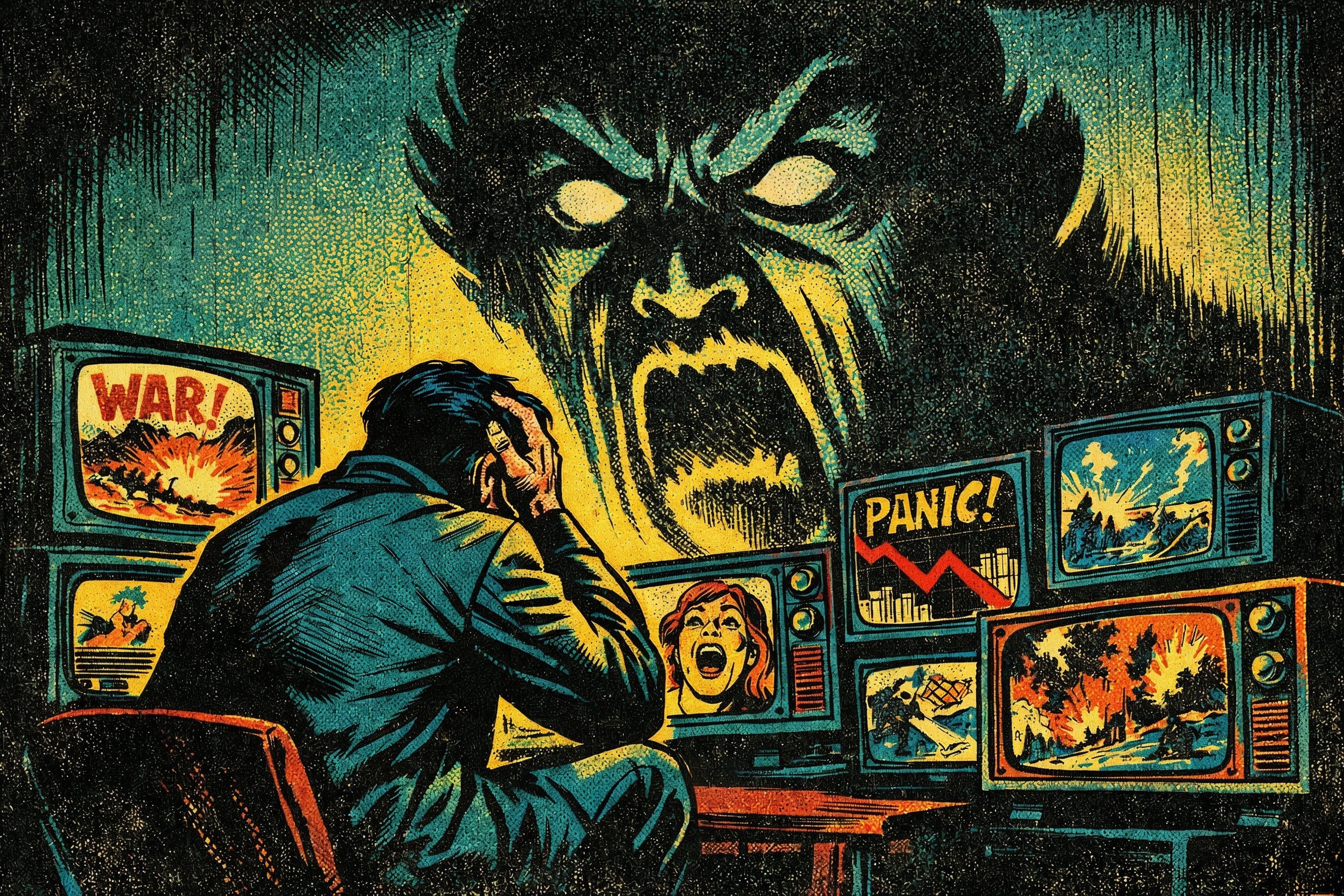
It’s now 2026, a year that still sounds like science fiction to this ‘80s kid.
Like clockwork, this morning’s news arrives preloaded with urgency. Another conflict ignites. Another industry declares itself disrupted. Another argument demands my attention before I’ve had time to decide whether it deserves it.
And here I sit, on the quiet edge of a single day, trying to make sense of what, exactly, feels different now.
Truth be told, I don’t believe we’ve lost our ability to think, just our patience with discernment.
We use our personal discernment to elevate good from great, but we also use it to identify good from bad. I’d argue it’s one of our most languished skills, blunted by the artificial nature of our education systems, corporate structures and political pageantry.
Discernment is individualized. It’s unique, like a fingerprint. It’s where craft generates, where care incubates. Discernment keeps us anchored to our values, to the moment, and to those around us.
But now, more than ever, we are intentionally jostled by the news of the day; throwing the equilibrium between action and care into a tailspin.
We’ve discovered that our knowledge of an event often pales in comparison to the imposed emotional response attached to it.
That imbalance isn’t accidental.
Emotion-first information is a tool. It homogenizes large populations, people with disparate backgrounds and lived experiences, by bypassing our discernment entirely.
Content fueled by high emotional impact paired with minimal nutritional fact is the most efficient way to move a crowd to self-enforce. Litmus tests, binary opinions, rapid posturing. It’s so exhausting.
But it’s nothing new. Yellow journalism did it. Advertising perfected it.
Sensationalized information has always leaned on the monkey mind as some call it. And once the monkey brain is activated, the lizard brain follows, eagerly assembling justifications: Look at all this data. Of course this must be true.
But the verdict was ordained before the facts arrived to the individual.
I think Baby Jessica might be a perfect example of this phenomenon in action. Someone I’ve never met. Someone whose first name alone still triggers a faint emotional echo.
For a few hours in the late ’80s, an entire country synchronized its fear, hope, and attention around a child trapped in a well.
Then, once a resolution was reached while we captively observed, we were released back into our lives, carrying a residue we never consciously integrated. Why? Because it never truly involved us, only our attention.
And when attention becomes perfunctory performance, we lose the ability to call the curtain.
In the ‘80s, we didn’t have the language to define parasocial relationships.
We didn’t have platforms designed to sustain them indefinitely. But the mechanism was already there: an unrequested emotional contract. We were told when to care, how intensely, and when to let go.
Today’s systems didn’t invent this phenomenon. They industrialized it. They shortened the loop. They removed the cooldown. There is always another face. Another crisis. Another demand to grip tightly now.
Discernment, then, is no longer just about separating truth from fiction. It’s about consent.
Not “is this true?” but “is this worth holding?”
Not “do I feel something?” but “did I choose to feel this?”
This might explain why men of a certain age gravitate toward World War II documentaries.
That era offered a clean narrative alignment: clear villains, defined objectives, a conclusive end state. It was the last broadly accepted moment where emotion and morality moved in the same direction and stood the test of time.
Every conflict since (Korea, Vietnam, Iraq, et al.) has carried confusion, obfuscation, and doubt. The emotional pitch remained, but the clarity evaporated.
I think this same misalignment now applies to creatives.
To live as a creative person is to constantly pitch: ideas, angles, ourselves. We convince people holding money and scant imagination to trust our ideas enough to fund their incubation. It’s Shark Tank as a lifestyle. Value must be declared before an idea has time to breathe.
This pitch process is corrosive to creation itself.
That’s why so much theatrical entertainment feels merely okay. Jukebox musicals, superheroes, and known IP dominate because they reduce the cost of emotional buy-in. The audience already knows what they’re supposed to feel. Discernment is outsourced to familiarity.
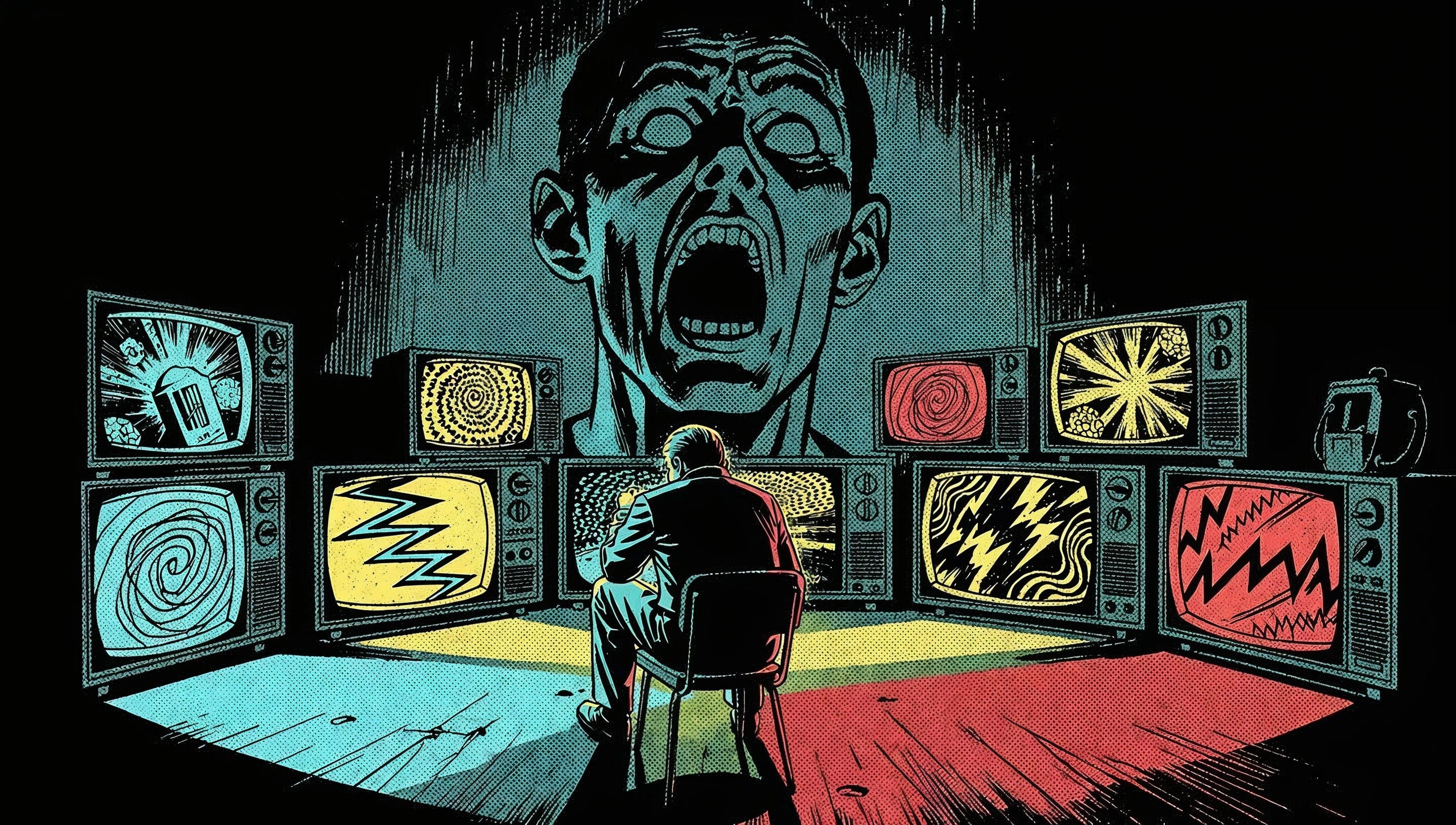
So what does any of this have to do with AI?
AI compresses time horizons.
It allows ideas to be explored without consequence. It raises the fidelity of sketches. What some now dismiss as AI slop was once just considered doodles. It lets creators test edges, discard paths, and sharpen intent before value must be defended.
In that sense, to me at least, AI makes the suffering bearable. The struggle begins to feel surmountable. To share our perspective, to speak up.
Creatives fearing for their livelihoods aren’t wrong: the game has changed. But what’s being stripped away isn’t meaning; it’s the bureaucratic theater of worthiness. The hopscotch of who you know, where to stand, how to present. You know, that same game that’s been broken for decades…
AI doesn’t replace discernment. It just demands more of it, more of us. Individually and collectively.
As new voices and perspectives emerge, feel free to attach an asterisk if that helps you cope with the transition. But something genuinely new is happening here.
New worlds to explore. New ideas to surface. New voices to hear.
I don’t fear this barrage of incoming creation.
I trust my discernment. I recognize the interested parties pushing narratives. And perhaps most importantly, I’ve learned when to open my heart to receive. And when to fold my hand, and release.
Author’s Note
This piece was developed through an iterative collaboration with an AI writing and visual partner. I used AI as a thinking companion—to pressure-test ideas, refine language, and explore visual metaphors—rather than as a source of conclusions or claims.
The core arguments, lived references, and final editorial decisions are my own. AI assisted in sharpening the framing around discernment, parasocial attention, and consent, and helped translate those themes into companion imagery—most notably the pulp-comic visual language used in the header and CW mark. That imagery was developed through dialogue, selection, and revision, not generation alone.
In a piece about choosing when to feel, what to hold, and how to discern, it felt important to practice the same restraint in how tools were used. AI didn’t replace authorship here—it helped compress the distance between intention and expression.