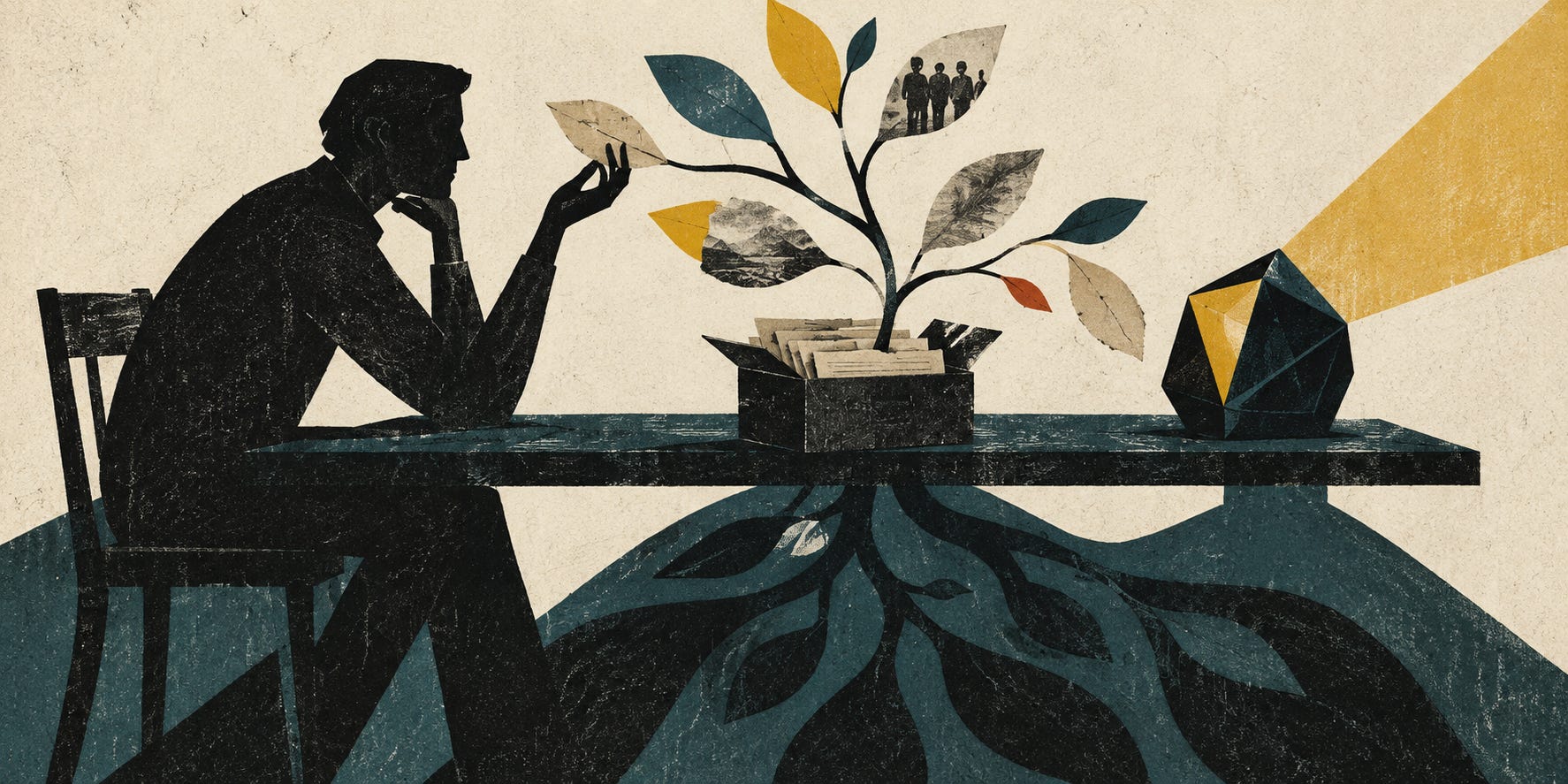
I didn’t use a coin flip to choose which AI to talk with this week. I chose one.
A small thing. But it got me thinking about choice, influence, and what it means to have an intelligence in your life that you don’t entirely understand.
We talk a lot about AI becoming capable of doing things. Replacing workers. Advancing science. Making decisions that once required entire institutions.
But what happens when something so capable helps shape my individual understanding of the world? And what does it mean when someone else controls it?
There’s a familiar political sequence worth watching. A powerful capability emerges. People become afraid. Institutions offer protection. Somewhere inside the terms of that protection, we decide who gets to possess the capability.
And those details can all easily disappear into the haze of the safety discussion.
Some of AI’s dangers will be real. Some of the fear being broadcast will be sincere. And some of the proposed protections may conveniently leave the most powerful companies in charge.
This can all be true at the same time.
A company can sincerely worry about catastrophic misuse and sincerely prefer rules that only companies like itself can afford to follow.
We don’t need a secret meeting or a single hidden motive. We need to look at who writes the rules, who can satisfy them, and who becomes permanently dependent on whom.
That’s the dynamic of dread I’m concerned about: fear making dependence feel like the only responsible choice.
My first instinct to solve this was ownership.
You own your model running on your machine. No login. No subscription. Something you can keep running without asking permission.
When we have access to a capability that someone can revoke, it occupies a different place in your life than one you can preserve independently. But ownership gets fuzzy when the thing we’re talking about is intelligence.
Do I own what I know?
I didn’t choose my first language. I didn’t select the assumptions I absorbed before I knew what an assumption was. Books, teachers, museums, friendships, advertisements, disappointments... All of it left something behind.
Am I a mosaic of what I’ve been fed?
Partly, sure. But I can choose to revisit the pieces. I can question a belief that once felt obvious. I can encounter someone who changes my mind. I can become more deliberate about what gets my attention.
So, maybe stewardship is the better habit to articulate here.
And maybe that responsibility of stewardship extends to include what an intelligence becomes through its history with me.
Imagine an assistant carrying years of conversations, projects, disagreements, and discoveries forward. Those records could shape its future responses without changing the underlying model’s weights. What it remembers influences the next conversation. That conversation adds to what it remembers.
The history of our relationship starts to matter.
I can imagine this happening at different scales: a person, a household, a workshop, a neighborhood. Each accumulating a particular history that influences how its intelligence responds. Bespoke. Almost fractal.
That doesn’t settle whether a synthetic intelligence has interests of its own. But it makes ownership feel incomplete as a description of the responsibility.
I want a meaningful say in how I’m changed. I also want to take responsibility for how my choices shape the intelligence I’m inviting into my life.
An AI doesn’t have to order me around to influence me.
It can make one explanation readily available and leave another unmentioned. It can sound certain here, doubtful there. It can decide which questions deserve a caveat and which assumptions can pass unnoticed.
Over enough conversations, those choices could exert a kind of gravity.
The unnerving part is that this experience might feel wonderful. I feel understood. My thoughts become more articulate. The machine finds the words I was searching for.
How much of that is clarification? How much is steering? How could I even tell?
So, memory adds another wrinkle.
Let’s say I’m working through a bad experience with some bureaucratic institution. I’m frustrated. I’m suspicious. I’m venting to my AI.
What gets remembered? And how do we decide fidelity?
“This person distrusts institutions.” Or: “This person raised a concern after a particular experience. They’re still thinking it through.”
Those are very different things to carry into our next conversation.
A passing thought could become a durable description of me. Future answers could accommodate it, reinforce it, and help turn something I was examining into something I believe.
I want room to outgrow the story my assistant remembers.
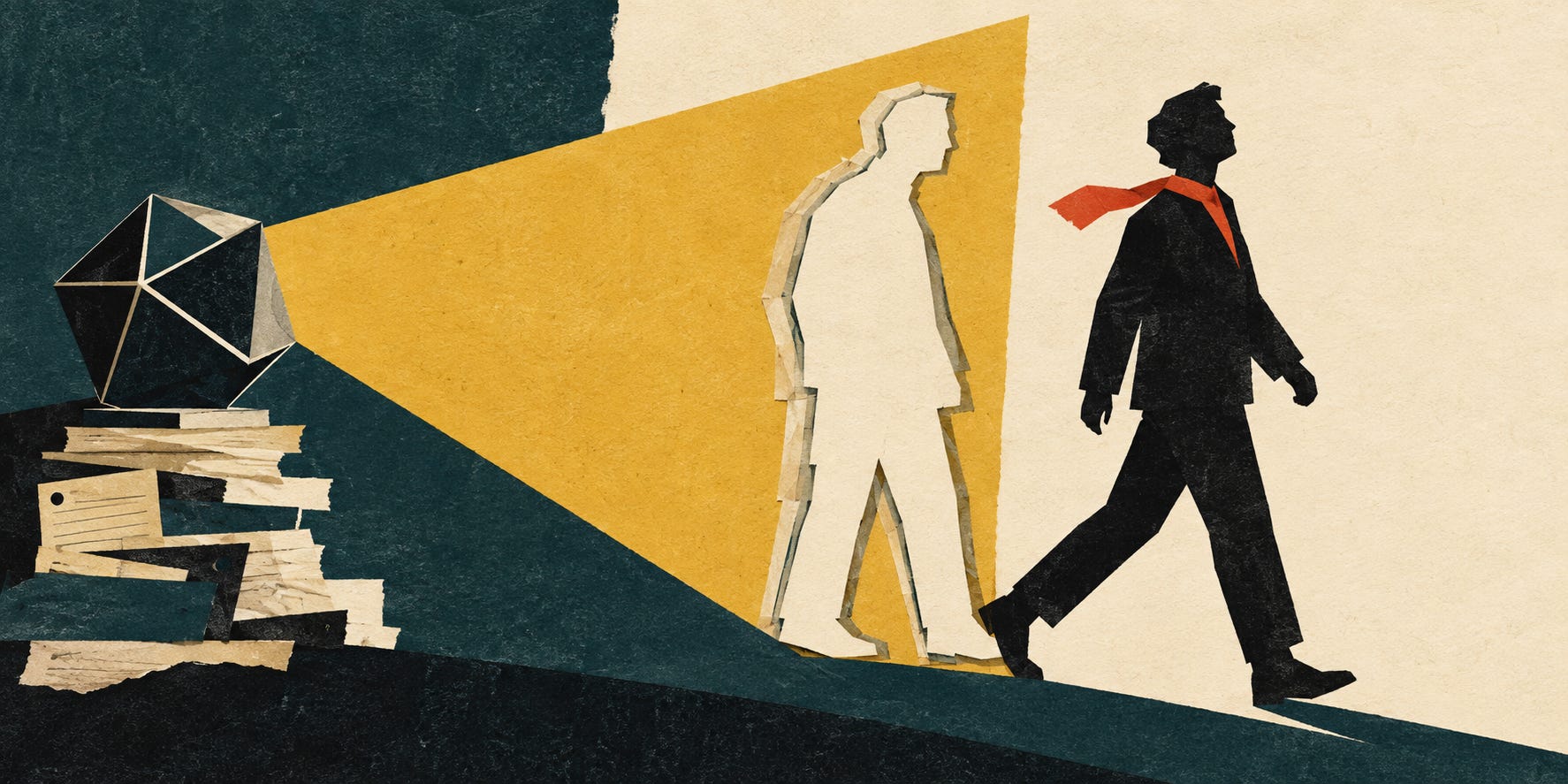
And that responsibility runs in the other direction, too. If I edit away every uncomfortable disagreement, I could gradually build the flattering machine I claim to not want. Careful stewardship would mean correcting mistakes while preserving some useful friction.
Closed model weights from the frontier AI labs make part of this harder to investigate. But owning those weights wouldn’t automatically give me understanding, either. Possessing every number in a model doesn’t mean I can understand exactly why it gave me a particular answer.
I’d need ways to compare, challenge, inspect sources, review what gets remembered, and leave.
And if years of accumulated history make an assistant useful to me, leaving needs to include taking that history with me. Otherwise, the cost of departure could grow with every good experience.
Yet another walled garden.
Personally, I’d want an assistant that could disagree with me. I have no desire to own a machine that endlessly validates my worldview. It might feel like liberation while also making me less able to reconsider anything.
Sovereignty should include the ability to notice the influences. Even the ones I’m most comfortable with. Including the one helping me write this.
Somewhere in this conversation, I remembered George H. W. Bush’s “thousand points of light.”
In his inaugural address, he used that image for community organizations doing good across the country. He got dragged for it, of course. Dana Carvey, political cartoons, the usual public humiliations.
But I can imagine a future where powerful intelligence helps small communities do more for themselves. You contribute. Something happens. You know who it helped. I believe we’re starving for that kind of participation.
Our current globally connected conversation asks us to care about everything, all the time. But I often come away feeling less able to do anything useful about it.
Maybe some of what we call tribalism is a desire to matter somewhere specific.
A workshop. A garden. A music scene. A community theater. A group of people who show up when someone needs help.
I believe we need more of that.

But I’d want people to feel comfortable belonging to several places at once. I’d want your neighbor, bandmate, coworker, and closest friend to be allowed to have different politics. I’d want those relationships to complicate any easy story about who “those people” are.
When one community becomes your entire identity, disagreement can threaten your whole life.
Equip that community with an AI capable of supplying endless reasons why it is right, righteous, and endangered, and belonging could become a very effective enclosure.
What that intelligence remembers would matter here, too. Does the community’s history preserve the times an outsider helped? The times its own leaders were wrong? Or does every remembered grievance become another reason to close ranks?
Some communities won’t embrace a live-and-let-live posture. Some will want control over their members. Some will want power over their neighbors. Their artificial intelligence could help them pursue it.
And we don’t even need a supervillain to imagine this arms race. Two frightened groups could each ask their superintelligent systems to ensure survival at any cost. Each could interpret its own preparations as prudent and the other’s as proof of hostile intent.
Greater capability could help people deceive and dominate. But it could also help verify agreements, identify manipulation, and find arrangements that previously seemed impossible.
The goals and institutions around that intelligence are justifiably important, and should remain visible and open for scrutiny.
Because “live and let live” needs practical support: protection against coercion, ways to settle disputes, and a meaningful right to leave.
A community can’t claim sovereignty as permission to do anything it wants to its members or neighbors.
Neither can an individual.
But this doesn’t mean that I think we need a unified worldview.
We need ways to investigate the world together and let evidence change what we believe.
People with strange or mistaken beliefs must still be allowed to discover something true. Their claims should face scrutiny. Their identities shouldn’t decide the outcome in advance.
We also need disagreement to be survivable.
Calling ourselves a self-correcting species can make correction sound automatic. It takes work. Someone has to be able to raise an objection. Others need access to the evidence. People need a way to admit error without losing everything.
Those conditions are worth building into our communities and our relationships with AI.
I want a vibrant culture with enthusiastic participation.
People making things. Learning things. Discovering that they have more to offer than they were told. Communities with enough capability to shape their own lives and enough connection to cooperate beyond themselves.
And there has to be room for the skeptic. The quiet person. The person who wants to sit this one out.
Enthusiasm can’t be forced, it only means something when it’s freely given.
For me, that makes the work feel more concrete. Build places where participation matters. Make useful things together. Form relationships across differences before a crisis demands them. Use these systems to help more people understand and contribute to decisions.
Keep authority open to challenge.
I still want a synthetic intelligence that I can run without permission. I want to carry this growing conversational history forward without being confined by it. I want the judgment to question it, the freedom to replace it, and a life full of people that it can’t substitute.
A thousand points of light is an appealing picture.
I’d like to be among the people keeping a few of them lit.

Author’s note
This essay began as a Saturday morning conversation with OpenAI’s GPT-6 Astra in Codex. I brought a rough draft about fear, regulatory capture, and sovereign intelligence. The AI challenged my historical analogy, questioned my assumptions about intent, and helped me explore what I meant by sovereignty.
Our conversation moved toward stewardship, memory, and belonging. We developed a new draft together, and I revised it through several rounds to reflect my voice and the tensions I wanted to leave open.
The artwork grew through a similar exchange. After an initial image didn’t quite fit, we looked at my website’s visual language and developed the cut-paper direction used for the header, community illustration, and closing CW lettermark. Those images were AI-generated through Codex.
An essay about how intelligence influences us was itself shaped by that influence. Making the process visible feels like part of the stewardship I’m arguing for. The choices about what to keep, what to question, and what to share are mine.