Stick with me here. Why? Well, because you have to… if you want. If you don’t, then I’m just talking to myself.
And honestly, that’s not the worst outcome.
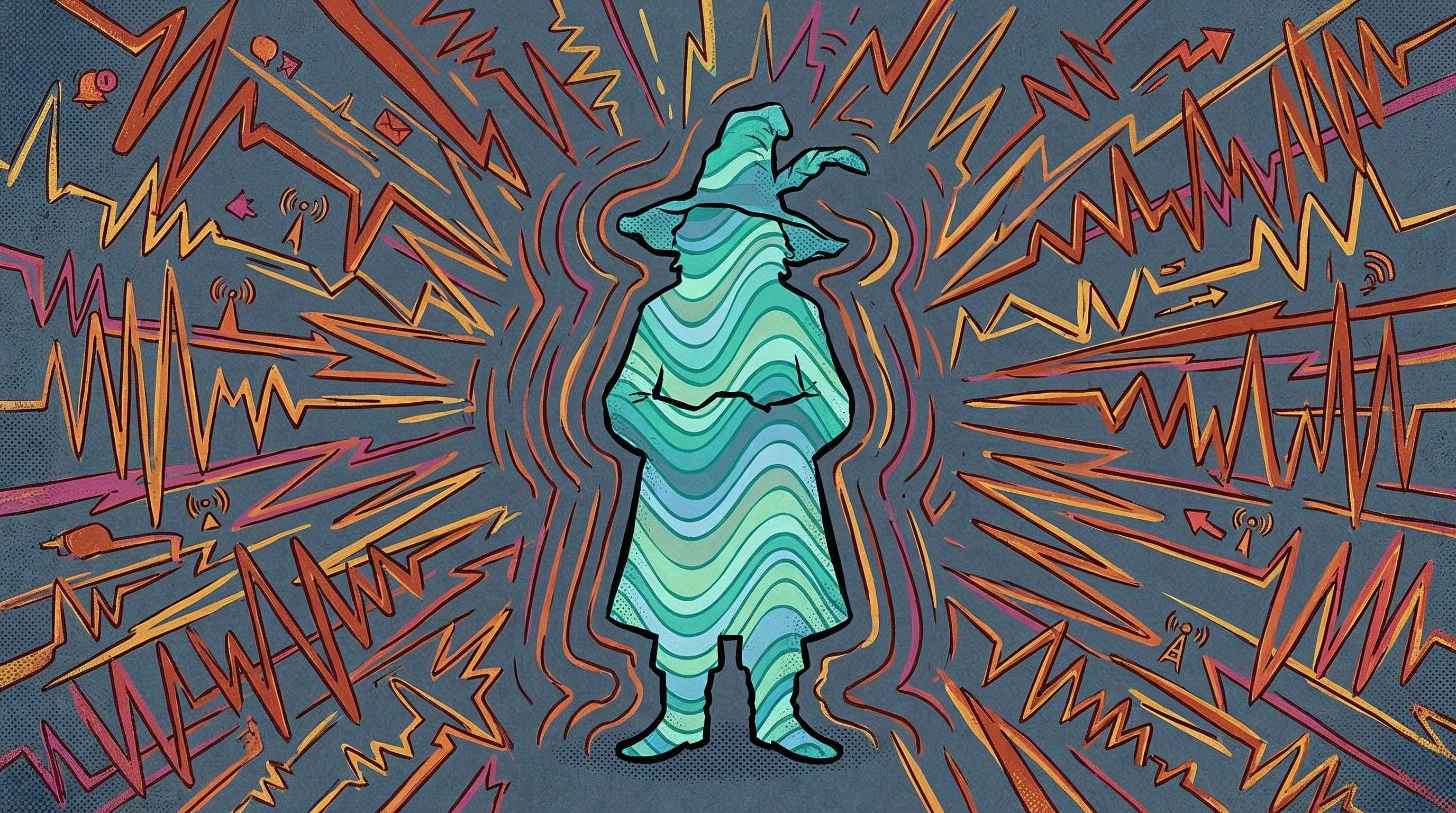
This week has felt like a rash.
Not the catastrophic kind that sends you to the hospital. The other kind. The irritating one. The persistent one. The one that sits just beneath the skin and insists that you scratch it.
Headlines cascade across the screen. Videos appear, disappear, then reappear again through a different account. Leaks. Counter-leaks. Narrative volleys fired across every social platform. A constant staccato barrage of awful.
You feel it in your body.
The itch to react.
The itch to pick a side.
The itch to amplify.
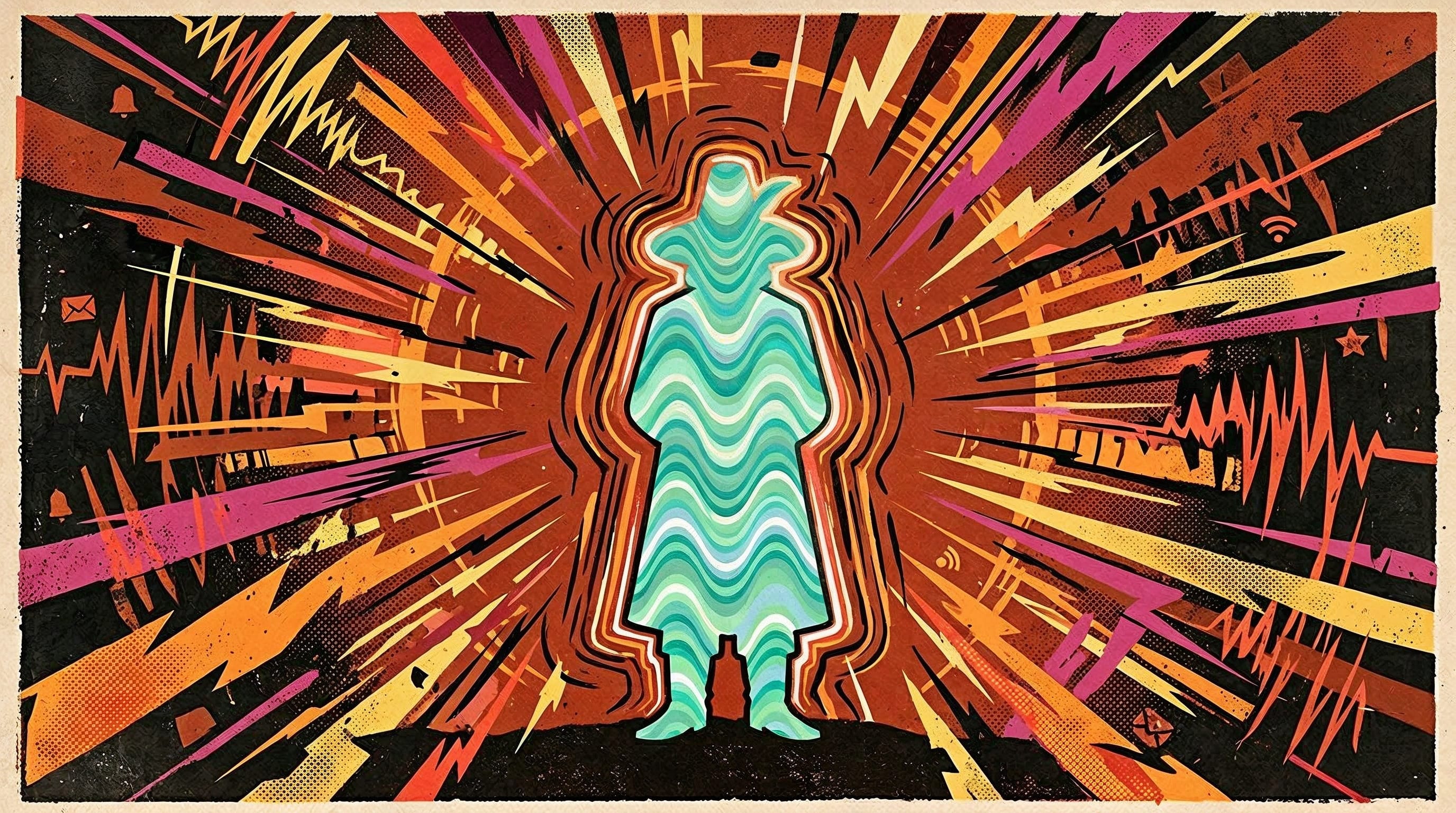
Modern systems are remarkably good at producing this sensation. The entire information ecosystem (news media, social media, geopolitical narrative management) has evolved into something like an irritation engine. It produces friction. Heat. Emotional urgency.
Not necessarily clarity.
Just engagement.
A rash spreads when it’s scratched.
And the system is always saying the same thing:
Scratch this.
This week, while watching the churn, I found myself thinking about an odd character from The Lord of the Rings.
Tom Bombadil.
Readers of Tolkien know the name. Viewers of the films do not. Bombadil was cut from the movies entirely, which is understandable. He doesn’t move the plot forward in any obvious way.
In fact, he almost breaks it.
In the books, Bombadil briefly encounters the One Ring. The object that corrupts kings, destroys civilizations, and turns its wearer invisible.
The most powerful artifact in Middle-earth.
Bombadil slips it on his finger.
Nothing happens.
He doesn’t disappear. He doesn’t become tempted. He doesn’t feel its pull. To him, the ring is just another shiny object. A curious bit of gold. Metal.
The ring holds no power over him.
Not because Bombadil defeats it.
But because he simply does not participate in the contract that gives it power.
The ring works by exploiting desire. Ambition. Fear. The longing to wield control over the world.
Bombadil supplies none of these things.
So the ring can’t operate.
Tolkien once acknowledged that Bombadil posed a narrative problem. A character immune to the central conflict of the story can’t easily exist inside that story’s machinery.
Which is precisely why the character fascinates me.
Bombadil is not the hero.
He is something far stranger.
He’s proof that some systems only function if we agree to operate on their frequency.
The modern information environment works in a similar way.
Wars are fought with bombs and missiles, yes. But they’re also fought with narrative. Competing signals. Competing claims of legitimacy. Competing emotional appeals designed to recruit participants.
Each headline asks for something.
Outrage.
Certainty.
Immediate reaction.
The moment we feel compelled to respond instantly (to amplify, condemn, defend, argue) that means we’re operating on the frequency the system needs to survive.
The signal sustains itself through willing participation.
It’s not necessary for everyone to agree.
It’s only necessary that everyone continues reacting.
In Tolkien’s world, the ring spreads power through those who covet and attempt to wield it.
In our world, the signal spreads through those who attempt to resolve it.
Bombadil offers an uncomfortable alternative.
He simply refuses the frequency.
Now, this doesn’t mean ignorance.
Bombadil is aware of the ring. He recognizes it for what it is. But he is not recruitable by it.
This distinction matters.
Choosing not to resonate with a signal isn’t the same as pretending it doesn’t exist.
And this is where the idea of endurance begins to take shape.
Endurance is often misunderstood as passive suffering. Waiting helplessly while events unfold.
But the kind of endurance I’m describing is active.
It is disciplined.
It’s the deliberate cultivation of an interior landscape that can’t be commandeered by every signal passing through the air.
In moments of chaos, the world encourages outward motion. Immediate reaction. Endless commentary.
Bombadil demonstrates another path.
Sometimes the most radical act is simply to endure without amplifying the signal.
To remain present without becoming a transmitter.
To allow dissonant frequencies to exhaust themselves.
And I recognize how this may sound suspiciously like retreat.
It isn’t.
The world still demands participation in many forms: compassion, responsibility, discernment, action when it’s truly required.
But not every signal deserves amplification.
Not every irritation deserves scratching.
And not every conflict requires us to become one more node in the emotional network that sustains it.
Active endurance means using moments like this to trek inward.
To examine the contracts we’ve unknowingly signed.
The systems we participate in without noticing.
The signals we amplify simply because they’re loud.
Bombadil didn’t conquer Middle-earth.
He simply remained outside the ring’s emotional economy.
There’s also a strange meta layer here as well.
Because while these thoughts were forming, I did something disgustingly modern.
I fed them into an AI.
I handed the machine my half-formed ideas, my clumsy metaphors, my scattered references to hobbits and narrative warfare. I let it reflect them back to me, sharpen them, rearrange them, question them.
In a sense, this is prompt engineering.
But not in the way the term is often used.
Not as a technique for controlling machines.
More like a technique for clarifying oneself.
Ideas go in messy. They come out structured. The thinking becomes easier to see.
It’s less like outsourcing thought and more like aerating soil.
Sometimes the compost pile just needs turning.
People occasionally ask me why I continue writing essays like this every week.
Thirty-two weeks now without missing a beat.
The world is chaotic. Systems are grinding against one another. The information environment feels increasingly engineered for agitation.
What difference does another essay make?
Probably not much.
But the practice matters.
Thirty-two weeks of thinking in public won’t stop the world from burning.
But it does keep my internal frequency tuned.
And that may be the quiet work available to many of us right now.
The powerful will continue their struggles. Narratives will collide. Signals will escalate and fracture and reform.
Heaven help us for what we will need to endure before they relent.
In the meantime, the rest of us still have an interior landscape to cross.
Bombadil reminds us that this terrain exists.
And sometimes the most effective salve for an algorithmic rash is simply refusing to itch.

Author’s Note
This essay was developed through an ongoing conversational process with AI. The initial concepts, metaphors, and core argument are my own reflections from the week—specifically the idea of Tom Bombadil as a metaphor for “active endurance” in an increasingly chaotic information environment.
I then used AI as a thinking partner to help surface structure, challenge phrasing, and refine the spine of the piece. In practice, this looked less like outsourcing authorship and more like turning a compost pile: rough ideas went in, the conversation aerated them, and something clearer emerged.
All final editorial decisions, revisions, and the published text are my own. I share this note for transparency, but also because the process itself reflects a theme that appears throughout my writing: AI can function not just as a generator of content, but as a tool for reflection, synthesis, and intellectual sharpening.
In other words, it’s less a replacement for thinking than a mirror that sometimes helps you see the thinking more clearly.