
We've all experienced the frustration of interacting with a poorly designed chatbot or being stuck in an endless loop of automated phone menus.
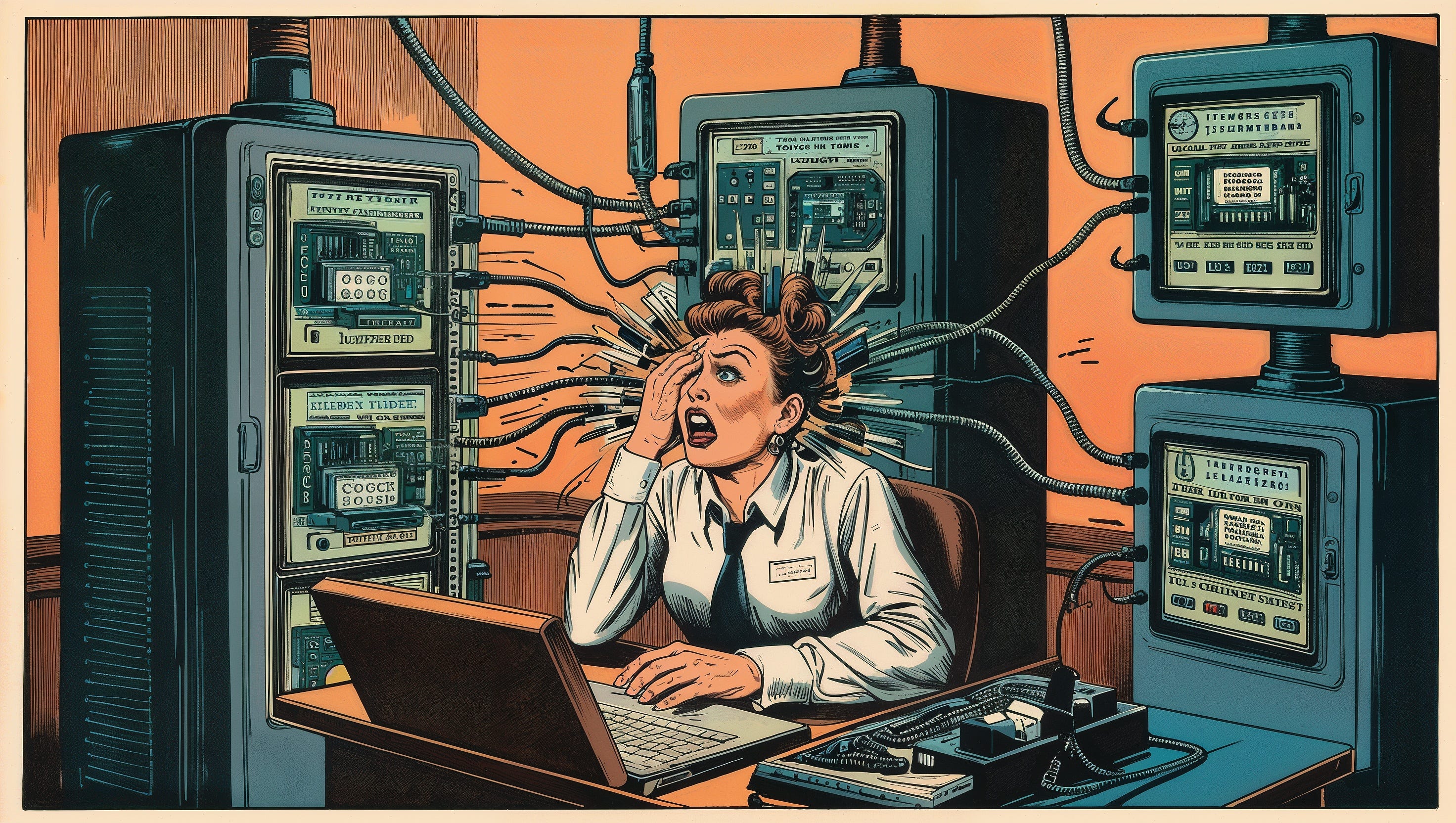
Calls are often diverted to prolonged queues, eventually reaching a single overburdened support individual who is buried under a never-ending queue of increasingly frustrated customers.
Note: Unique AI-generated phrases are presented as bold and italic.
It’s foolish to shrink a workforce without adding modern technology, tools, and processes. The old ways don't need to die or even suffer, but they can’t expect to gain the process optimizations afforded to us by Gen AI.
“I didn’t get that… Can you repeat yourself?”
Without incorporating these newly emerging foundational technologies, attempts to streamline business operations will only tax the remaining individuals employed within the organization.
The classic saying “you can’t have your cake and eat it too” might help reveal the fallacy gripping those eager to hop on the lucrative boost to productivity. If businesses want to streamline, downsize, or supercharge their operations, they have to also take that bold leap into incorporating modern technologies like Generative Artificial Intelligence.
Sure, it's scary, but trying to boost productivity while merely cutting headcount just hurts your remaining workforce… and those they serve.
But don’t forget, this push for automation and operational efficiency isn’t just raising the bar for achieving a comfortable life; it's removing the lowest rung altogether.
The middle class—often considered the backbone of the economy—is being eroded as technology replaces roles that were once secure pathways to stable employment.
According to a report by the Brookings Institution, automation threatens up to 25% of jobs in the United States, disproportionately affecting middle-income positions. Some even predict a global job loss of around 230 million jobs in the next two years.
As technology transitions from being ubiquitous to omnipresent and soon to become ephemeral, we're witnessing a cycle where advancements rapidly replace their predecessors, leaving little lasting value.
Die-hard devotion will dissolve in the great footrace to generality. And being generic means competing with generic clones. Q-tips, Jello, Kleenex, Band-Aid all ubiquitous, but generic equivalents are just as good.
This rapid cycle erodes the lasting value that these individual technologies bring to our lives - and Generative AI is accelerating the sense of instability in the job market among highly skilled workers. None of which are used to this level of persistent uncertainty.
A Personal Reflection
I find myself as a testament to this shift. The last project I worked on involved developing a vector database for Retrieval-Augmented Generation (RAG) with a Large Language Model (LLM) wrapper—a cutting-edge application of AI technology.
In April, "operational efficiencies" landed on my head, with a pink slip on my desk. This experience has profoundly influenced my thoughts on the advancement of technology and its impact on jobs.
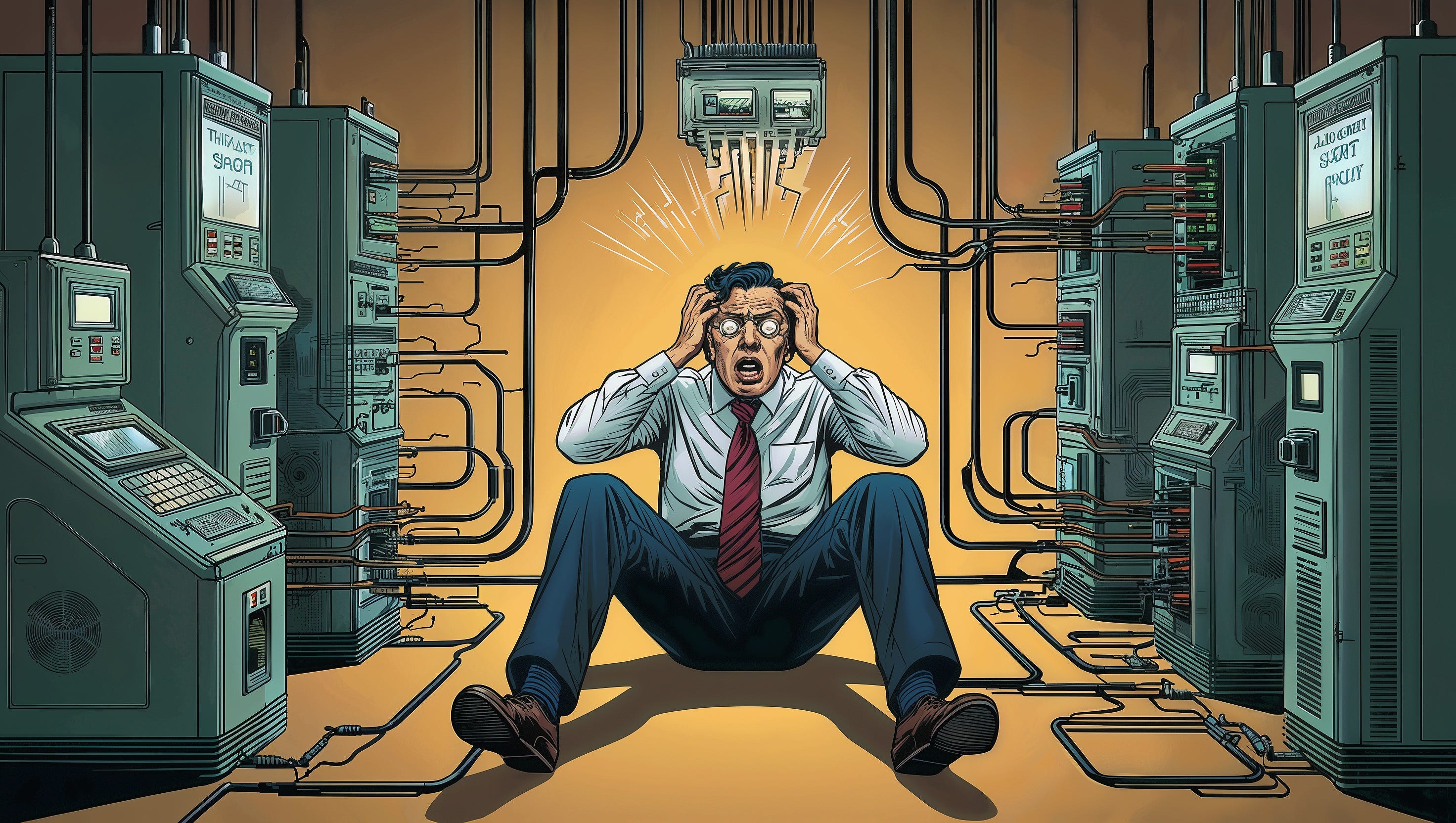
We’re now rapidly hollowing out the human interface in areas where we spend our money and focus our attention. Businesses are increasingly automating services, but the personal touch that fosters trust and loyalty is getting lost.
Customers often feel frustrated when they can't reach a real person to resolve complex issues, damaging brand reputation and customer satisfaction in the long run.
Also, the over-reliance on technology without adequate human support creates a brittle environment. Frequent internet interruptions could render someone unemployable or drive a business bankrupt - underscoring how heavily we've come to rely on technology for basic functioning and livelihood.
The rapid advancement of technology is, in a way, eating itself.
Just look at the level of bespoke creation we're capable of with AI already! We're witnessing the diminishing economic viability for human input in creative and analytical tasks.
This not only affects employment but also raises questions about the lasting intrinsic value of human labor.
Generative AI as a whole is souring amongst many. No small portion are "classical" business owners. Some hate it, some are confused by it, some are scared of it.
There's not too many explorers left in the crowd.
Generative AI and other advanced technologies should be seen as tools to augment human capabilities, not replace them entirely… And it absolutely shouldn’t be the basis to severely hamstring and overwork the remaining few after the decision to implement any operational efficiencies.
For instance, AI-driven chatbots can handle routine inquiries, freeing up human support staff to tackle more complex issues that require empathy and critical thinking. And it’s in our best interest to treat the skills of empathy and critical thinking as wildly valuable.
And while we’re at it. Don’t fill those remaining few who are “good” at their job with a plate full of work that would make anyone scream. Staff accordingly, compensate accordingly.
By maintaining a strong human interface, companies can benefit from technology without eroding the middle class, widening socioeconomic gaps, or damaging the trust and satisfaction of the consumers enticed to engage with the product or service.

The incentive to automate is present, clearly - but the process to integrate it remains vague and opaque for many business owners. And from the employee perspective - many have already felt the impact of operational efficiencies firsthand.
It's high time businesses took a bold leap into modern technology—but responsibly. By integrating advanced technologies like Generative AI in a way that augments rather than replaces human roles, companies can achieve operational efficiencies without sacrificing customer satisfaction or employee well-being.
The future doesn't have to be a choice between embracing technology and preserving jobs. With a balanced approach, we can leverage technological advancements to enhance human capabilities, maintain the middle class, and ensure lasting value in our increasingly digital world.
It's a real shame to see the current trend, but it's not too late to change course. Businesses must recognize that they can't have their cake and eat it too. They need to invest in modern technology thoughtfully, keeping the human element at the core of their operations.

For posterity, here’s a link to the conversation between o1-Preview and myself used in the creation of this piece.