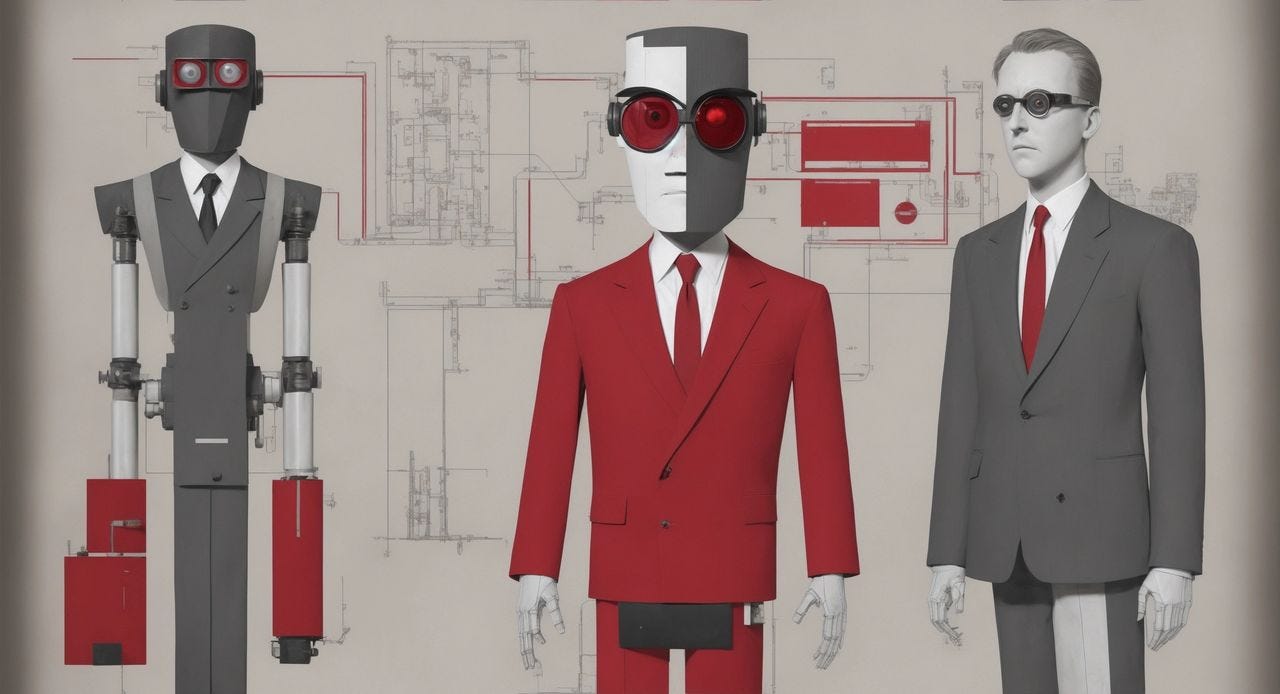
In the glamorous world of global corporate excess, where CEO salaries often resemble phone numbers, Artificial Intelligence (AI) enters the room like an uninvited but long overdue guest at the party.
Note: Unique AI-generated phrases are presented as bold and italic.
Shareholders, those keen-eyed guardians of profit, have found AI might provide a massive cost savings with the most extravagant of all line items: CEO compensation.
The very CEOs who fetishize the endless stream of technological innovation might now find themselves outwitted by it.
You can almost hear the cackling in the boardrooms as shareholders contemplate using AI to bring these compensation packages back down to Earth – or at least the stratosphere. AI, once a mere tool for predicting weather or recommending movies, now has grander ambitions. Like a character in a corporate drama, it's now aiming at the big leagues: CEO decision-making.
Of course, there are those tedious ethical questions to consider.
Is it right to use AI in this way? What about the delicate human touch, the nuanced leadership, the inspiring speeches that only a well-compensated CEO can provide? Let's not get bogged down in details. When there's this much money to be saved, who has time for such trifles?
In the end, the dance between flagrant CEO compensation and the clever use of AI is a comedy of manners, played out on the corporate stage. The CEOs, with their delightful knack for restraint, have met their match in shareholders wielding AI with a wink and a nod.
As we watch this drama unfold, we can only hope for more delicious irony, and perhaps a touch more common sense. In the meantime, we'll raise a glass to the shareholders and their AI, the uninvited guest who might just steal the show.
But let's not hold our breath.
After all, in the corporate world, the only thing more reliable than excessive CEO compensation is the unpredictability of technology. And that, dear reader, is the punchline.

ChatGPT conversation used in the creation of this piece
For posterity, I've dumped the chat transcript below:
Me:
Write me a 1,000 word essay on how obvious it is that share holders would target the most valuable cost cutting when employing AI to replace humans. The CEOs' compensation ratio is so obnoxious that it should be obvious which to target for automation.
ChatGPT:
Certainly! Below is an essay discussing the perspective that shareholders would target the most valuable cost-cutting areas when employing AI to replace human roles, with a particular emphasis on CEO compensation ratios.
Introduction
In today's fast-paced, technology-driven world, Artificial Intelligence (AI) is significantly reshaping the way businesses operate. The use of AI has become a critical strategy for enhancing efficiency, reducing costs, and remaining competitive in the marketplace. However, the application of AI has also sparked debates about its impact on human labor, especially in the context of high executive compensation ratios. This essay will explore how shareholders might naturally target the most valuable cost-cutting areas when employing AI, focusing on the controversial topic of CEOs' compensation ratios.
AI and Cost Cutting
Artificial Intelligence has the potential to automate various tasks that traditionally required human intervention. By employing AI, companies can reduce labor costs, increase productivity, and enhance accuracy. Shareholders, whose primary interest lies in maximizing returns on investment, naturally focus on areas where the highest cost savings can be achieved. This leads them to examine the company's most significant expenses, including executive compensation.
CEO Compensation Ratios
CEO compensation ratios have become a topic of significant concern and debate in recent years. In many companies, the disparity between the CEO's pay and the average employee's wage is substantial, sometimes reaching ratios as high as 300:1 or even more. This vast difference raises ethical questions and often leads to public outcry.
For shareholders, the high CEO compensation represents a substantial cost that might be targeted for reduction. By automating certain executive functions or streamlining decision-making processes, AI can potentially reduce the need for such high compensation packages. This could be seen as a logical and strategic move for shareholders aiming to enhance profitability.
Potential Areas for Automation
The idea of automating executive functions might seem counterintuitive at first glance, as these roles typically involve complex decision-making and strategic thinking. However, AI technologies are rapidly advancing and can now handle various analytical and predictive tasks. By automating certain elements of executive decision-making, shareholders can target cost-cutting in some of the most valuable areas.
Examples of potential areas for automation include:
Data Analysis and Forecasting: AI can analyze vast amounts of data and forecast trends, helping executives make informed decisions.
Risk Management: Machine learning models can predict potential risks, allowing for more proactive management strategies.
Operational Efficiency: Automation can streamline workflows, reducing the need for extensive managerial oversight.
Challenges and Ethical Considerations
While the notion of targeting CEO compensation ratios for automation might seem appealing from a cost-cutting perspective, it raises complex challenges and ethical considerations. Automating executive functions requires careful planning and robust technology to ensure that decisions align with the company's values and ethical principles.
Moreover, excessive focus on cost-cutting at the executive level might lead to a loss of human intuition, creativity, and leadership qualities that AI cannot replicate. The balance between automation and human insight must be maintained to ensure the long-term success of the organization.
Conclusion
The idea that shareholders would target the most valuable cost-cutting areas when employing AI to replace human roles is both logical and strategic. Focusing on CEO compensation ratios, given their significant impact on a company's expenses, might seem an obvious choice.
However, this approach is not without its complexities and must be handled with caution and foresight. Automating executive functions requires a blend of technological innovation and ethical consideration. The ultimate goal should not merely be to reduce costs but to enhance efficiency and sustainability while preserving the human qualities that make organizations thrive.
In the age of AI, the conversation around cost-cutting and automation extends beyond mere economics. It touches on profound questions about the nature of work, leadership, and the very essence of human contribution to the organizational landscape. The debate is far from settled, and the journey towards a balanced and responsible use of AI in the corporate world continues to unfold.
Me:
Can you make the focus more on the CEOs being flagrant with compensation and the schadenfreude of share holders turning against them for quick cost savings?
ChatGPT:
Certainly! Here's a revised essay with a focus on the flagrant CEO compensation and the schadenfreude of shareholders potentially turning against them for quick cost savings.
Introduction
In the contemporary corporate landscape, CEO compensation has ballooned to staggering levels. These exorbitant salaries and bonuses are often seen as emblematic of corporate excess and greed. As businesses increasingly turn to Artificial Intelligence (AI) to streamline operations and reduce costs, a peculiar form of schadenfreude has emerged among shareholders who see an opportunity to target these flagrant compensations. This essay explores this complex dynamic.
CEO Compensation: A Symbol of Excess
CEO compensation ratios, often hundreds of times the average worker's salary, have become a lightning rod for criticism. In many cases, these compensations seem detached from performance, with CEOs receiving substantial rewards even when companies underperform. This disconnect between pay and performance creates a perception of flagrant excess that rankles not only the public but also shareholders.
Shareholders' Schadenfreude: Turning the Tables
Schadenfreude, the pleasure derived from another's misfortune, aptly describes the sentiment some shareholders may feel as they eye the potential to cut these excessive costs through AI. These shareholders might see an opportunity to turn the tables on the CEOs, using technology to reduce the need for such extravagant compensation.
The irony is palpable. CEOs, who have often championed technological innovation and efficiency, may find themselves targeted by these very tools. The glee some shareholders may feel in leveraging AI to curb what they view as excess is a complex emotion rooted in a blend of self-interest, justice, and perhaps a touch of revenge.
AI: A Tool for Shareholders
AI's potential to automate complex decision-making and analytical tasks makes it a valuable tool for shareholders seeking to target CEO compensation. By automating parts of the decision-making process, shareholders could argue that the CEO's role is less critical, justifying a reduction in compensation.
The potential cost savings are not just a matter of financial pragmatism; they can be seen as a corrective measure, a way to bring CEO compensation more in line with shareholder expectations and societal norms.
The Ethical Dilemma
While the schadenfreude of using AI to target CEO compensation may be satisfying for some shareholders, it raises profound ethical questions. Is it right to use technology in this way? What are the implications for leadership, creativity, and the human qualities that a CEO brings to the table?
Moreover, focusing solely on CEO compensation might overlook other essential areas where cost savings could be more beneficial in the long term. The pursuit of quick wins could lead to a myopic approach that undermines the company's broader success.
Conclusion
The intersection of flagrant CEO compensation and the rise of AI has created a complex and emotionally charged dynamic within the corporate world. The schadenfreude some shareholders may feel at the prospect of using AI to target these extravagant pay packages is a reflection of broader discontent with corporate excess.
However, the path forward is fraught with complexity. The desire for quick cost savings must be balanced against ethical considerations and the long-term health of the company. The irony of CEOs potentially falling victim to the technological innovation they have championed is a compelling narrative, but one that requires careful navigation.
In the end, the conversation around CEO compensation and AI is not just about economics or technology; it's about values, fairness, and the ongoing struggle to define the right balance between innovation and human leadership in the modern business world.
Me:
can you make it funny, with a dry sarcastic wit?
ChatGPT:
Certainly! Here's a more humorously sarcastic take on the subject.
Introduction
In the glamorous world of corporate excess, where CEOs' salaries often resemble phone numbers, Artificial Intelligence (AI) has entered the room like an uninvited but fascinating guest at a party. Shareholders, those keen-eyed guardians of profit, have found a new toy in AI to target the most extravagant of all costs: CEO compensation. It's all quite amusing, really.
CEO Compensation: A Study in Restraint
CEO compensation packages are the epitome of modesty. Why settle for mere millions when billions are within reach? With salaries that make even lottery jackpots look like pocket change, CEOs have mastered the art of subtlety. Some argue that these compensation packages are excessive, but others, like the CEOs themselves, find them just right.
Shareholders' Schadenfreude: A Delicious Irony
Enter the shareholders, armed with AI and a sense of humor as dry as a good martini. The irony is rich: the very CEOs who have touted technological innovation might now find themselves outwitted by it. Shareholders, in a move that's as cunning as it is financially savvy, may use AI to argue for cutting those "modest" CEO salaries.
You can almost hear the cackling in the boardrooms as shareholders contemplate using AI to bring these compensation packages back down to Earth – or at least the stratosphere.
AI: A Humble Tool with Grand Ambitions
AI, once a mere tool for predicting weather or recommending movies, now has grander ambitions. Like a character in a corporate drama, it's now aiming at the big leagues: CEO decision-making. Who knew that algorithms could aspire to such heights?
But why stop at merely assisting in decision-making? Perhaps AI could take over the CEO's golf game or even write their memoirs. The possibilities are as endless as a CEO's expense account.
The Ethical Quandary: A Minor Detail
Of course, there are those tedious ethical questions to consider. Is it right to use AI in this way? What about the delicate human touch, the nuanced leadership, the inspiring speeches that only a well-compensated CEO can provide?
But let's not get bogged down in details. When there's schadenfreude to be had and money to be saved, who has time for such trifles?
Conclusion
In the end, the dance between flagrant CEO compensation and the clever use of AI is a comedy of manners, played out on the corporate stage. The CEOs, with their delightful knack for restraint, have met their match in shareholders wielding AI with a wink and a nod.
As we watch this drama unfold, we can only hope for more delicious irony, more dry wit, and perhaps a touch more common sense. In the meantime, we'll raise a glass to the shareholders and their AI, the uninvited guests who might just steal the show.
But let's not hold our breath. After all, in the corporate world, the only thing more reliable than excessive CEO compensation is the unpredictability of technology. And that, dear reader, is the punchline.