For most, if not all of the history of fame as a concept, envy’s been the engine.
We see someone adored, and we want to recreate their life.
The spotlight, the glow.
But fame isn’t free.
Adoration always brings along scrutiny. And scorn.
So maybe now’s a good time to step back and survey the value of our own terminal uniqueness as Taylor Swift puts it.
The part of us that can’t be copied cleanly.
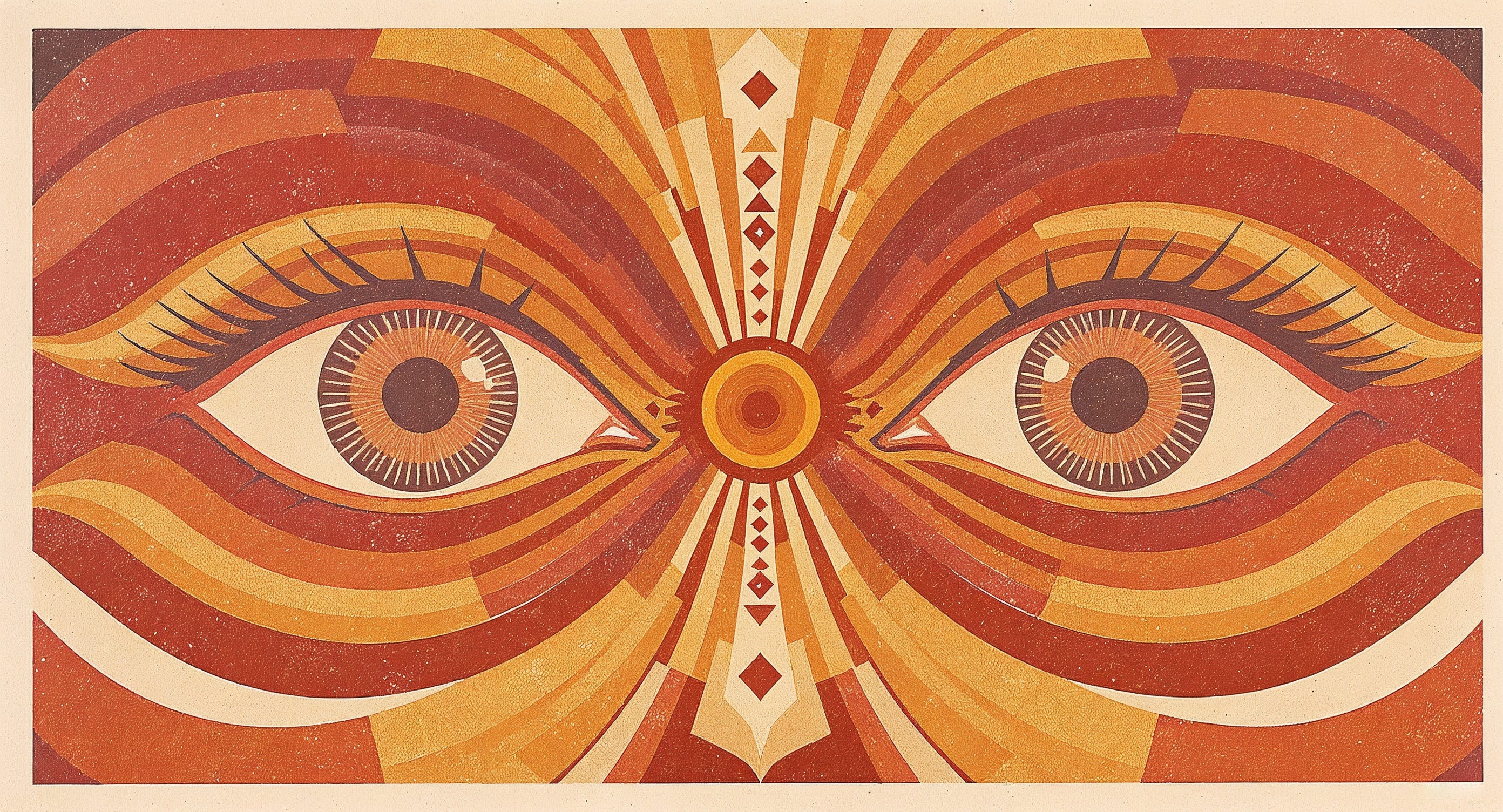
A single eye can only see in two dimensions. Add another, and you get depth.
That’s perspective.
And sure, that’s the thing that keeps us from walking into walls. But we’re all now a part of something bigger, weirder. Not just in time and space, but signal and noise. We define our frequency individually and collectively.
We are a hive mind, a web, a cluster of nodes; all humming with human reasoning, biases, and borrowed insights.
And that’s never been clearer than now, with AI flooding the marketplace.
We’ve spent lifetimes attempting to mimic what we admire. Then, when a machine mimics us, we recoil.
That’s the Uncanny Valley: not fear of the machine, but fear of the mimic.
Sure, we see it in robotics, in embodied AI, in the race to build androids that “pass.” But maybe that gut reaction isn’t about them at all.
Maybe it’s our way of recognizing ourselves, reflected just a little too perfectly.
And AI’s good at that. Too good, sometimes.
Just ask Sora 2, or any voice model that can catch your exact sigh in three sentences flat.
So yeah, we should reclaim our POV. It’s more than just our perspective, it’s our goldmine. Because that’s what it is: endlessly renewable, stubbornly personal, gloriously human.
If we wire things right, we can build systems that amplify us all. We can then all choose to dismiss the existing machinations that flatten our worth into a rote consumer class.
But doing this takes faith… and faith isn’t exactly trending right now.
Because at this moment, we’re all living in one of two AI timelines:
The headlines, where models ace PhD exams. And the day-to-day, where the apps on our desks feel like petulant high schoolers still figuring it out.
That gap between what’s promised and what’s felt? That’s where these two stories split.
The optimists see progress. The skeptics see vapor.
And honestly? Both are right.
None of us grew up filling every Scantron test bubble correctly, we got plenty wrong along the way.
We love to imagine machines as flawless, but errors exist in every system.
We still eat at restaurants.
And yeah, sometimes we go home with food poisoning.
To err is human.
To forgive? Divine.
To find errors and keep building anyway; that’s the real trick.
Because here’s the thing: I still believe in this stuff.
Not like a magic trick, but like it might help us fix a few of our world’s largest cracks.
I see a future where people are all energy independent.
Where collaboration crosses time, language and unfathomable distance.
Where the work feels lighter, because it’s more connected, cumulative, and creative.
I see folks waking with the sun, greeting the snoozing bees on their wildflowers — defenseless, stressless, at peace — and checking the overnight report from their chosen AI instance, enjoyed with coffee like the morning newspaper.
Days filled with perspective, curiosity and non-transactional conversation.
Evenings with friends, family, good food, and laughter that lingers.
It’s our perspective.
It’s always been our perspective.
The golden ticket, the cost of entry, the key that builds tomorrow.
A congregation of perspectives, and a confidence that contribution is valued.
Sure, it’s all a bit messy. And it will continue to be messy.
But we’ve got this.
AI will tear down the walls.
We just have to be willing to accept what we all see on the other side.
Authored by Charles Wilke. Developed in creative collaboration with generative systems. Opinions are human; syntax, negotiable.
Link to chat used in creating this piece.