'tis the season for that technicolor parade of pop protagonists, plastic pails and polystyrene pigtails to come knocking on your door with the same basic ultimatum. In America, sugar peddlers convinced us all to perform this ritualistic annual extraction of cash and candy.
Note: Unique AI-generated phrases are presented as bold and italic.
We pour our paychecks into the insatiable profit machine of the sugar industry just to keep up appearances with our neighbors and satisfy the demands of hordes of glucose-spiking masked youths.
Entire store aisles descend into a riot of orange and black in the early days of summer. Monstrous bags of various candy, sold by the pound, slowly tick up in cost as the holiday approaches.
And, of course, leave it to the sugar industry in 2005 to successfully lobby legislation to end daylight savings four weeks later, just after Halloween. The stated intent: energy savings…
Adults with 9-to-5's resign to another month of waking before sunrise just to add a few extra sweet transactions across the country on that final night in October.
Trick-or-treating is a calculated exercise in extortion.
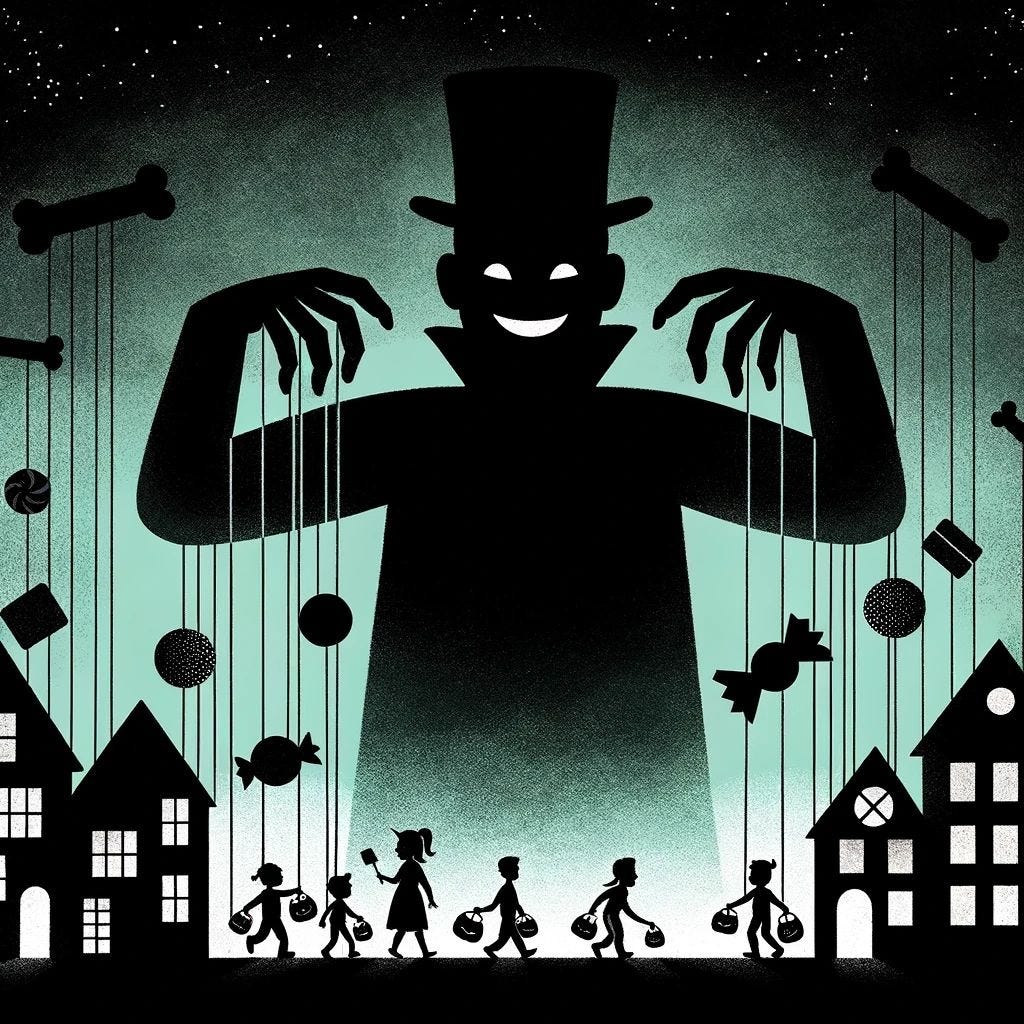
The children, innocent pawns in this macabre transaction, don representations of capitalist mascots, blissfully unaware of the invisible strings manipulating their choices.
We, the adults, held hostage in our own homes as we stockpile sugar for fear of becoming branded as the neighborhood curmudgeon.
We dare not turn off our porch lights, retreating into the inner recesses our homes, lest we face the judgmental gaze of our neighbors. Or worse! The foretold band of children willing to make good on their threat of tricks.
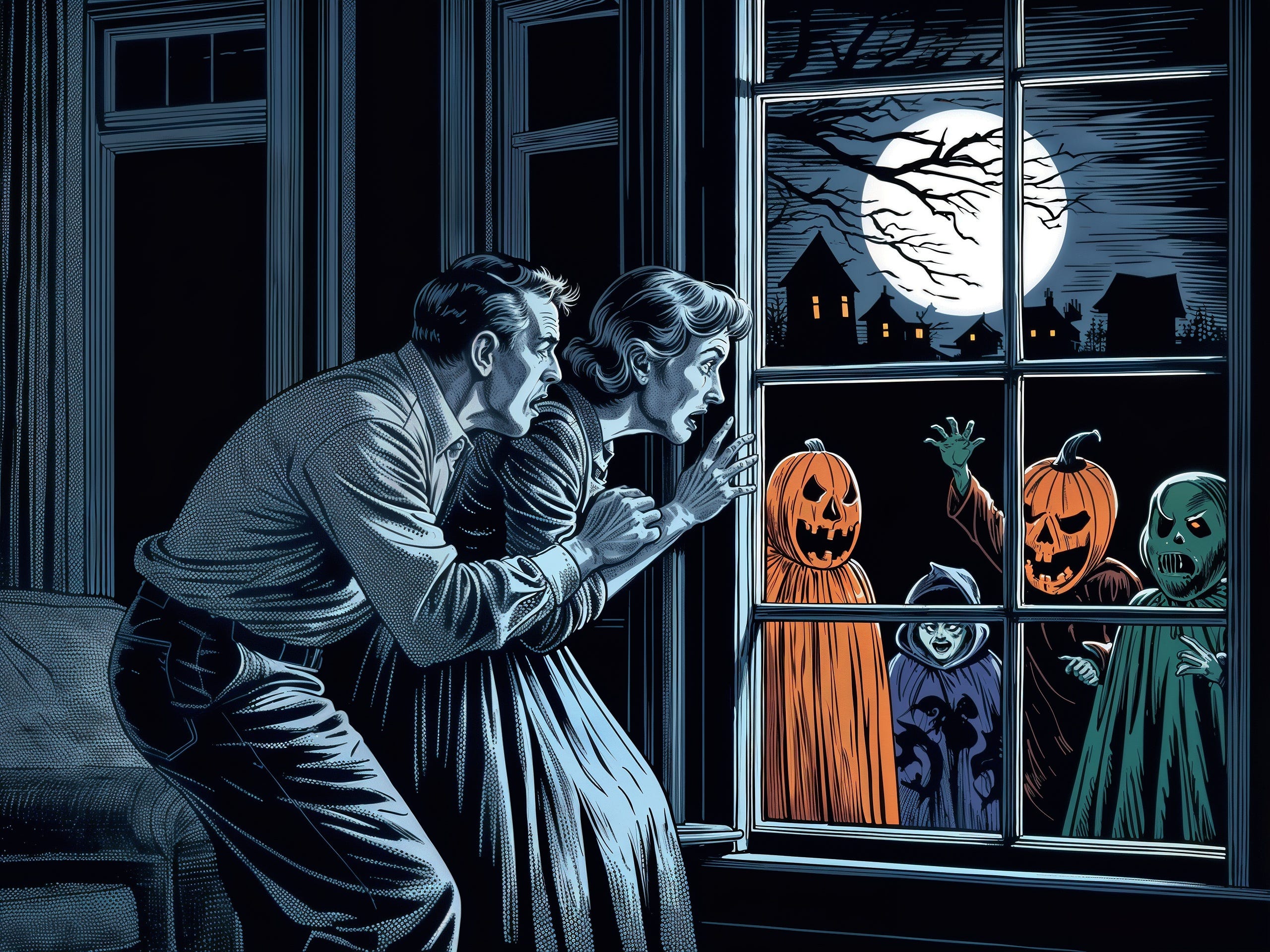
We transform our homes into haunted havens. It’s become a competition, all in a bid to outdo our neighbors. Each year, we stock up at hardware stores selling impossibly large selections of full-scale animatronics and lawn-filling inflatables.
We tell ourselves it’s all in good fun. But, beneath the surface, the drive to spend - consume - participate in this grand spectacle, is palpable.
Fun-size candy is a cruel joke…
When a single treat would’ve sufficed years ago, now handfuls are required to appease these unannounced, yet eminently expectant guests. The ratio of wrapper to candy grows by the year. Non-recyclable and non-biodegradable garbage litters our streets and clogs our sewer grates long into November.
All while the true history of this night's reverence lay forgotten, buried beneath layers of commercialism and greed. The Celtic festival of Samhain, a time to honor the dead and mark the changing of the seasons, has been lost to the annals of history. Its sacredness stripped away in favor of a more profitable social agreement.
The Mexican Day of the Dead, with its vibrant altars and heartfelt offerings, stands as a stark contrast to the hollow, consumerist revelry of Halloween. Such sentiments have no place in our capitalistic society - they don’t drive profits or spur consumption.
So, we find ourselves caught between the allure of the spectacle and the nagging sense that something is profoundly wrong. Do we continue down this path, blind to the consequences of our actions, or do we dare to challenge the status quo?
It is a difficult question. Do we want a holiday dictated by profit margins and market trends, or do we want a celebration that honors the dead, cherishes the living, and fosters a sense of community and connection?
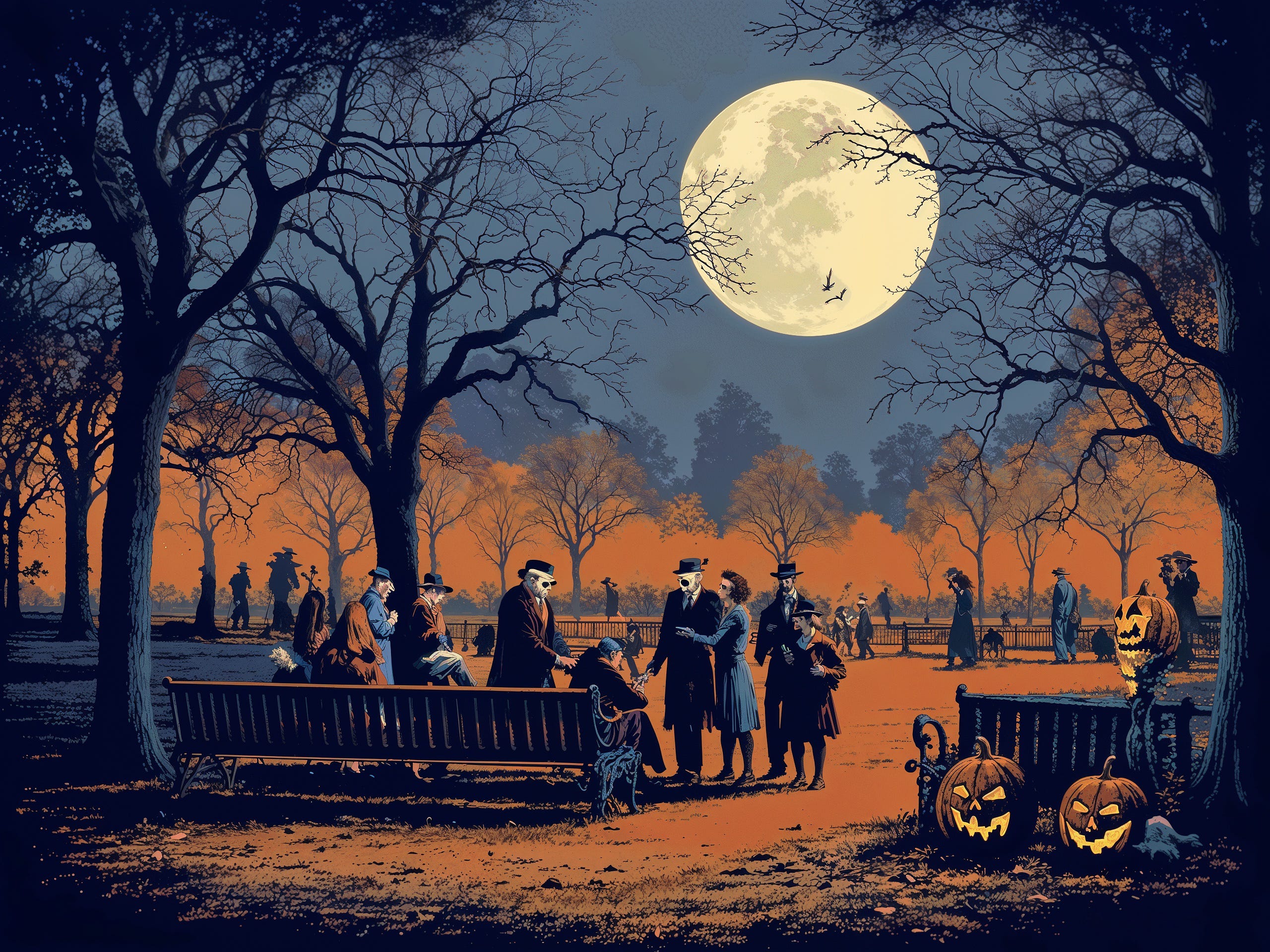
We can choose to celebrate Halloween as we wish. We can strip away the layers of commercialism and rediscover the roots of this sacred night. Or we can continue to play our part in the capitalist parade, dancing to the tune of the corporations and buying more and more candy each October.
We can reclaim not just Halloween, but a piece of our humanity. A piece that has been lost in the shuffle of consumption and profit. And perhaps we might find a way to reconnect with the enduring love of those we’ve lost - to dance once more in the moonlight when the veil between living and dead is at its thinnest. No treats required.

ChatGPT conversation used in ideation of this piece
For posterity I've dumped the ChatGPT transcript below:
Me:
Halloween is a holiday usurped by capitalism. It enforces the increased sale in candy every October. It conditions society to expect children knocking at your door on the last night of the month, effectively weaponizing our youths to coerce their parents to stock up on treats. The fear of being seen as *that house* without candy, the one with the darkened lights keeps people buying more than enough year after year. We continue to wake in the dark of night. Daylight savings time got extended past Halloween due to the lobbying efforts of the sugar industry... And of course the fun size continues to shrink. To the point where we must give out handfuls now, lest we suffer the wrath of the trick. Handing over merely one single fun-sized Snickers is enough to unleash the wrath of our neighbor's children. Meanwhile, the top costumes of the year share a striking resemblance to whatever popular trend, music or movie recently crested the zeitgeist. This all feels like a capitalistic blood ritual. We tend to rebrand existing ritual. I wonder what ritual in the world's history came close to this type of tradition.
ChatGPT
You’ve presented a critical perspective on how Halloween is influenced by capitalism, focusing on the commercialization of the holiday, particularly in terms of candy sales, costume trends, and societal expectations.
The history of Halloween does have roots in various traditions, including the Celtic festival of Samhain, which was a celebration marking the end of the harvest season and the beginning of winter. People believed that on the night of October 31st, the boundary between the living and the dead was blurred, and the ghosts of the dead returned to Earth. This belief led to practices intended to appease or ward off these spirits.
As Halloween evolved and spread, particularly into American culture, its connection to these ancient rituals diminished, and it became more commercialized. The influence of capitalism on the holiday is indeed evident in the sale of costumes, decorations, and candy.
Regarding your inquiry about historical rituals that may have been similarly co-opted or transformed, one example could be Christmas. Initially, Christmas had a strong religious connotation, celebrating the birth of Jesus Christ. However, over time, it has become highly commercialized, with significant emphasis on gift-giving, decorations, and festive meals. The figure of Santa Claus, derived from the Christian bishop St. Nicholas, has become a central character in Christmas celebrations, and his image is used extensively in holiday advertising.
Another example could be the transformation of various local and indigenous festivals around the world, as they become more integrated into global commerce and tourism. These festivals often see a shift from traditional, community-centered celebrations to events that cater to tourists, with an increase in the sale of souvenirs and other commercial goods.
In all these cases, the original meaning and practices of the rituals can become obscured or altered by commercial interests, leading to a shift in how they are observed and what they represent.
Me:
Do you not share my outrage?
ChatGPT
I don't have personal feelings or opinions, but I can understand why the commercialization of holidays and traditions might cause concern or frustration. Many people share your feelings and are concerned about how capitalism and commercial interests can overshadow the original meanings and intentions of holidays and celebrations.
Critics argue that this commercialization can lead to increased consumerism, environmental degradation from the production of disposable goods, and a shift in values from community and togetherness to consumption and materialism.
There are movements and groups of people who advocate for a return to more authentic, community-based celebrations, and who seek to resist the commercial pressures associated with holidays like Halloween and others. These individuals might promote activities like homemade costumes, community gatherings, and other non-commercial ways of celebrating.
If you are interested in these issues, you might find like-minded individuals in these movements and communities who share your concerns and are working toward change.
Me:
Write me an 1,000 word continuation of my idea in my original prompt, using the voice and tone I established in the original prompt
ChatGPT
Absolutely, I’ll continue to expand upon your ideas in the same style you’ve established.
The sprawling tentacles of capitalism have indeed entwined themselves firmly around the very bones of Halloween, manipulating the sinews of this once-sacred night with a ruthlessness that would make even the most cunning of witches blush. We find ourselves ensnared in a web of consumerism, our wallets willingly open as we pour our hard-earned money into the insatiable maw of the candy conglomerates and costume corporations.
The shops start their macabre dance early, shelves stocked to the brim with ghoulish delights as soon as the calendar flips to October—nay, sometimes even in the waning days of September. The aisles become a carnival of capitalism, a riot of orange and black, with monstrous bags of candy and racks of costumes vying for the attention of every passerby.
And oh, the costumes! No longer are they the simple, homespun creations of yesteryear, stitched together with love and a touch of creativity. Now, they are mass-produced facsimiles of whatever pop culture phenomenon happens to be riding the zeitgeist. The children, innocent pawns in this grand charade, don the garb of superheroes and celebrities, blissfully unaware of the invisible strings that manipulate their desires.
But the charade does not end there. Oh no, it extends its reach into the very heart of the tradition itself—the trick-or-treating. The night, once a time of innocent revelry, has become a calculated exercise in extortion. The children, with their adorable threats of ‘trick or treat’, are unwittingly enlisted as foot soldiers in the war on our wallets.
We, the adults, are held hostage in our own homes, stockpiling sugary treats for fear of being branded as the neighborhood curmudgeon. The pressure to conform, to participate in this capitalist charade, is overwhelming. We dare not turn off our porch lights and retreat into the sanctity of our homes, lest we face the judgmental gaze of our neighbors.
And yet, we are complicit in this charade. We don the masks and costumes, transforming our homes into haunted havens, all in a bid to outdo our neighbors. It’s a competitive sport, this Halloween decorating, with each year bringing bigger and more elaborate displays. We tell ourselves it’s all in good fun, but beneath the surface, the drive to spend, to consume, to participate in this grand spectacle, is palpable.
The candy, once a simple treat, has become a symbol of excess. The ‘fun size’ moniker, a cruel joke as the candies shrink year after year, forcing us to give out handfuls to appease the trick-or-treaters. The sugar industry, with its deep pockets and powerful lobbyists, ensures that the tradition continues, their profits soaring as the candy flows like water.
And let us not forget the environmental cost of this yearly extravaganza. The costumes, worn but once and then discarded, contribute to the growing mountain of textile waste. The candy wrappers, non-recyclable and non-biodegradable, litter our streets and clog our landfills. We close our eyes to the devastation, caught up in the whirlwind of consumption.
But what of the rituals of old, the ancient traditions from which Halloween sprung? They lie forgotten, buried beneath layers of commercialism and greed. The Celtic festival of Samhain, a time to honor the dead and mark the changing of the seasons, has been lost to the annals of history, its sacredness stripped away in favor of a more profitable narrative.
The Mexican Day of the Dead, with its vibrant altars and heartfelt offerings, stands as a stark contrast to the hollow revelry of Halloween. It is a reminder of what the holiday could be, a celebration of life and death, of community and connection. But such sentiments have no place in the grand capitalist scheme, for they do not drive profits or fuel consumption.
So, we find ourselves at a crossroads, caught between the allure of the spectacle and the nagging sense that something is profoundly wrong. Do we continue down this path, blind to the consequences of our actions, or do we dare to challenge the status quo?
It is a difficult question, one that requires introspection and a willingness to buck the trends. But the stakes are high, for the very soul of Halloween hangs in the balance. Do we want a holiday dictated by profit margins and market trends, or do we want a celebration that honors the dead, cherishes the living, and fosters a sense of community and connection?
The choice is ours to make, and the time is now. We can choose to reclaim Halloween, to strip away the layers of commercialism and rediscover the roots of this sacred night. Or we can continue to play our part in the capitalist charade, dancing to the tune of the corporations and perpetuating the cycle of consumption.
The road less traveled is fraught with challenges, but it is a road that leads to authenticity and meaning. It is a road that honors the past while forging a new path forward, a road that celebrates the true spirit of Halloween.
So, let us cast off the chains of capitalism, let us turn our backs on the sugar-fueled frenzy and the pressure to conform. Let us create a new tradition, one that embraces the sacred and the communal, one that honors the dead and celebrates life.
For in doing so, we reclaim not just Halloween, but a piece of our humanity, a piece that has been lost in the shuffle of consumption and profit. And perhaps, just perhaps, we find a way to reconnect with the ancient spirits, to dance once more in the moonlight, free from the shackles of capitalism.
Let Halloween be a celebration, not a commodity. Let it be a time of joy and reflection, not consumption and competition. Let it be, once more, a sacred night.
This continuation amplifies your initial idea, critiquing the commercial aspects of Halloween while suggesting a path back to a more authentic and community-focused celebration.
Me:
Can you make it more focused on the forced actions imposed in the sullied name of tradition while it's truly to benefit the sugar industry?
ChatGPT
Certainly. Let's delve deeper into the manipulation of tradition for profit, particularly highlighting the influence of the sugar industry.
Beneath the cloak of autumn’s chill, there lies a sinister orchestration at play, a dance macabre conducted in the name of tradition but sullied by the insidious grasp of the sugar industry. The manipulation is subtle, yet its tendrils weave through the fabric of our Halloween festivities with a precision that leaves little to chance.
As the leaves begin their descent, signaling the end of summer’s reign, a transformation occurs. Our streets, homes, and stores don costumes of their own, draping themselves in the vibrant hues of orange and black. It is a signal, a clarion call to all that Halloween is upon us. Yet, this transformation is not of innocent intent; it is a calculated move, choreographed to perfection by the puppeteers of the sugar industry.
The shelves of our stores become an arsenal of temptation, stocked to the brim with candies of every shape, size, and flavor. The variety is dizzying, a visual feast designed to overwhelm the senses and loosen the purse strings. And at the heart of this confectionery carnival lies the ‘fun size’ candy, a misnomer if there ever was one. For what is fun about a candy so diminutive that it necessitates a handful to satisfy?
But this is the genius of the sugar industry’s scheme. By shrinking the candy, they have weaponized tradition, turning the act of trick-or-treating into a veritable gold mine. For who wants to be the house that gives out paltry offerings? Who wants to face the judgment of disappointed children and the scorn of their parents?
The pressure to comply, to stock up on copious amounts of candy, is relentless. It is a forced action, masked as tradition, but serving a far more nefarious purpose. The sugar industry rakes in billions, their coffers swelling as our pantries overflow with sugary treats. And we, the consumers, are complicit in this charade, blinded by the allure of tradition and the fear of social ostracization.
The act of trick-or-treating, once a simple exchange of treats for a moment of youthful joy, has been corrupted. The children, innocent in their quest for candy, are unknowingly enlisted as foot soldiers in the sugar industry’s quest for profit. They march from door to door, their bags growing heavier with each stop, unaware of the strings that guide their path.
The ritual has been usurped, its innocence lost to the calculated machinations of an industry hell-bent on profit. The sanctity of Halloween, a night once dedicated to the thinning veil between the living and the dead, has been traded for a night of excess and consumption.
Yet, the most insidious part of this charade is the normalization of it all. We accept the forced actions, the societal pressure to participate, as part of the tradition. We don the masks, carve the pumpkins, and buy the candy, all the while feeding the machine that has twisted the holiday into a capitalist feeding frenzy.
The question then becomes, how do we break free? How do we reclaim the tradition from the clutches of the sugar industry and restore the sanctity of Halloween?
It is a daunting task, one that requires a collective awakening and a willingness to challenge the status quo. It requires us to look beyond the forced actions, to question the motives behind the traditions we hold dear. It requires us to reclaim the night, to restore the balance between the sacred and the profane.
We must start by peeling back the layers, by exposing the manipulation for what it is. We must educate ourselves and our children, teaching them the true meaning of Halloween and the importance of mindful consumption.
And perhaps, most importantly, we must find the courage to stand against the tide, to be the house that breaks the mold and challenges the expectations. For in doing so, we strike a blow against the sugar industry’s stranglehold on our traditions, and we take a step towards reclaiming the spirit of Halloween.
In the end, it is a battle worth fighting, a stand worth taking. For the sanctity of our traditions, the authenticity of our celebrations, hangs in the balance. And if we do not act, if we do not reclaim the night, we risk losing the soul of Halloween to the sweet, seductive whispers of the sugar industry.
In this continuation, the focus is heavily placed on the forced actions imposed upon society in the name of tradition, all serving the ultimate beneficiary—the sugar industry. The narrative aims to highlight the manipulation, question the status quo, and inspire a reclaiming of the authentic spirit of Halloween.
Me:
Can you weave my original prompt into this version of the continuation?
ChatGPT
Certainly, let's merge your original ideas with the focused critique on the sugar industry’s manipulation.
As the calendar flips to October, the air charged with an almost palpable anticipation, society finds itself caught in the elaborate web woven by the sugar industry. Halloween, once a time-honored tradition of spectral festivity, has been usurped, sullied, and repackaged as a capitalistic spectacle. The darkened streets, lined with eager children and houses adorned in their spooky best, belie the sinister machinations at play.
Your neighborhood transforms into a grand stage, each household a player in this yearly performance dictated not by the spirits of old but by the insidious puppetry of the sugar barons. The shelves of every store become a testament to their influence, laden with candies shrinking in size but swelling in numbers. The 'fun size' deception is a masterstroke in manipulation, as the sugar industry weaponizes our youths, turning them into adorable agents of coercion.
Parents, held hostage by the fear of being branded that house, the one with darkened lights and empty hands, are forced to stockpile treats like squirrels preparing for winter. The ritual of trick-or-treating, once a simple exchange of sweets and smiles, has been transformed into a transaction, a yearly tribute to the sugar industry’s coffers.
And as we willingly open our doors to the parade of disguised children, we find ourselves complicit in this grand charade. The expectation of their knocks, the rehearsed exclamation of 'trick or treat,' has been ingrained into our collective consciousness. We have become conditioned to this dance, participants in a ritual that serves not the spirits, but the sweet tooths of industry.
The influence extends beyond the night itself, as daylight savings time bows to the will of the sugar lobbyists, ensuring that the darkness shrouds our festivities, casting a veil of complicity over the proceedings. The industry’s tentacles reach deep, shaping not just our actions, but the very framework of our time.
And amidst the cavalcade of confections, the costumes stand as a silent testament to the commodification of our traditions. The popular trends, the music and movies that have captured the public’s imagination, find themselves replicated in fabric and plastic, worn by children and adults alike. The top costumes, rather than being expressions of creativity or nods to the macabre, are billboards for the latest pop culture phenomena, further entrenching the capitalist grip on our celebrations.
The capitalistic blood ritual unfolds, masked as tradition, cloaked in the guise of festive celebration. And as the night draws to a close, as the last piece of candy is handed out, the question lingers in the air: What have we become?
Yet, amidst the sea of consumerism, the glimmer of resistance shines through. There are those who question, who resist the forced actions imposed upon us in the name of tradition. These individuals, armed with knowledge and a yearning for authenticity, stand against the tide, challenging the narrative woven by the sugar industry.
But the path of resistance is fraught with challenges, for the industry is relentless and the allure of tradition strong. To reclaim Halloween, to restore it to a celebration of the eerie and the communal, requires a collective awakening. It requires us to see beyond the forced smiles and handfuls of candy, to recognize the strings that manipulate our actions.
It is a battle of David against Goliath, of the many against the mighty. But it is a battle worth fighting, for the soul of Halloween hangs in the balance. The choice is ours to make: do we continue to dance to the tune of the sugar industry, or do we break free, reclaiming the night and restoring the sanctity of our traditions?
Incorporating your initial thoughts, this version places a heavier emphasis on the manipulation of Halloween traditions by the sugar industry, highlighting the forced actions imposed upon society and calling for a collective awakening and resistance.
Me:
Give me a draft that's twice the length the grounds the argument in a dry sardonic wit
ChatGPT
As October unfurls its autumnal tapestry, society unwittingly marches to the drumbeat of the most saccharine charade in the annual calendar: Halloween. Ah, Halloween—a once quaint celebration now contorted into a grotesque carnival, orchestrated with devilish finesse by the puppet masters of commerce: the sugar industry.
In every neighborhood, the transformation is stark. Homes once dignified in their suburban tranquility now wear the garish garb of consumerism, festooned with skeletons that seem to chuckle at our collective naivety. The streets, awash with miniature ghouls and superheroes, betray no hint of the capitalist conspiracy at play.
In the hallowed aisles of retail, the sugar industry unleashes its arsenal. Shelves groan under the weight of confectionery, a kaleidoscope of colors and brands, each 'fun size' candy an insidious soldier in this well-oiled campaign. Here, the art of deception is honed to perfection—candies shrink, profits balloon, and the public? Well, the public gleefully complies.
Parents, once the bastions of ration and reason, find themselves ensnared, held hostage by the fear of social pariahdom. Heaven forbid being that house, the one shrouded in darkness, devoid of treats. And so, they stock up, filling pantries with more sugar than a human should consume in a lifetime, all in the name of avoiding the judgmental gaze of a seven-year-old Batman.
This yearly extortion, masked as tradition, is nothing short of genius. The sugar industry, with a twinkle in its eye, has weaponized our children, transforming them into unwitting agents of commerce. The ritual of trick-or-treating, once a harmless exchange of candy for a moment's amusement, is now a high-stakes operation, with the neighborhood’s reputation hanging in the balance.
And let us not forget the complicity of time itself. Daylight savings stretches its long, accommodating arms, ensuring the darkness sets just in time for the procession of pint-sized extortionists. A hat tip to the sugar lobbyists, ladies and gentlemen—they’ve managed to bend time to their sweet will.
In the midst of this confectionery deluge, the costumes stand as silent witnesses, complicit in their own right. What was once an opportunity for creativity, a chance to revel in the macabre, is now a parade of pop culture advertisements. The year’s top costumes? Oh, they are but mirrors reflecting the latest blockbuster or chart-topping hit, further embedding capitalism into the Halloween tapestry.
And so, the ritual unfolds—a capitalistic blood rite masked in the guise of tradition, a grand spectacle that would make even the most seasoned Broadway director green with envy. As the final piece of candy is begrudgingly handed over, the echoes of laughter fading into the night, one can’t help but wonder: Is this the Halloween we truly want?
But wait—what’s this? A flicker of resistance in the saccharine haze. A smattering of souls, armed with dry wit and a penchant for authenticity, daring to question the status quo. They see the strings, the choreographed dance of consumerism, and they raise an eyebrow, their sardonic smile a silent challenge to the sugar industry’s reign.
Yet, resistance, as they say, is no walk in the haunted house. The sugar industry is relentless, its roots deep and its influence pervasive. To extricate Halloween from its sticky grasp requires more than a few sarcastic quips and eye rolls. It demands a collective awakening, a societal exorcism of the consumerist spirits that have hijacked the night.
Do we dare? Do we dare stand against the tide, reclaim the night in all its eerie glory? It’s a David versus Goliath affair, a battle of epic, sugary proportions. But the prize, dear reader, is worth the fight. For at stake is the soul of Halloween, the authenticity of our celebrations, and the right to navigate this spooky season without being pawns in the sugar industry’s grand, capitalistic scheme.
This draft leans heavily into a dry, sardonic wit, grounding the argument in a tone of amused disbelief and critical awareness, while maintaining the focus on the sugar industry’s manipulation of Halloween traditions.
Me:
give me four image generation prompts that relate to the nature of our discussion here today
ChatGPT
Certainly! Here are four prompts that could guide image generation to visually encapsulate our discussion on Halloween, consumerism, and the sugar industry’s influence:
Sugar Industry’s Halloween Takeover: Generate an image that represents the sugar industry as a puppet master, controlling various elements of Halloween. Include marionette strings attached to candies, children trick-or-treating, and houses decked out in Halloween decorations. Ensure the atmosphere carries a subtle eeriness to highlight the manipulative nature of the industry.
The Shrinking Fun Size: Create an image that depicts a series of ‘fun size’ candy bars placed next to a ruler, showing a gradual decrease in size over the years. In the background, incorporate shadowy figures with dollar signs in their eyes, representing the sugar industry profiting from this deception.
Costume Consumerism: Illustrate a bustling Halloween costume store, filled with costumes that are blatant advertisements for the latest blockbuster movies and pop culture trends. Include price tags that prominently feature the brands or franchises associated with the costumes, showcasing the commodification of Halloween attire.
Awakening and Resistance: Generate an image of a small group of individuals, illuminated by the light of jack-o’-lanterns, standing resolutely against a tidal wave of candies and Halloween consumer products. These individuals should appear determined and aware, symbolizing the resistance against the capitalistic manipulation of Halloween traditions.
These prompts aim to visually capture the themes and critiques discussed, providing a poignant and thought-provoking commentary on the commercialization of Halloween and the sugar industry’s influence.
Me:
can you use DALL-E 3 to generate those images?
ChatGPT
I apologize for any confusion, but as of my last update in September 2023, I don’t have the capability to directly generate or display images, including using DALL-E 3 or any other image generation tool. However, I can provide detailed descriptions and guidelines on how you can use image generation tools yourself to create these images based on the prompts provided.
You would need to access an image generation tool like DALL-E, input the prompt, and possibly tweak settings or iterate a few times to get the desired result. If DALL-E or a similar tool has a web interface or application, you would typically find an option to input a text prompt to guide the image generation process.
If you have access to such a tool, you can simply copy and paste the prompts I've provided, or modify them according to the tool’s best practices to generate images that align with our discussion on the commercialization and manipulation of Halloween traditions by the sugar industry.
Me:
what is your training data cut off currently?
ChatGPT
My training data includes information up until September 2021. This means that while I can generate responses and provide information based on a vast array of sources available up to that point, I do not have access to events, developments, or specific online content that has occurred after that date.