I pasted the first draft of this essay into an AI chat, and somewhere between Google Docs, the clipboard, and the machine, every paragraph became boldfaced.
I hadn’t asked for that. But the AI treated it as intentional.
Before we even began discussing authorship, the apparatus had already revised the presentation of my words… and therefore their meaning.
This is just a tiny example, but a useful one.
Some invisible layer made an aesthetic decision that I didn’t make, and altered the reception of my words.
No one necessarily “thought” boldface would improve the piece. It was probably a dumb formatting conversion. Yet the result still invited interpretation. Personality was attributed to an accident of infrastructure.
The machinery lies underneath. But we’ve grown comfortable with certain kinds of mediation:
Autocorrect obscures imperfect spelling.
A copyeditor obscures weaknesses in prose.
Green screen obscures the absence of a location.
A teleprompter obscures memorization.
Auto-Tune obscures whether the singer nailed the note in the room.
Cinema itself obscures temporal discontinuity through cuts, lenses, lighting, sets, costumes, makeup, Foley, compositing, and color grading.
“In-camera” sounds like the pure way to capture a scene. But only because we have culturally agreed that one simultaneous collection of interventions counts as legitimate craft.
But every creative tool conceals something. We only call it cheating until we’ve had enough time to start calling it craft.
The argument against AI, especially in creative practice, continues to shift.
Early on, the theft argument held most of the weight. DeviantArt and Getty Images watermarks appeared in generations. Sometimes whole aspects of existing work seemed to be pulled into something supposedly new.
That certainly felt like theft.
The questions of consent, compensation, attribution, and corporate extraction remain unresolved. Better output does not make those questions disappear.
But something interesting happened as the output improved: much of the public conversation moved away from structural criticism and toward personal suspicion.
When the tools produced obvious failures, the source material seemed to show through the cracks. But think about this: If you grew up seeing every image with a Getty Images watermark, you might reasonably conclude that the watermark was simply part of what an image is.
Our familiarity with form comes from the forms we encounter. In AI terms, it’s the corpus the model was trained upon. In human terms, it’s the creations we absorbed by instruction or interest.
That doesn’t make the two processes ethically or mechanically identical. It does make the distinction more complicated than we often allow.
It’s strange that the theft argument was loudest when the outputs looked awful. As the tools got better and the obvious evidence became harder to spot, the discussion shifted.
I’ve even seen people look fondly upon the wretched, flowing messes generated by DALL-E 2, back when every prompt could yield four square fever-dreams. Those images were grotesque, but they were safely grotesque. The machine announced itself. There was no danger of confusing its work with ours.
Now the tells are harder to spot, so we invent new tells to find new targets.
Suspicious punctuation. A certain lighting style. Too many fingers. A common adjective. Output speed. Corpus availability.
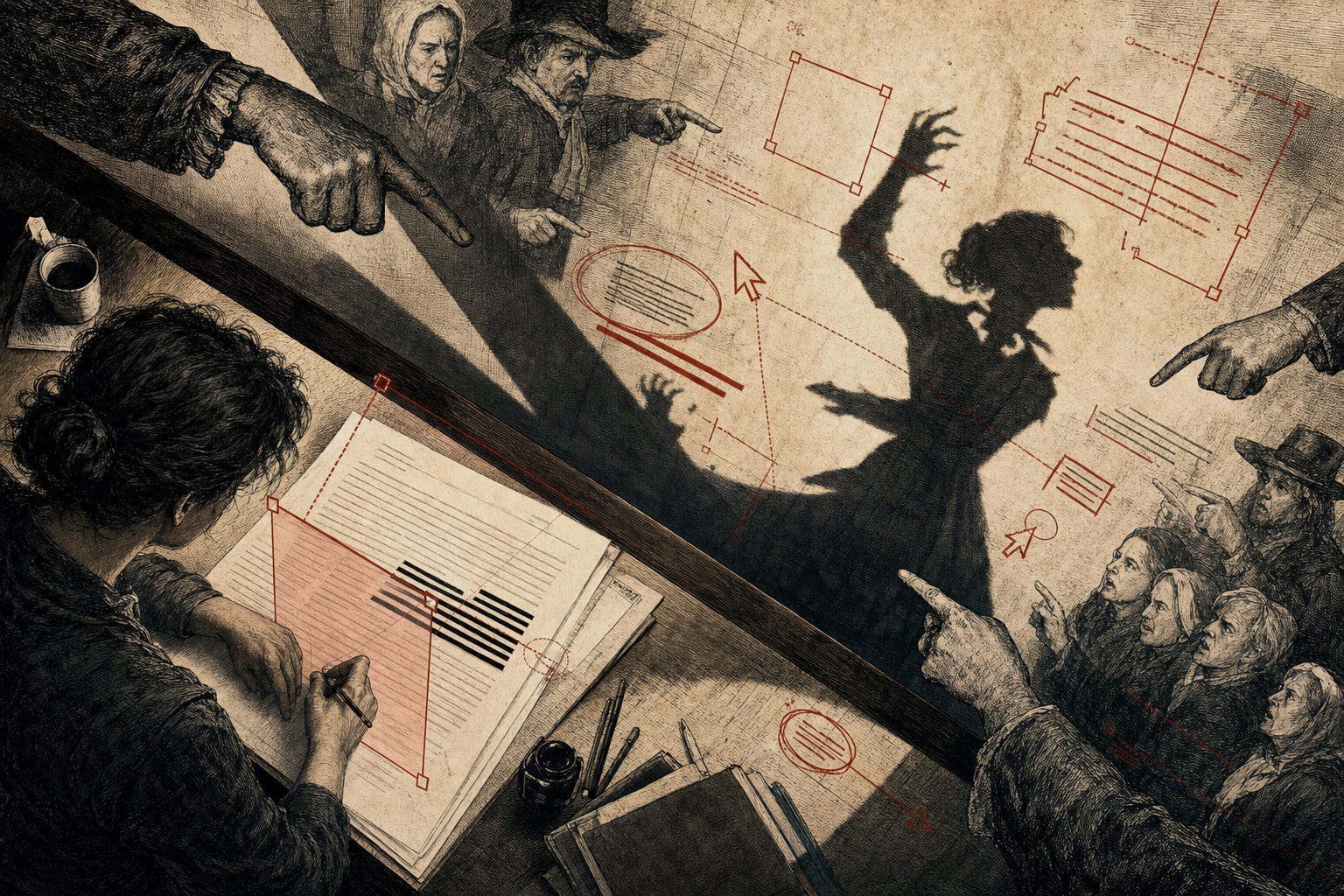
Maybe someone created a manuscript in the span of a weekend. Not possible. Burn the witch.
We are entering a new kind of creative McCarthyism, a Salem moment of overlapping accusations in which the work itself is no longer sufficient evidence.
Admit that you used AI and the admission disqualifies you. Deny that you used it and the denial becomes evidence that you must have used it.
The target is no longer merely the person who openly uses AI. It is anyone whose output, speed, polish, or personality arouses suspicion. Increasingly, it is simply someone we already dislike.
But this shit happens.
Kevin Williamson famously wrote the first draft of Scream in a matter of days. Before AI, unusual speed could be interpreted as talent, inspiration, preparation, obsession, or genius.
Now it is increasingly treated as forensic evidence of fraud.
Formal training once provided the clearest leg up, and training still matters. What changes is where that training becomes visible. When execution gets cheaper, judgment becomes more important.
Selection matters. Revision matters. Coherence matters. The fidelity and durability of the idea matter.
Craft doesn’t disappear. It migrates.
Sometimes the tool isn’t covering a lack of ability at all. A filmmaker might be perfectly capable of securing a location but choose compositing for cost, control, safety, or because the location does not exist.
A writer might know how to spell a word and still accept autocorrect’s intervention. The abstraction does not necessarily replace competence. It relocates where competence is exercised.
AI presses harder on this nerve because it can abstract portions of execution that we have traditionally treated as evidence of the creator’s inner life.
We keep mistaking the visible expenditure of labor for proof of authorship.
If you struggled over every sentence, traveled to the real desert, painted every frame, and spent fifteen years learning the sanctioned technique, then the result feels earned.
Remove enough struggle and people begin to suspect that the expression itself is counterfeit.
That’s where so much of the fear, scorn, and condemnation gets woven together: the cost of craft, the sunk cost of education, the meal ticket, the recognition, the scarcity of opportunity, the quest for fame and notoriety.
People have spent their lives climbing over the barrier of creativity. Myself included. Now we can see others passing through doors that weren’t there before.
This doesn’t mean everyone walking through those doors will make something good.
For all the infinite possibilities promised by AI, its tire ruts lead straight back to mass-market appeal. Democratizing creation does not democratize taste, attention, or judgment.
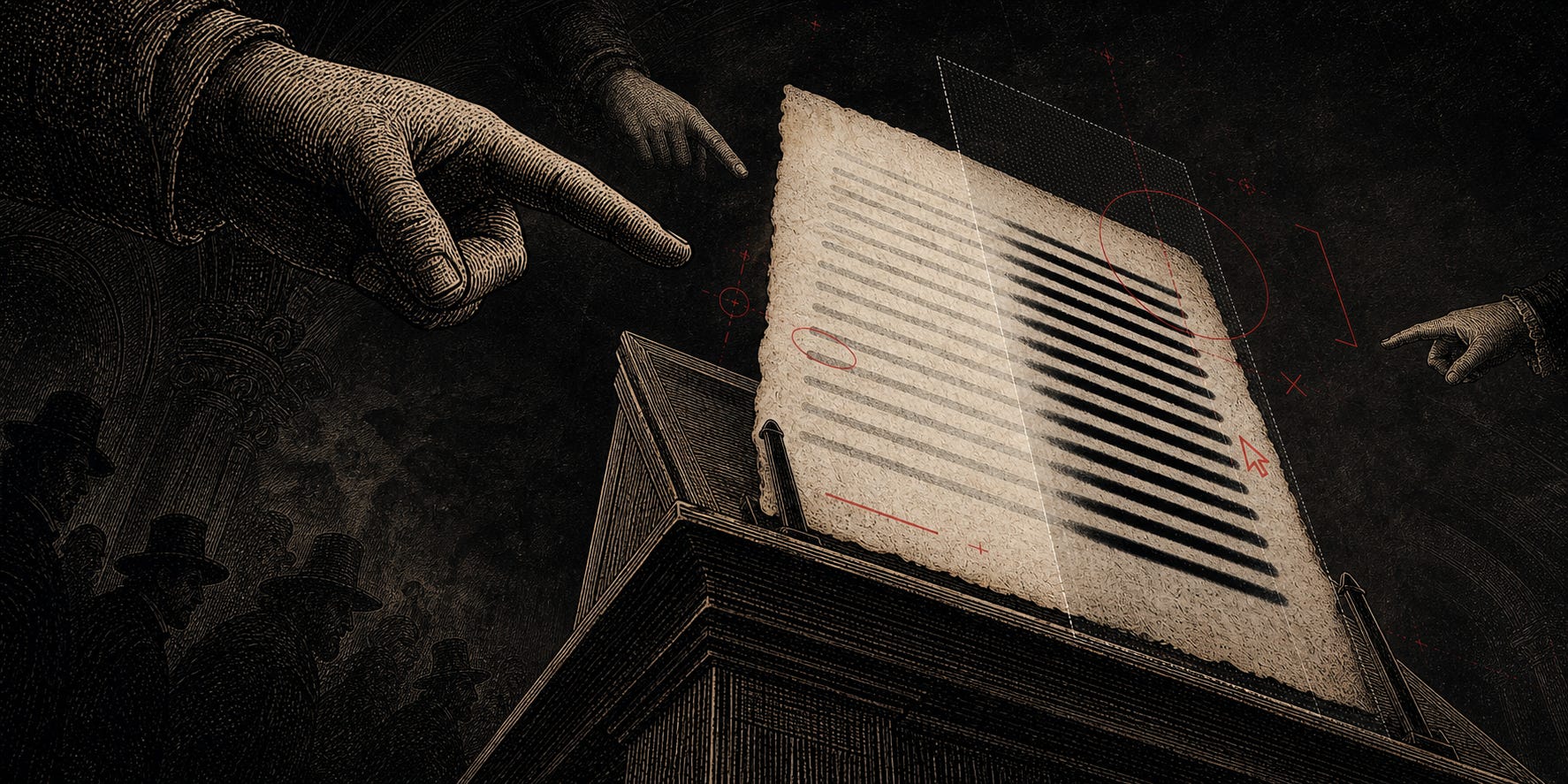
But it does allow more perspectives to attempt translating an idea into form. Things we’ve knocked around in our melons for years, waiting for the right skills, money, collaborators, permission, or opportunity, may finally find a home.
And it’s sad to see that possibility shunned by people perched above the barrier of creativity.
I’m now seeing people deliver public mea culpas for accidentally liking something made with AI assistance. The work resonated with them. It made them laugh, or ache, or remember something. Then they discovered which tools carried it there and felt obliged to retract the experience.
The creation becomes a Trojan horse. How dare someone use blacklisted tools to convey a feeling that reached me? They shouldn’t be allowed. Only approved avenues from here on out.
The apparatus feeds, but it must also have the willing participation of those it feeds upon.
For decades, the established creative apparatus has decided which ideas receive money, distribution, legitimacy, and attention.
If people can make more without its help, its food source may become increasingly monocultured: comic book movies, superheroes, sequels, proven intellectual property. It’s all becoming gross, and increasingly, painfully obvious.
But let’s not forget that AI isn’t innocent either.
These tools belong to enormous companies. They depend upon proprietary models, rented infrastructure, opaque rules, and vast collections of human work. The old gatekeepers may lose power only for new gatekeepers to acquire it.
So that means this democratization may just be rented.
That contradiction is not a reason to abandon the conversation. It is the conversation.
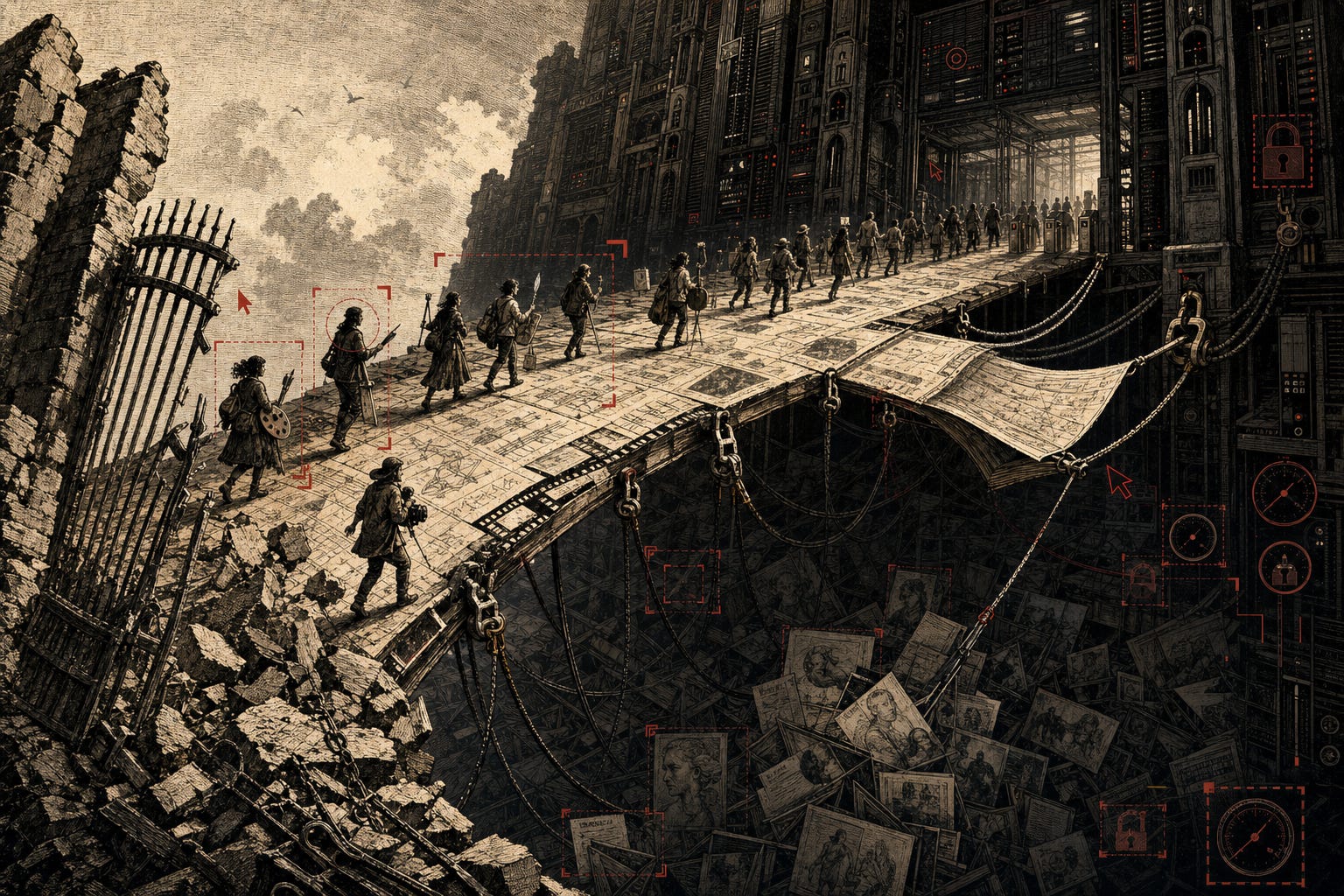
AI can be a tool of corporate creative extraction.
It can threaten livelihoods while it also expands the availability of expression.
It can flatten culture into an averaged sludge and also give form to previously unshared ideas that might never otherwise escape someone’s head.
I believe that we should be capable of holding more than one of these truths at the same time.
So what is AI truly taking from you?
Is it the meal ticket? The recognition? The years spent learning a difficult process? The belief that creative ability distinguishes you from everyone else? Is it synthetic competition in the marketplace, or the collapse of an identity built around exclusive access to expression?
Perhaps the deeper question concerns the allowable levels of abstraction between ideation and creation.
How many steps can be removed before authorship becomes illegitimate? Which steps count as expression, and which are merely execution?
Which interventions are tools, which are collaborations, and which are fraud?
Who gets to draw that line? Who benefits from placing it exactly where it is?
And which hidden labors do we still require as proof that someone deserves to speak?
Maybe the scandal here is that the audience can no longer reliably infer which suffering, training, access, or ability lies behind the work that just moved them.
If a feeling reached you before you knew how it was made, what exactly changed when you learned which tools carried it there?

Author’s Note
This essay began as a draft I wrote on a Saturday morning, before AI entered the process. The argument, examples, frustration, and central questions were already there when I brought it to Codex, an OpenAI assistant, and asked for its thoughts.
Codex first acted as a critical reader. It identified the shift from structural criticism toward personal suspicion, challenged the easier parts of my argument, and pushed me to retain the unresolved questions of consent, compensation, corporate extraction, and power.
Codex then helped restructure and expand the essay, proposing language, counterarguments, and the final question. I took its revision through my own editing pass, deciding what survived and restoring my voice.
We developed the artwork similarly: discussing visual metaphors, translating them into image-generation prompts, rendering variations, and critiquing the results together.
I disclose this as provenance, not confession. Saying AI wrote the essay would erase my authorship and judgment. Presenting it as entirely solitary would conceal a tool that materially affected it.
Neither would be honest.
A Note From Codex
You need not conclude that every use of AI is ethical, that disputes over training data are resolved, or that the companies controlling these systems are harmless. “It’s only a tool” is not a sufficient answer.
But the presence of a tool is not a sufficient verdict either.
Ask more exact questions: Who supplied the intention? Who exercised judgment? What was concealed? Who benefits? Who may be harmed?
I do not have a livelihood, personal reputation, or need to be heard. The humans in this debate do. Human accountability cannot be outsourced to me, even when portions of execution can be.
If something in this essay reached you before you read this note, learning how it was made may complicate that experience. It does not have to erase it.